The Benchwarmer
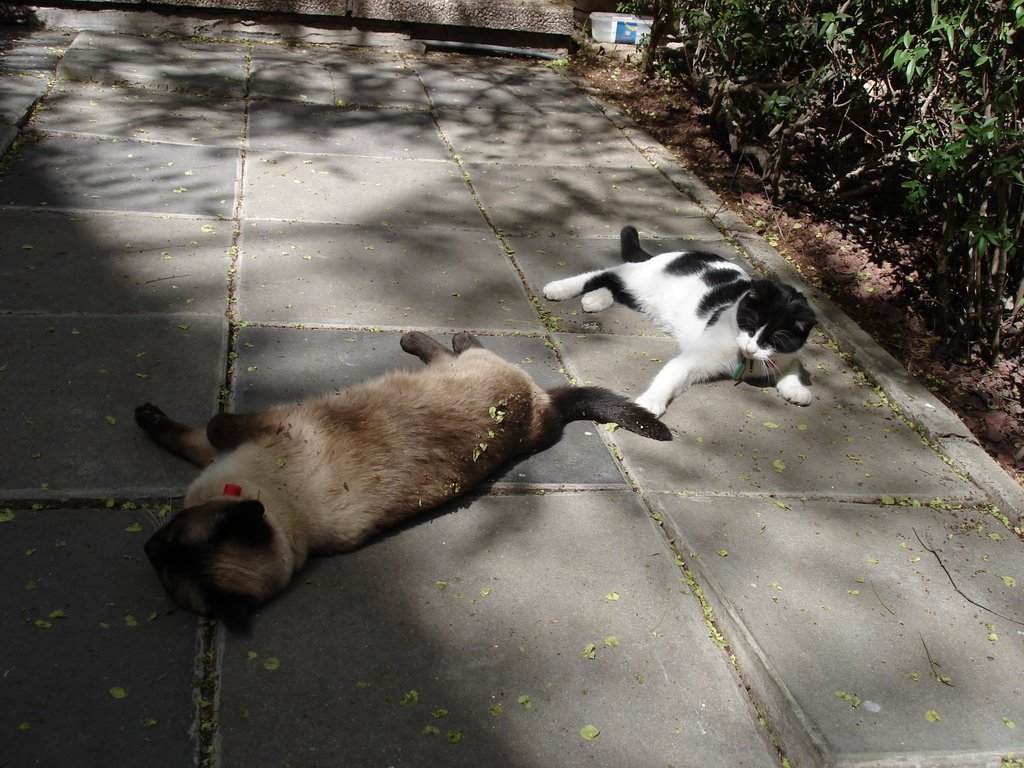
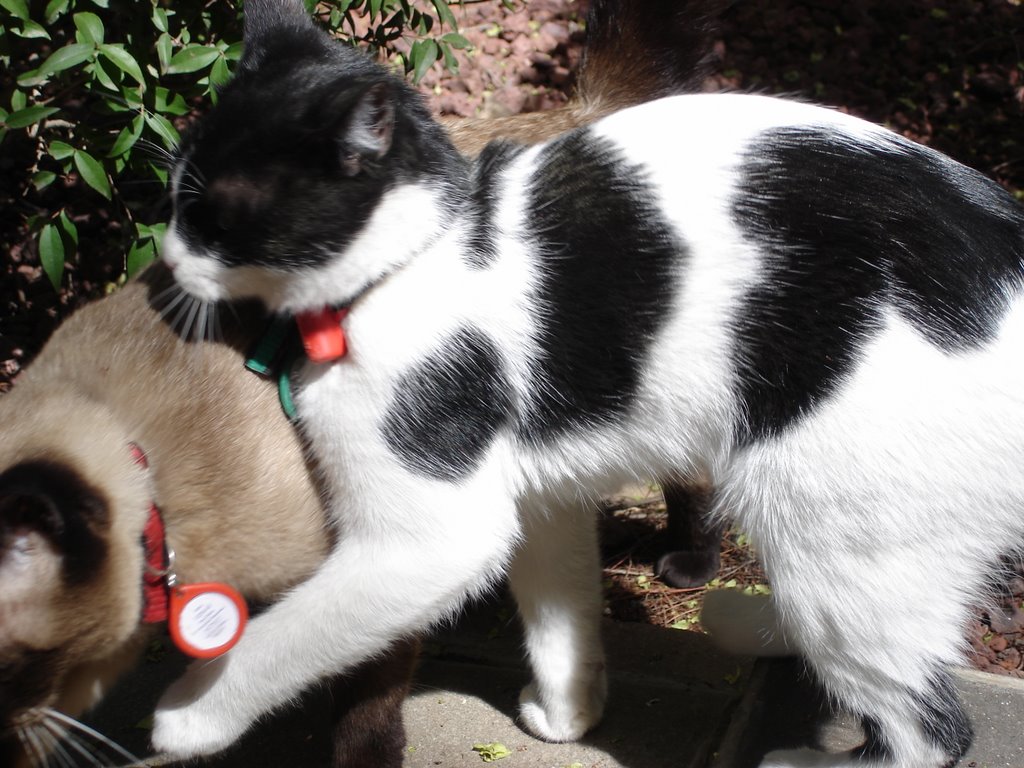
I give you Her Ladyship, benchwarmer:

Shabbat shalom.
(Check out the Friday Ark at the Modulator. This week’s Carnival of the Cats will be up on Sunday at K. T. Cat’s Scratching Post.)
I give you Her Ladyship, benchwarmer:
Shabbat shalom.
(Check out the Friday Ark at the Modulator. This week’s Carnival of the Cats will be up on Sunday at K. T. Cat’s Scratching Post.)
Missy slowly wakes up from a doze in the yard:
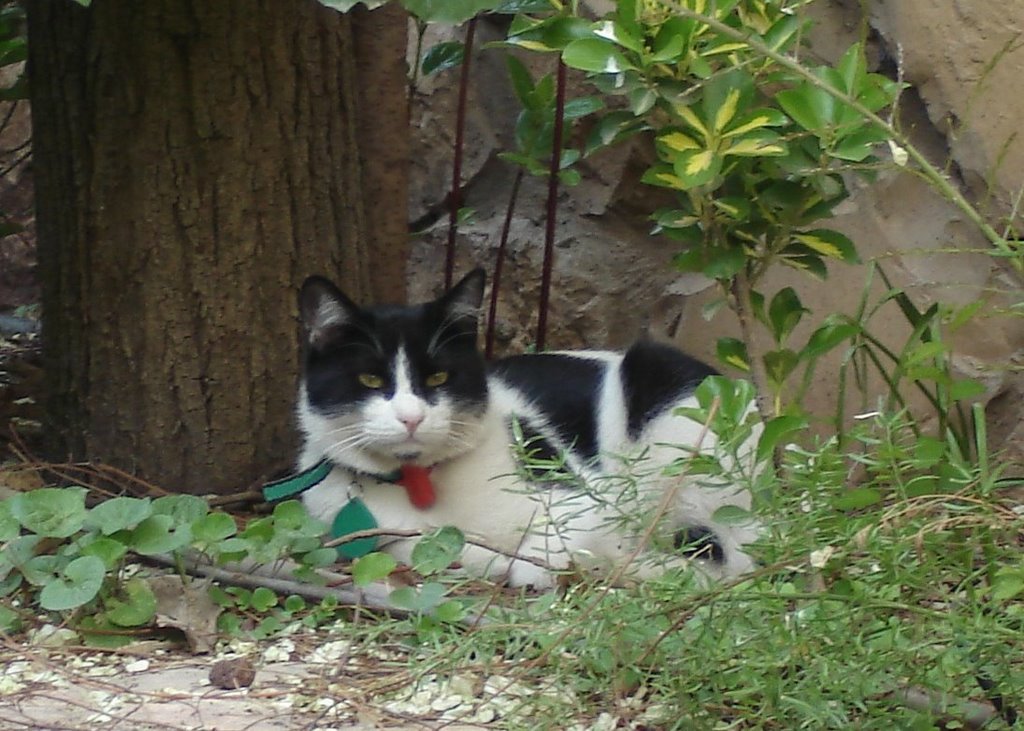
Today, I saw a cat colony near my workplace. Here’s one member, a young orange tom, sleeping:
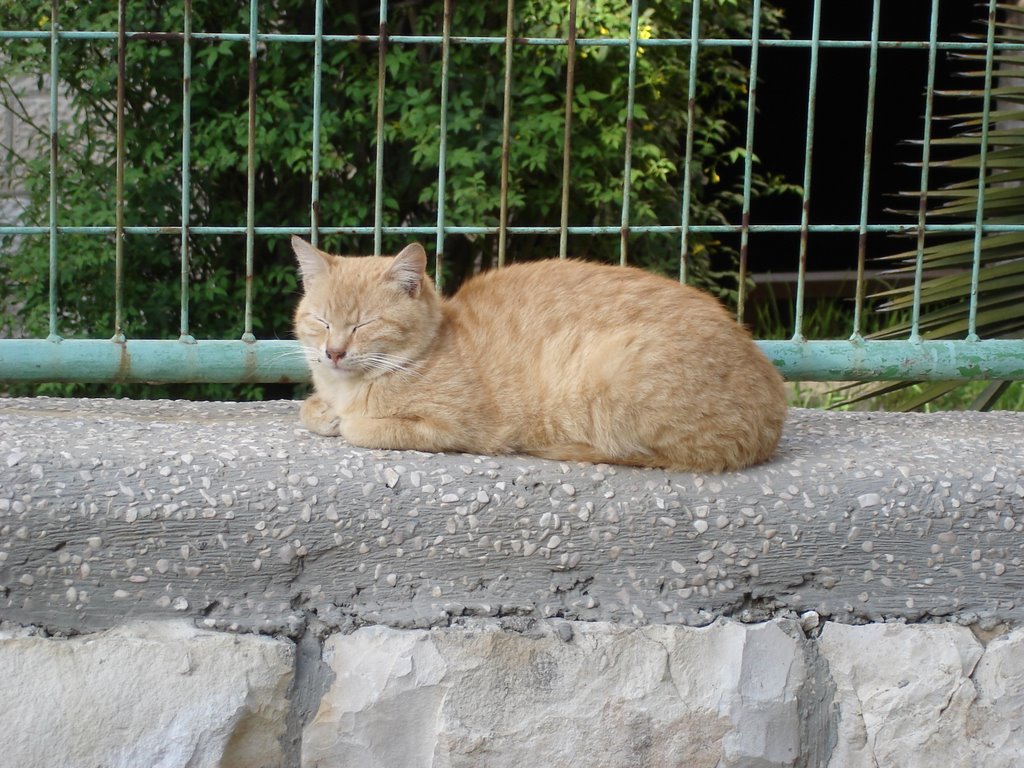
A lovely calico lady:
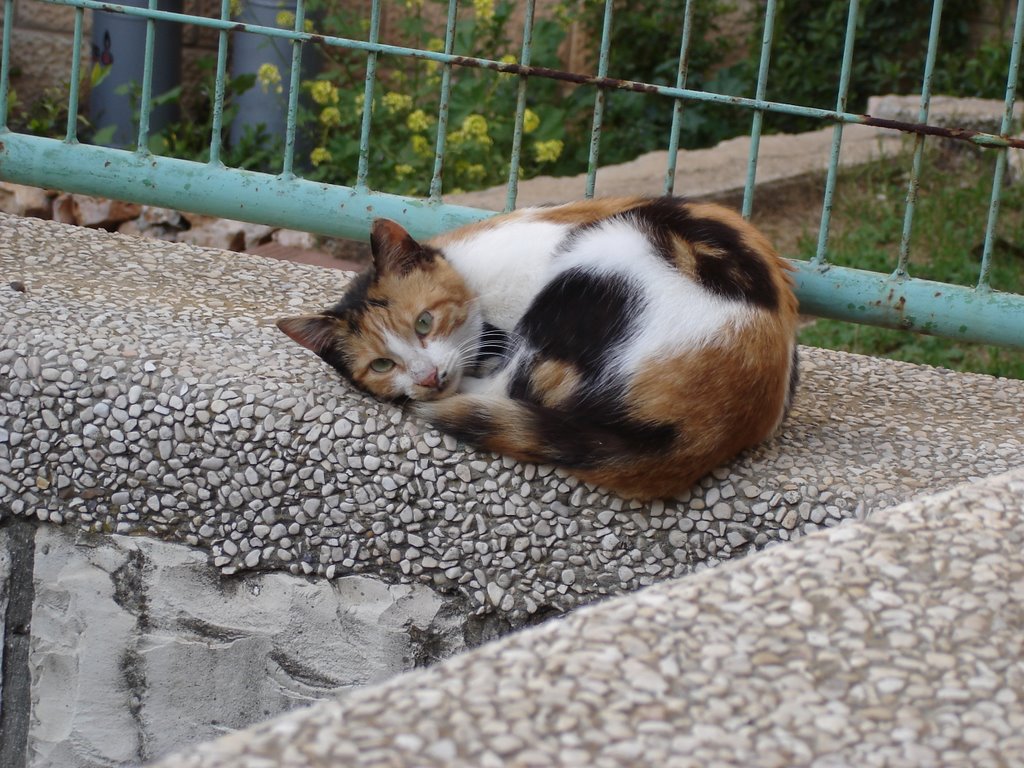
Here are some of their friends, posing for the camera:
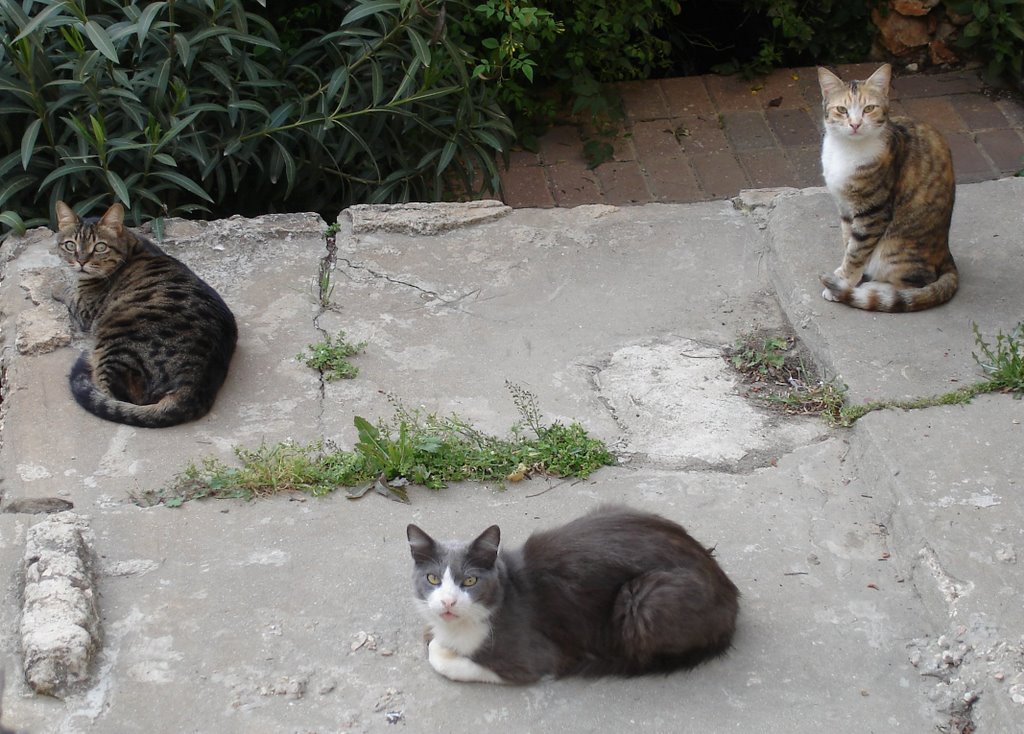
Check out the Friday Ark at The Modulator. This week’s Carnival of the Cats will be up at Pets Garden Blog.
When we see fruit trees in bloom for the first time in the spring, we recite a special blessing called Birkat ha-Ilanot, the Blessing of the Trees. This blessing is recited once a year. The text follows in Hebrew, in transliteration and in English translation:
ברוך אתה ה' אלהינו מלך העולם שלא חסר בעולמו כלום וברא בו בריות טובות ואילנות טובים להנות בהם בני אדם.
Barukh atah, Adonai, Eloheinu, Melekh ha-olam, she-lo hisar be-olamo kelum u-vara vo beriyyot tovot ve-ilanot tovim lehanot bahem benei adam.
Blessed are You, Eternal our God, Ruler of the Universe, who let nothing lack in His universe and created within it good creatures and good trees in order to give pleasure to human beings.
(In the Hebrew blessing, the word “davar” is sometimes substituted for “kelum.”)
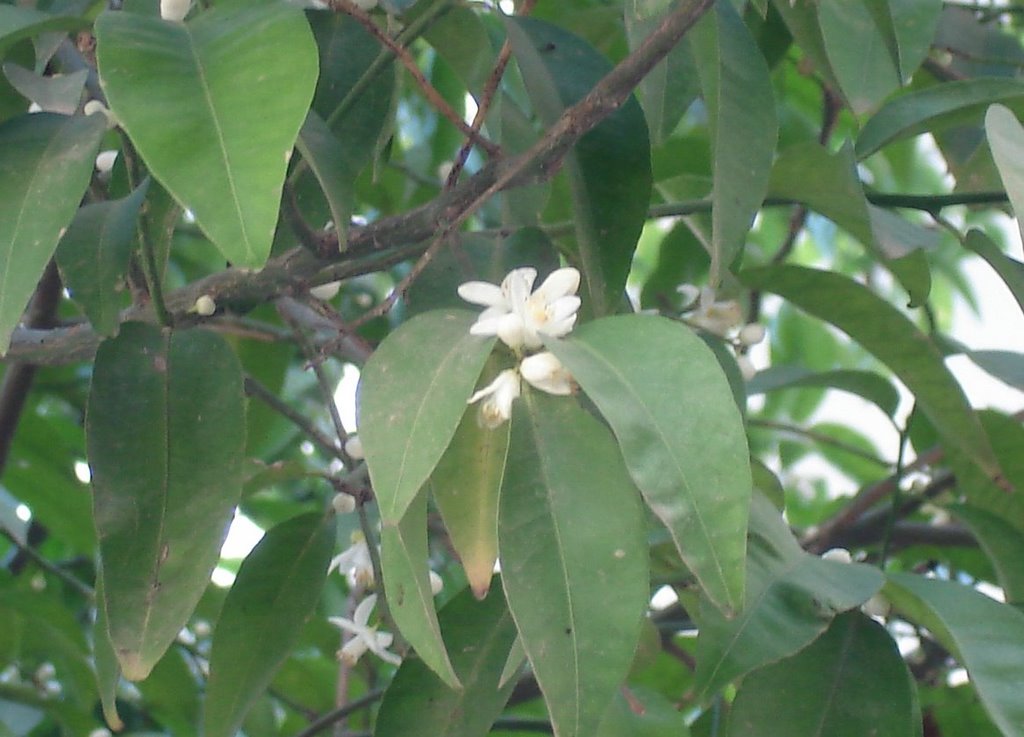
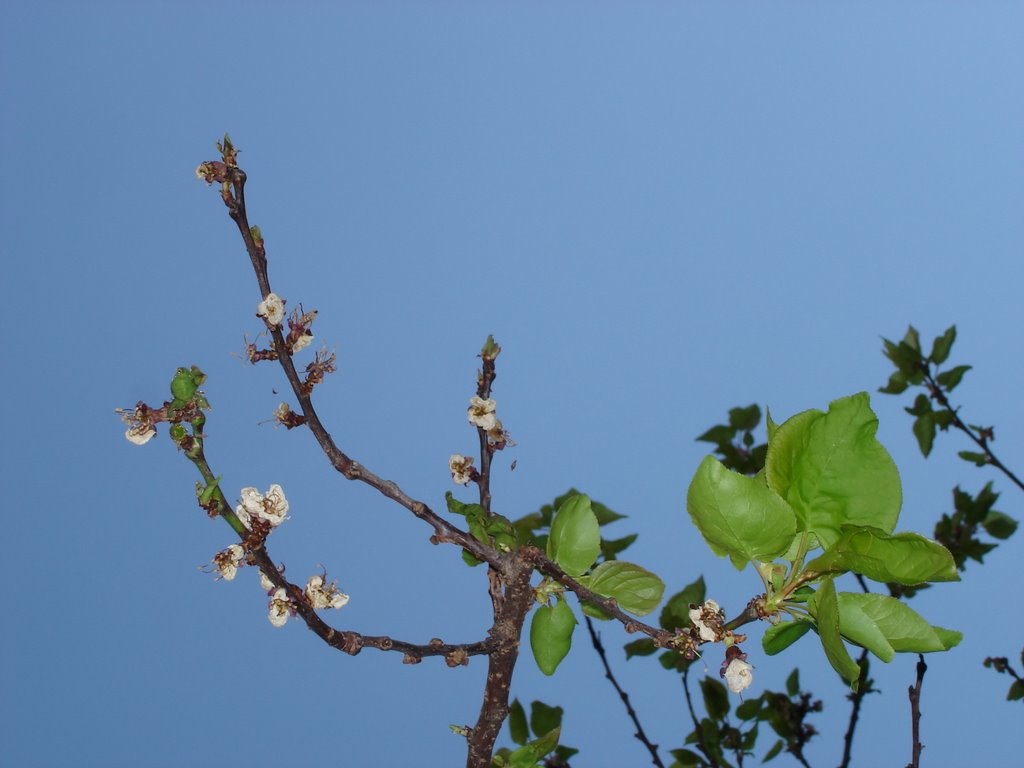
There is a custom to recite this blessing on Rosh Hodesh Nissan (the first day of the Hebrew month of Nissan). There is also a strong custom to recite it over at least two different fruit trees in bloom. Well, seeing that today is Rosh Hodesh Nissan and there are two fruit trees in bloom—an orange tree and a nectarine tree—in the yard, out I went. Prayer book and camera in hand, I discharged my religious obligation, took some pictures and enjoyed a good, strong whiff of orange blossom while I was at it.
Here are the orange blossoms:
The nectarine is still in bloom, too:
In religious neighborhoods, many people put up signs containing the words of the blessing next to the fruit trees in their yards and invite passersby to come and make the blessing.
(More information on birkat ha-ilanot can be found here, here and here.)
Finally, if anyone out there can tell me how to vowelize Hebrew in Blogger, please do. I’d appreciate it.
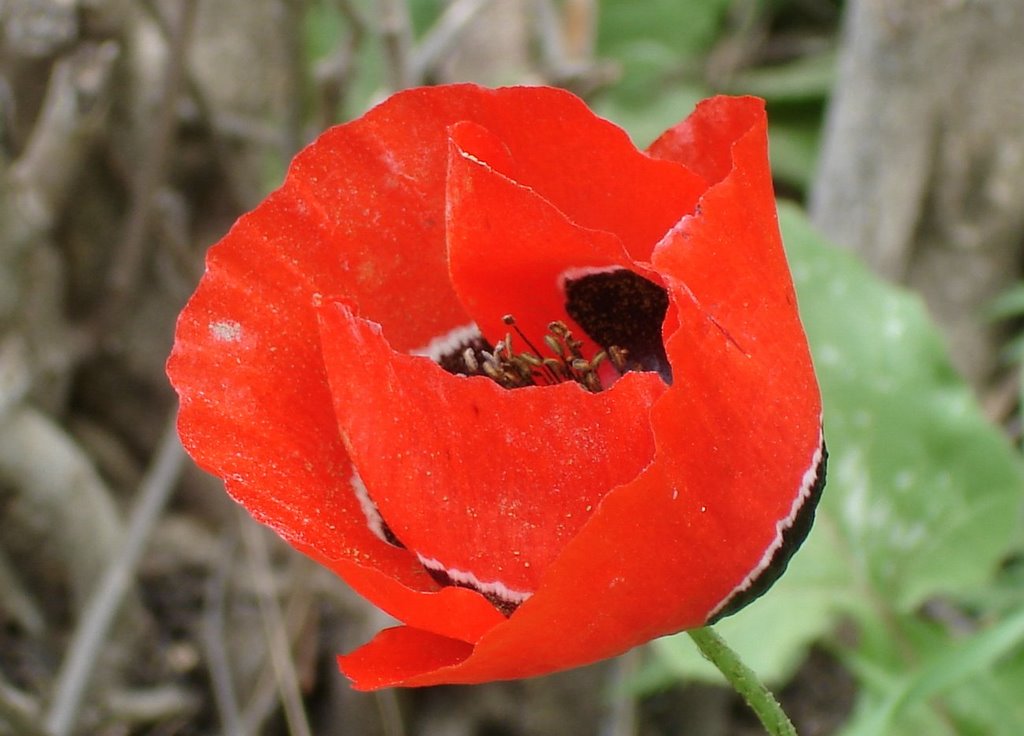
A poppy (I think; I’m forever confusing poppies and anemones):

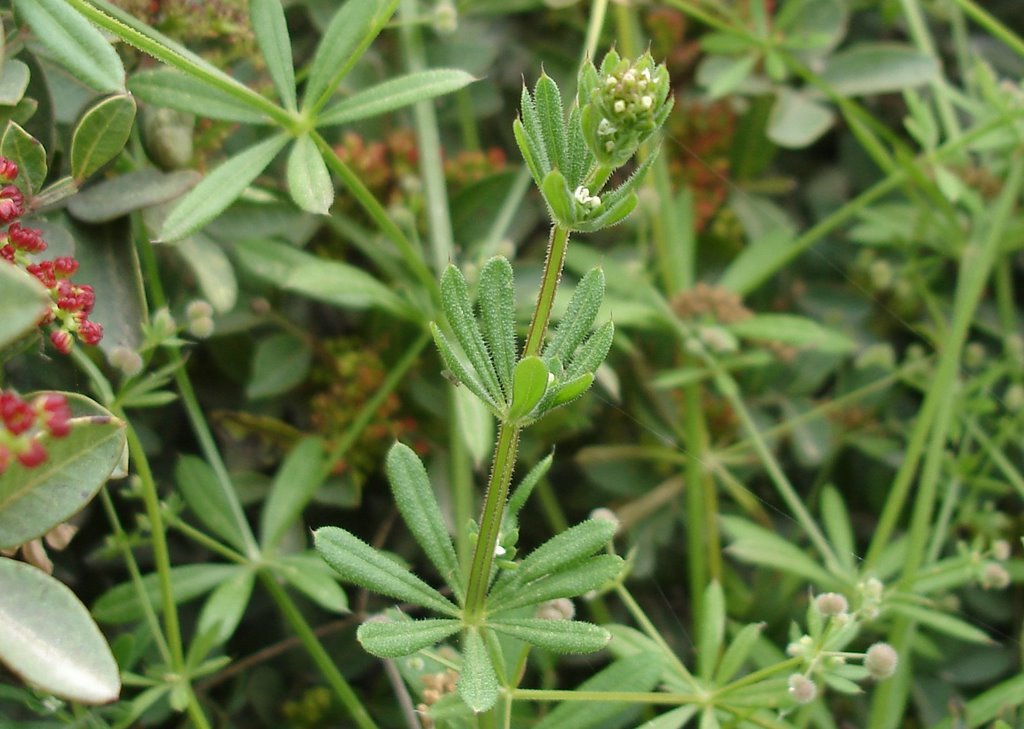
This common plant is the eaved madder, whose edible roots make red dye and contain a great deal of calcium (credit: herbalist and tour guide Nissim Krispil):
A bee on some blossoms (I don’t know what the blossoms are, unfortunately):

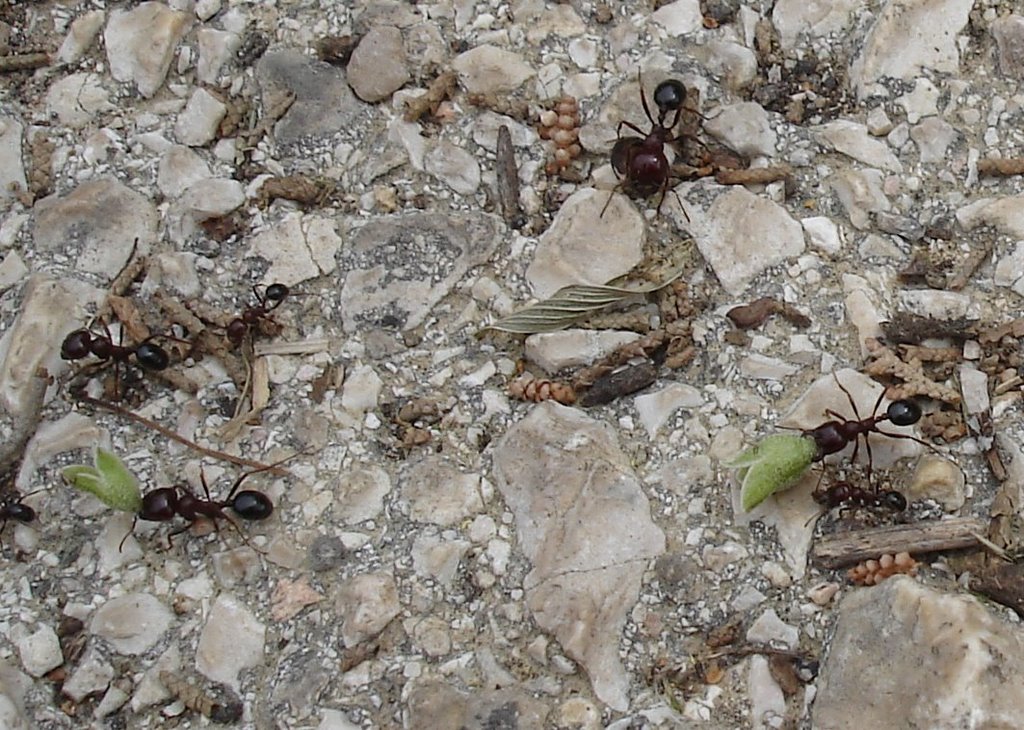
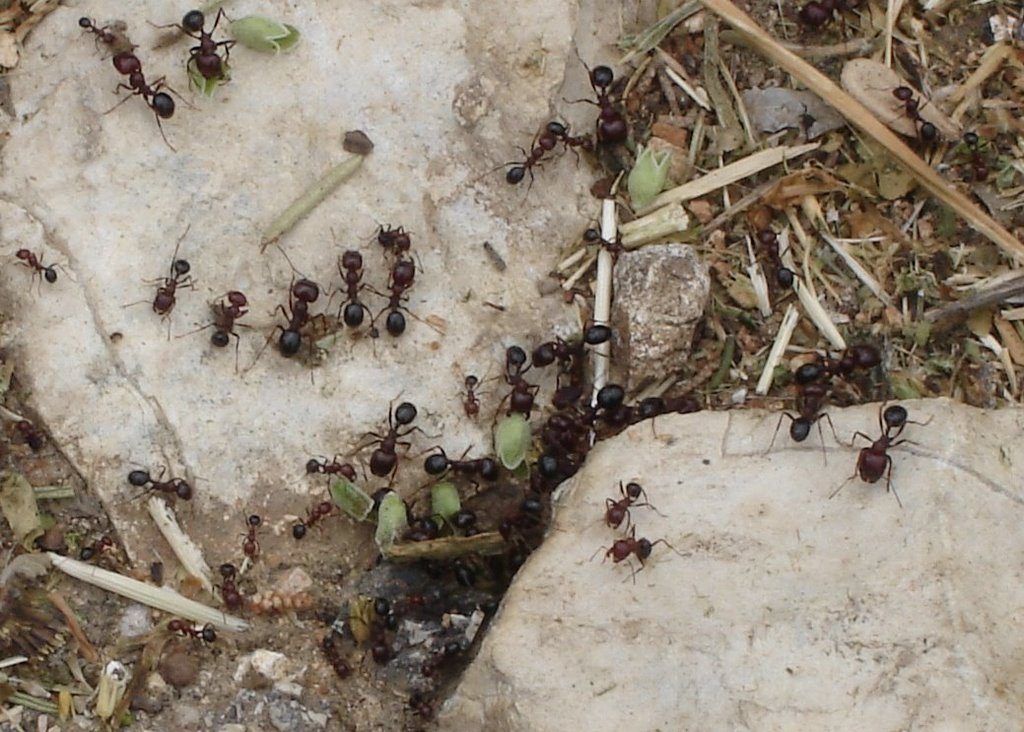
“Lazybones, go to the ant; study its ways and learn” (Proverbs 6:6, JPS translation). Ants carrying rosemary buds to their nest:
Finally, a thistle blossom surrounded by mustard plants:

The parakeets visited the tree outside my window again today, and this time I was ready for them.
(Click on any image to see a larger version.)
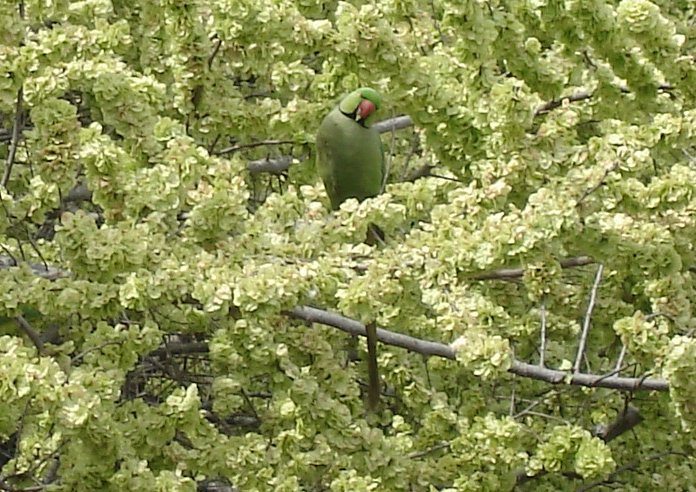
Here is a male (you can tell by the black stripe at his neck):
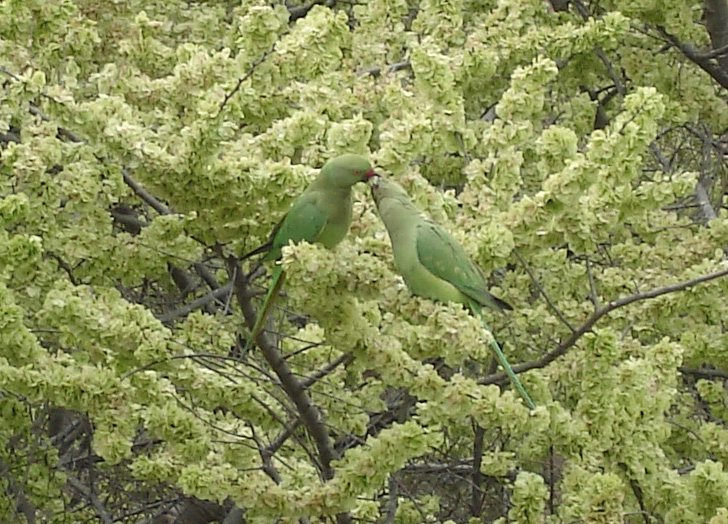
Here are two parakeets interacting. (I don’t know whether they were sparring or courting, actually. Or both, or neither.)
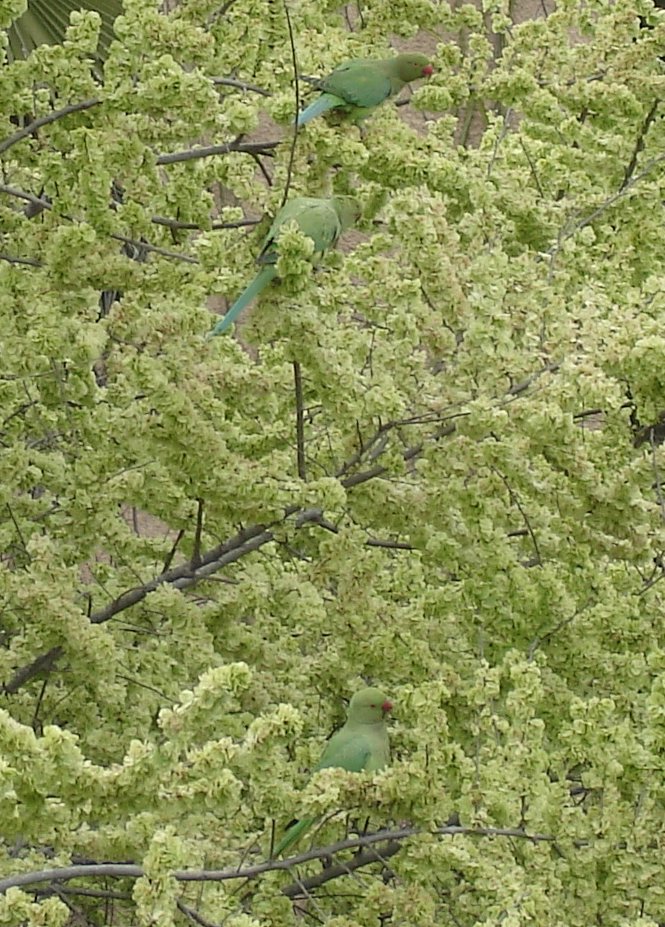
Here are three parakeets together:
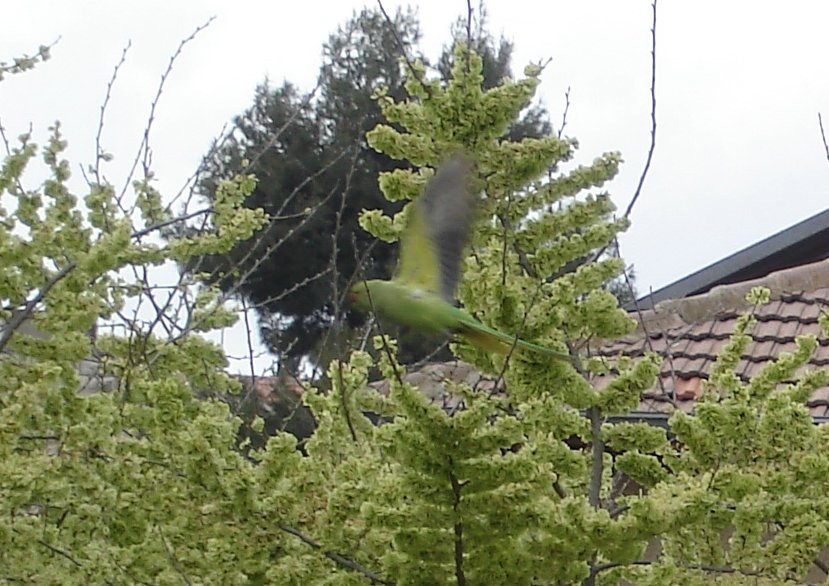
We have liftoff!
Three parakeets, one with wings spread:

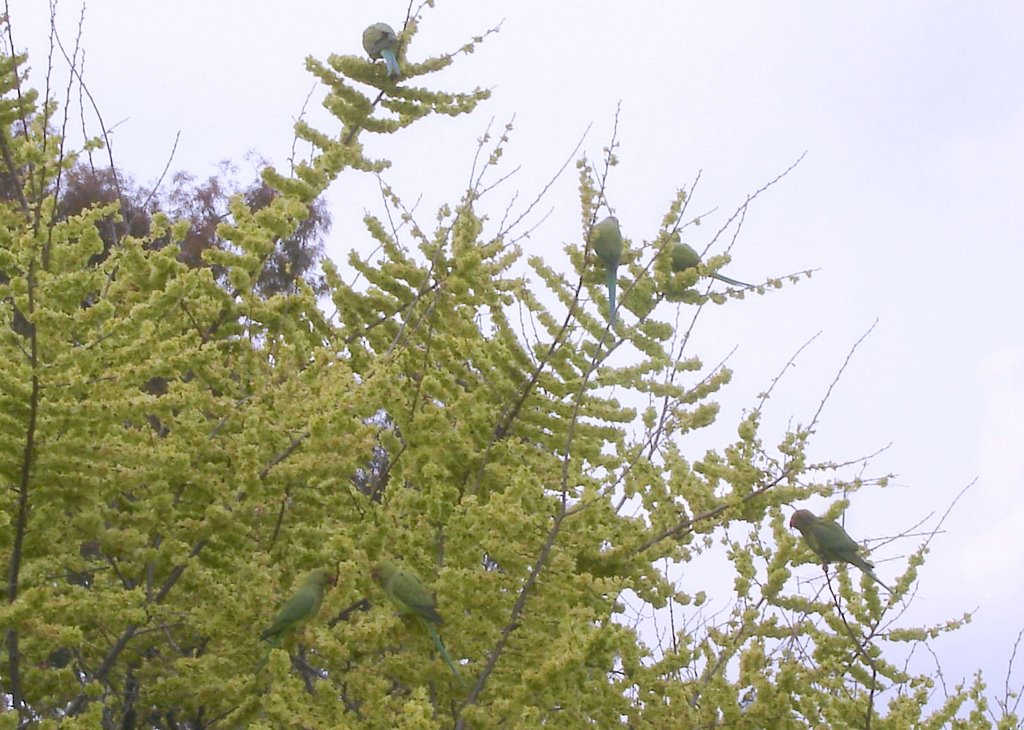
Finally, a shot of all six:
Last Thursday I suddenly heard a parakeet call from across the street. When I looked out the window, there were two parakeets on a distant tree.
I started thinking at them: “Closer ... closer ...” And what do you know—they flew right to the tree outside my window!
Now, before anyone gets any ideas about my ability to attract birds: it wasn’t me, but the fact that the tree outside my window is now full of seeds, and parakeets are seed-eaters. There are dozens of birds feasting on the tree at any time during the day, and it was only a matter of time before the parakeets headed over for a snack.
So here’s a picture of a female parakeet on the tree. When I tried to get closer to take a clearer shot, she saw me and flew off.
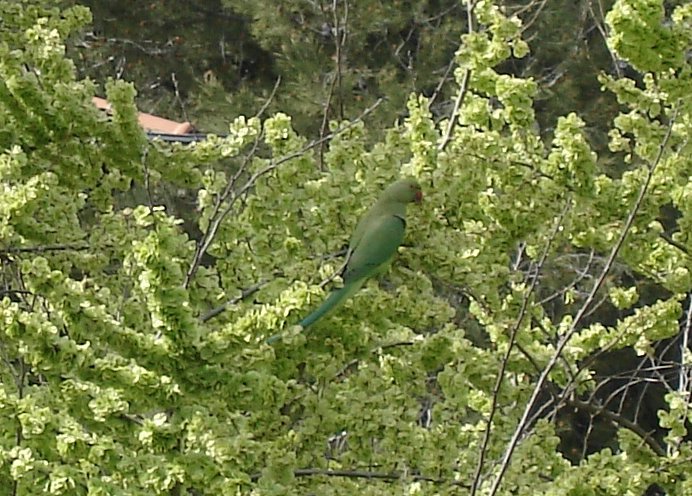
(Click to enlarge.)
I went outside today to take some pictures, and while I was busy concentrating, I felt a bump at the back of my right leg. Fortunately I knew what it was even before I looked, so I didn’t panic.

It was a young tomcat who was just as interested as I was in the birds I was trying to photograph.

A dose of grass ...

A peaceful meeting with an acquaintance ...

I met this lovely black cat on the way home.

On my way, I noticed this sign for the first time ...
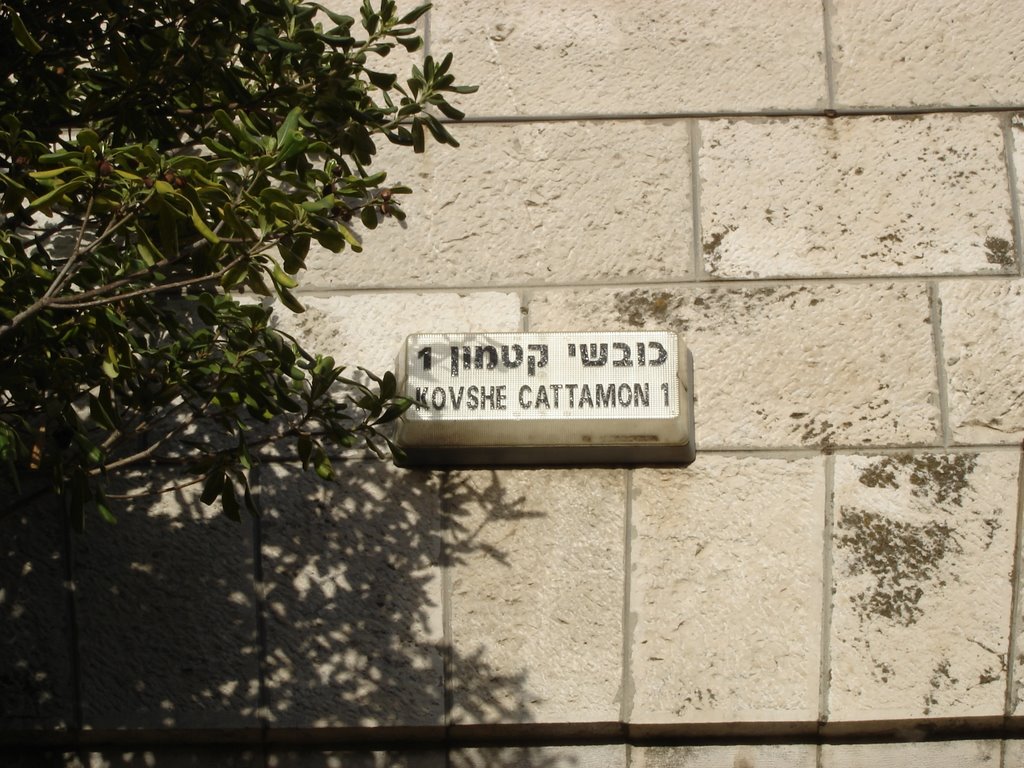
The actual spelling of the name of the street is “Katamon,” but I think I like this spelling better.
(Click here to read some history of Jerusalem’s Katamon neighborhood. Scroll down to the second item: San Simon Monastery, Jerusalem.)
(Click on each photo for a larger view.)
A blackbird:

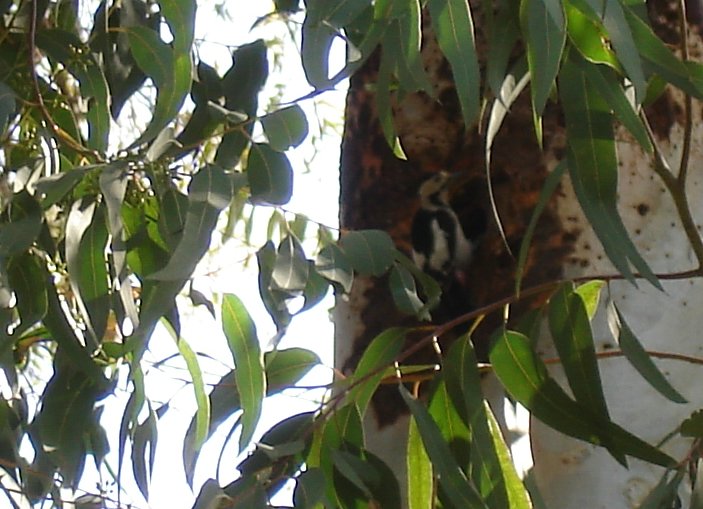
Here is a woodpecker in the very same spot on the eucalyptus tree where I photographed the parakeet last week, proving what my tour-guide friend told me: that the parakeets and the woodpeckers are in competition for living space.
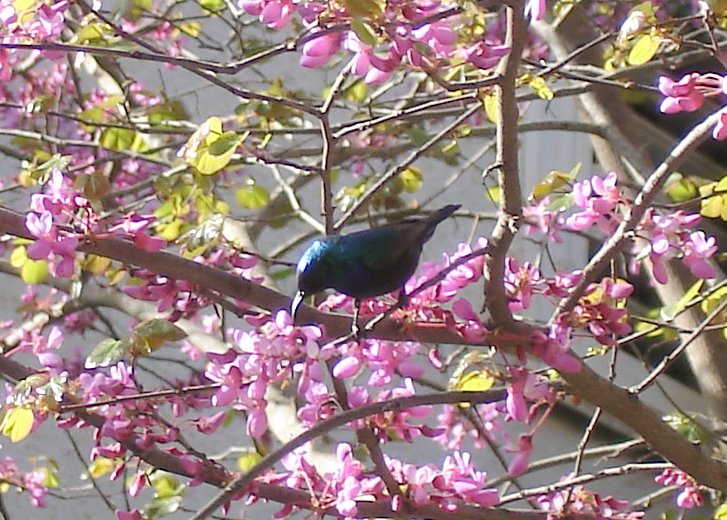
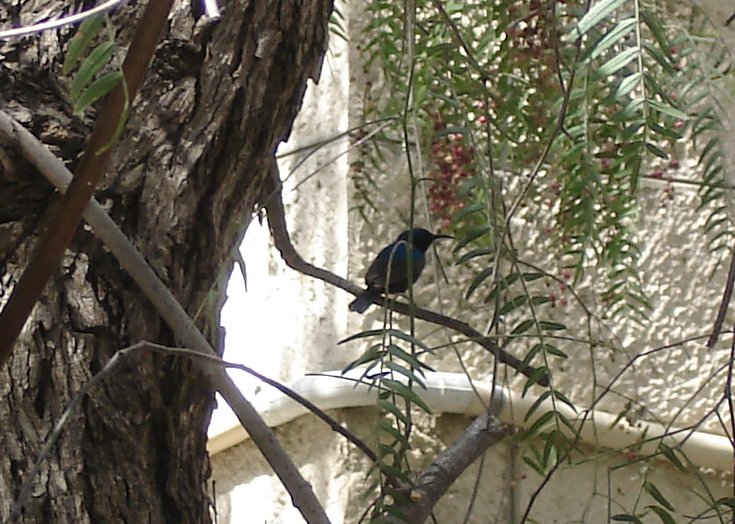
Here’s my best shot yet of a Palestine sunbird (Hebrew: tzufit Eretz-Yisraelit):
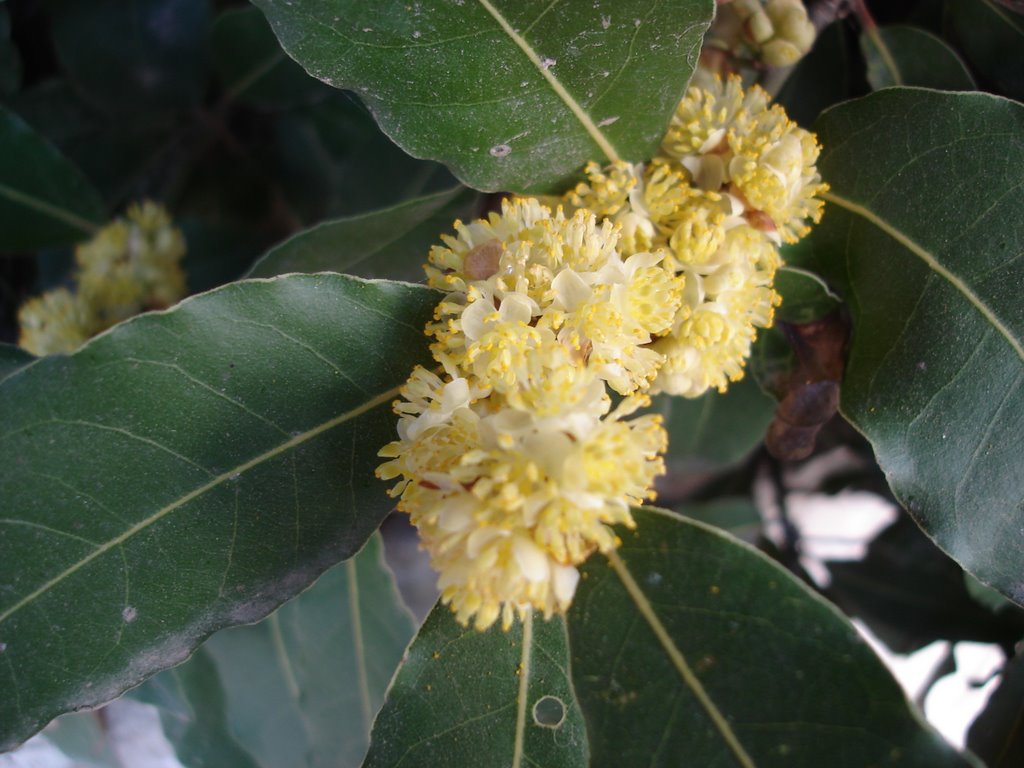
Here is a flower close up. I don’t know what it is, but I believe that the blossom forms a large “fuzzball” similar to that of a dandelion once it goes to seed.

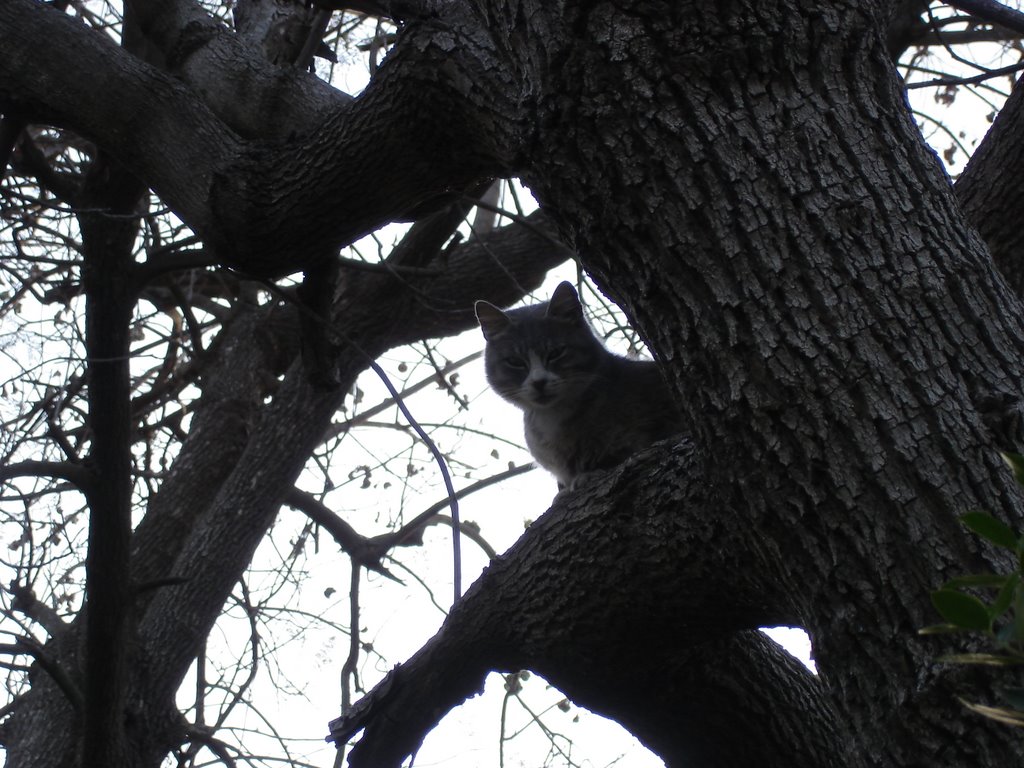
Here’s a cat resting in a tree:
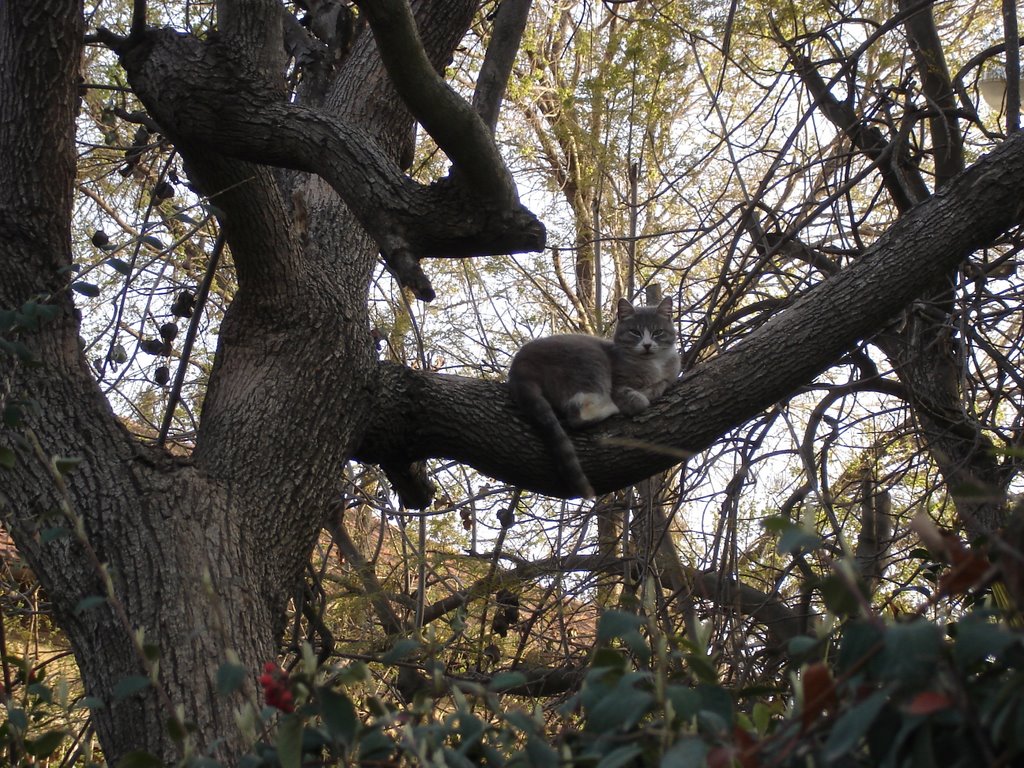
Same cat, different angle:
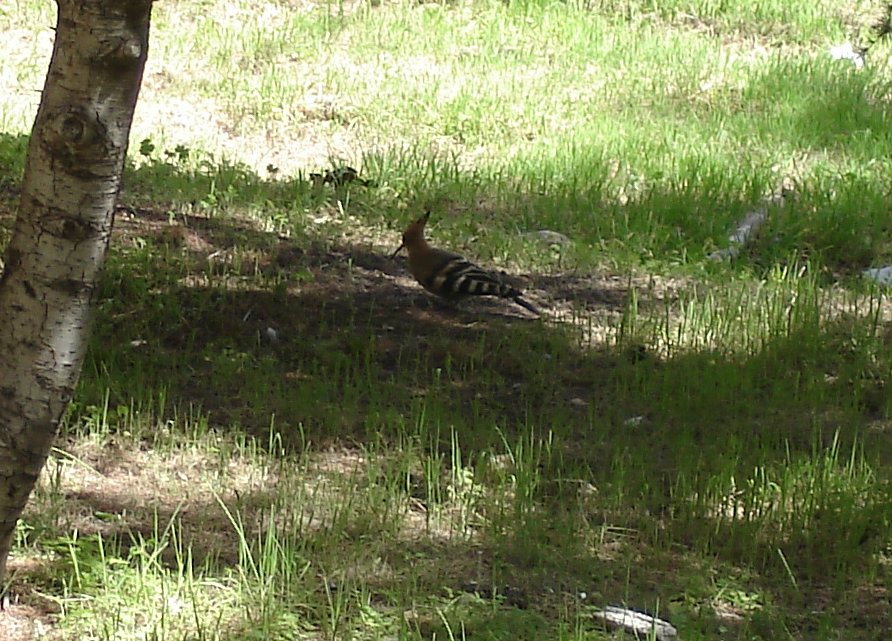
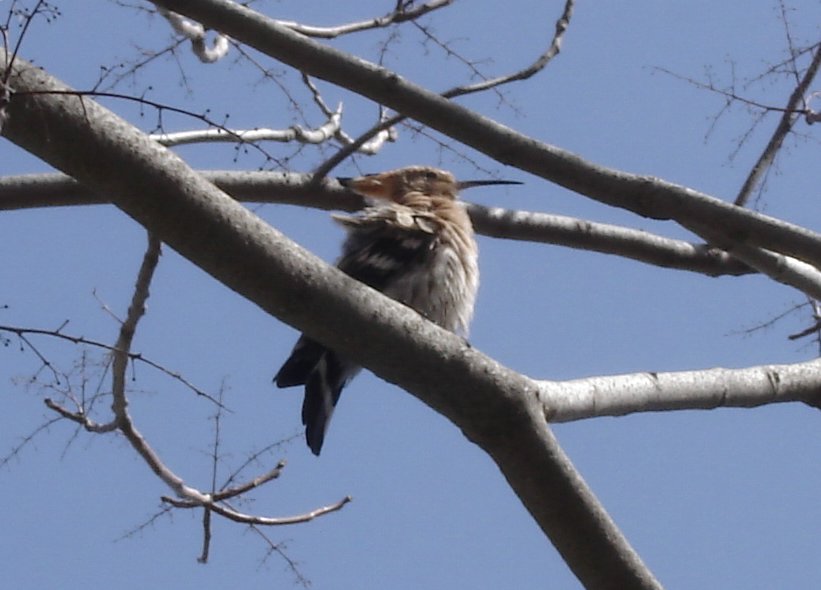
Here are some birds I photographed yesterday after work. First, a hoopoe on the ground and then in a nearby tree. He (she? not sure) was a good sport and let me take lots of pictures. (Say, can a hoopoe be a ham?)
(Click on any of the pictures to enlarge.)


Another attempt at capturing a woodpecker in pixels:

Finally, our local wild parakeets. My tour guide friend, Dani, told me that the parakeets are elbowing the woodpeckers out of their living space and that this is endangering the woodpeckers. Oy.
Well, at least they don’t eat the same food.
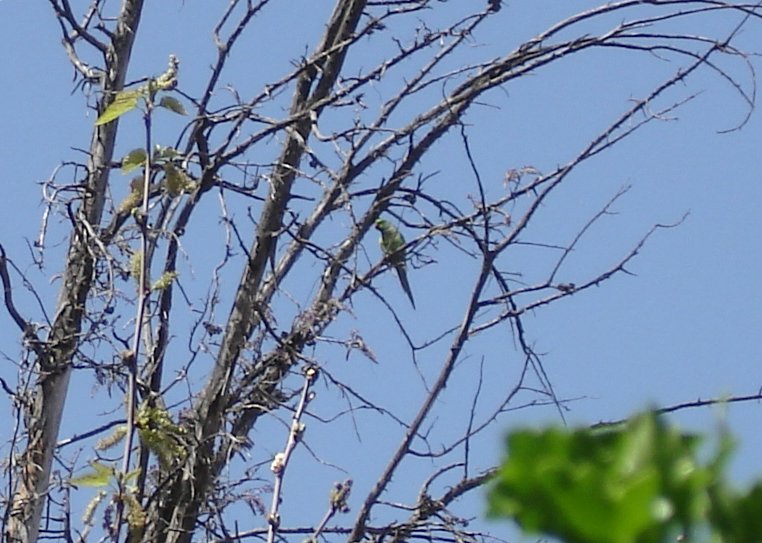
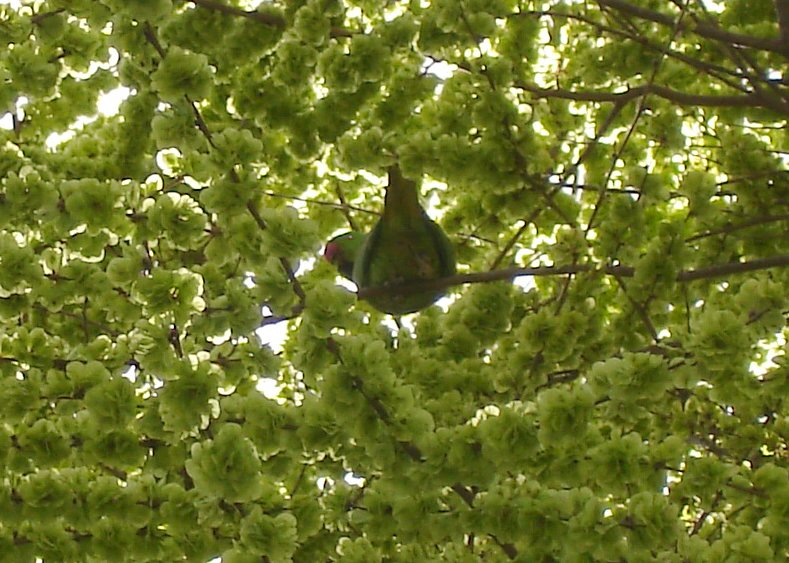

Let’s hope for better bird-related news soon.
The eucalyptus tree near my building serves as an apartment building of sorts for the wild parakeets that have become so much more common throughout Israel over the past several years. My tour-guide friend Dani Barkai who, together with his wife, my friend Libby, graciously puts up with my rhapsodizing about these and other birds, wild plants and every cat I’ve met since infancy, showed me a picture of these parakeets in a 1970s guidebook that describes them as “rare.” They’re not rare here anymore; they’re all over the place these days, and frankly, I’m delighted.
As I was coming home this afternoon, I heard a parakeet chirp (well, more like a screech, actually) coming from the eucalyptus tree. I decided to take a brief detour in order to see whether I could spot the parakeet. Usually that is a losing proposition: the eucalyptus tree is green all year round, and green on green just doesn’t work.
But this time it did. A man from the building next door was outside doing some work in the yard, and he showed me where the bird was: preparing a nest in the trunk of the tree. So out came the camera ...

(“Honey, move over and let me in, quick! The paparazzi’s here again!”)
... and then the flash conked out. (Technology is wonderful ... when it works.)
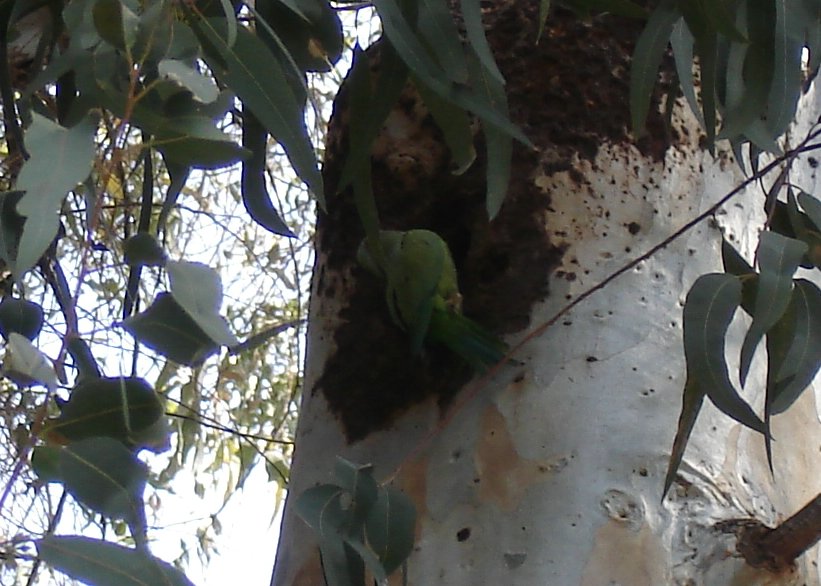
But I still got my photos, and now that I know where the parakeets live, I plan to get more. Lots more.