Friday, June 30, 2006

Cats and Greenery

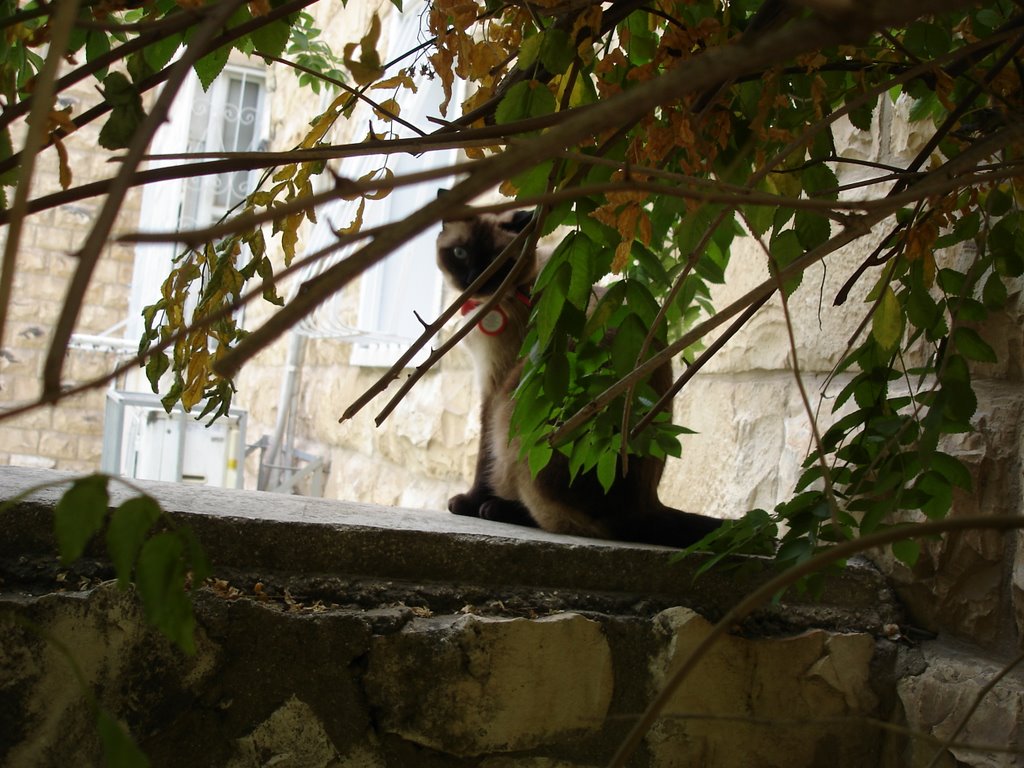
First, some downtown greenery (there are even some cats in the foreground:

Downtown street

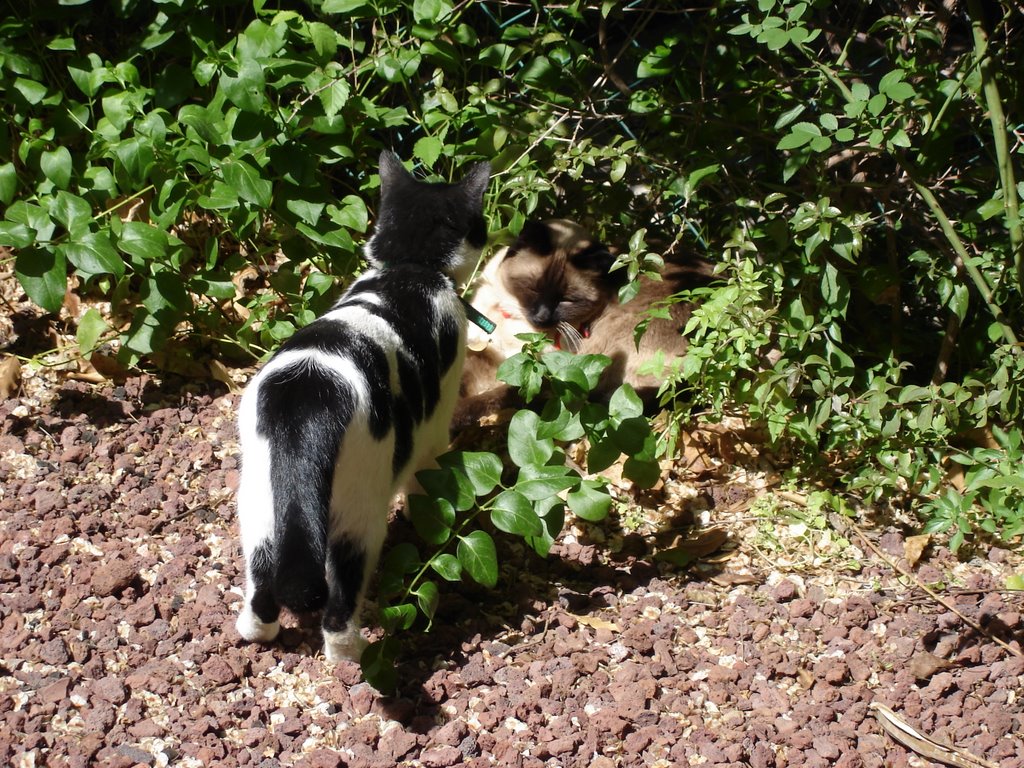
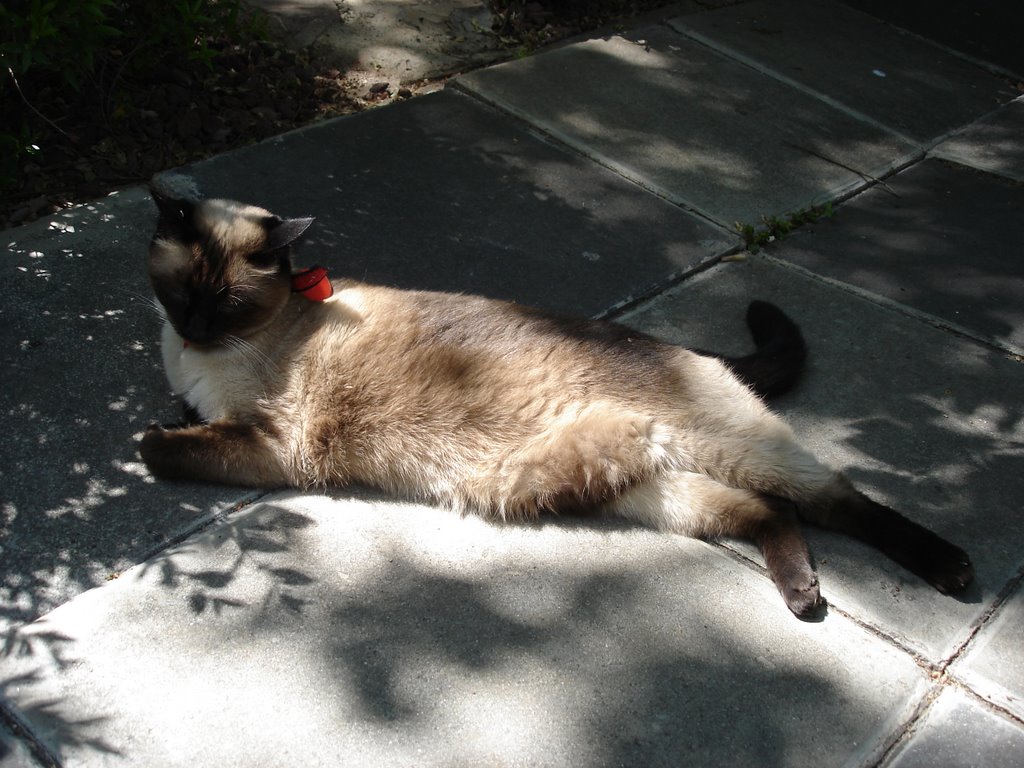
Now for the cats. For your delectation, Missy and Her Ladyship in the garden:

Missy and Her Ladyship

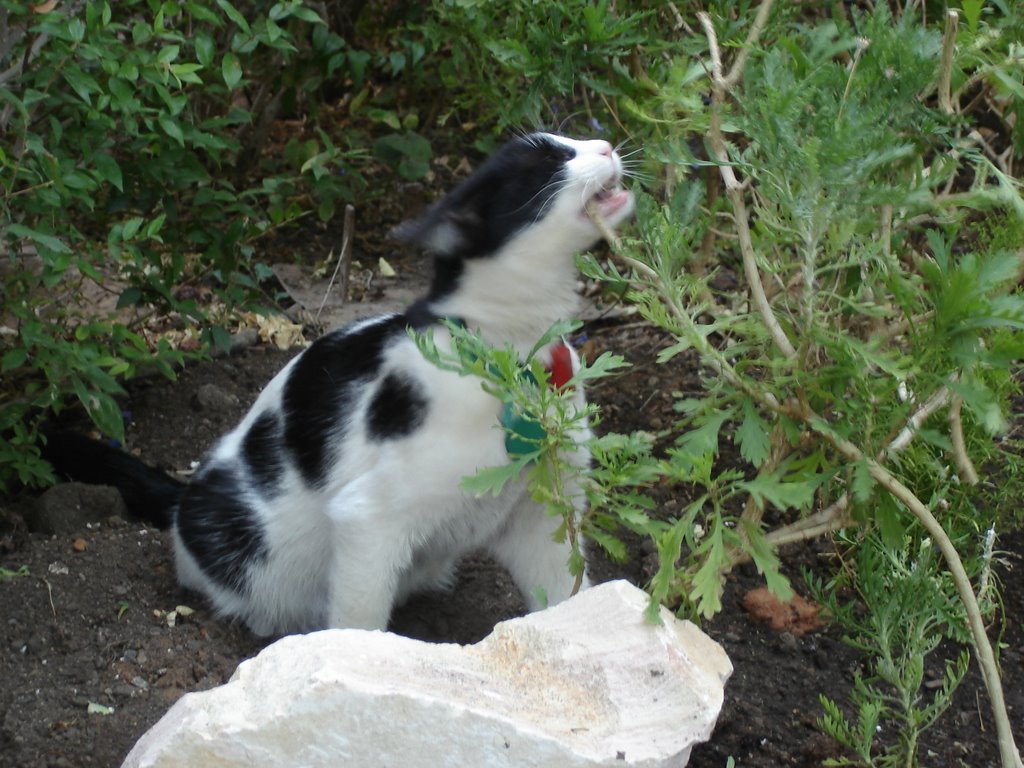
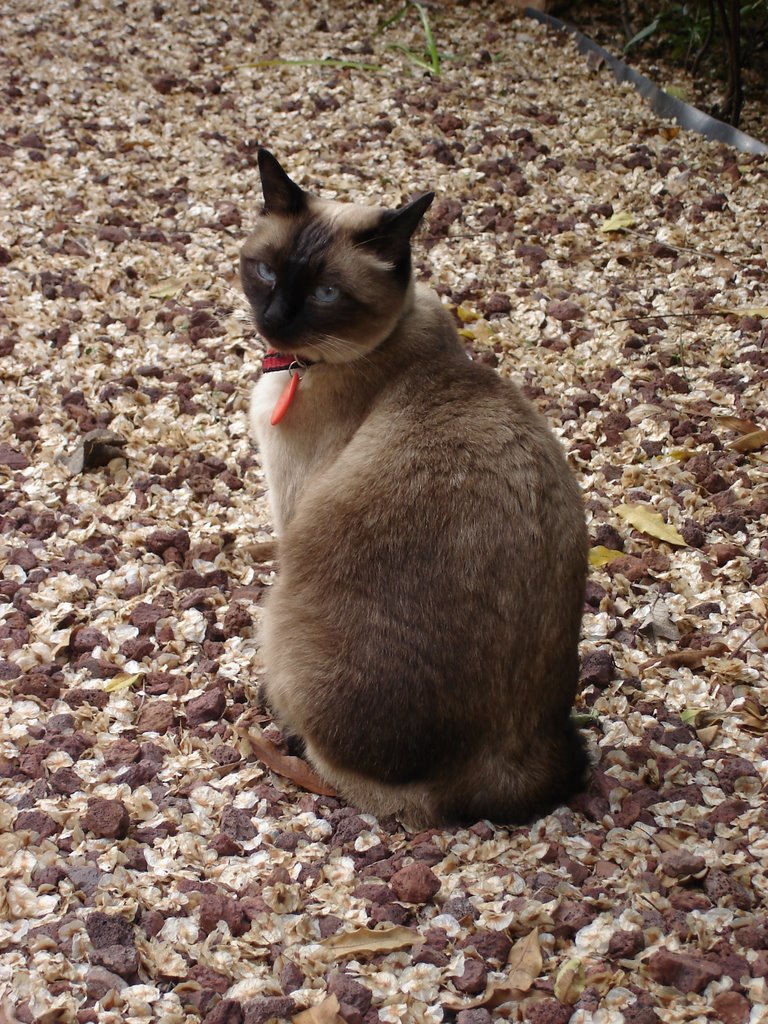
Missy samples a plant:

Missy samples a plant

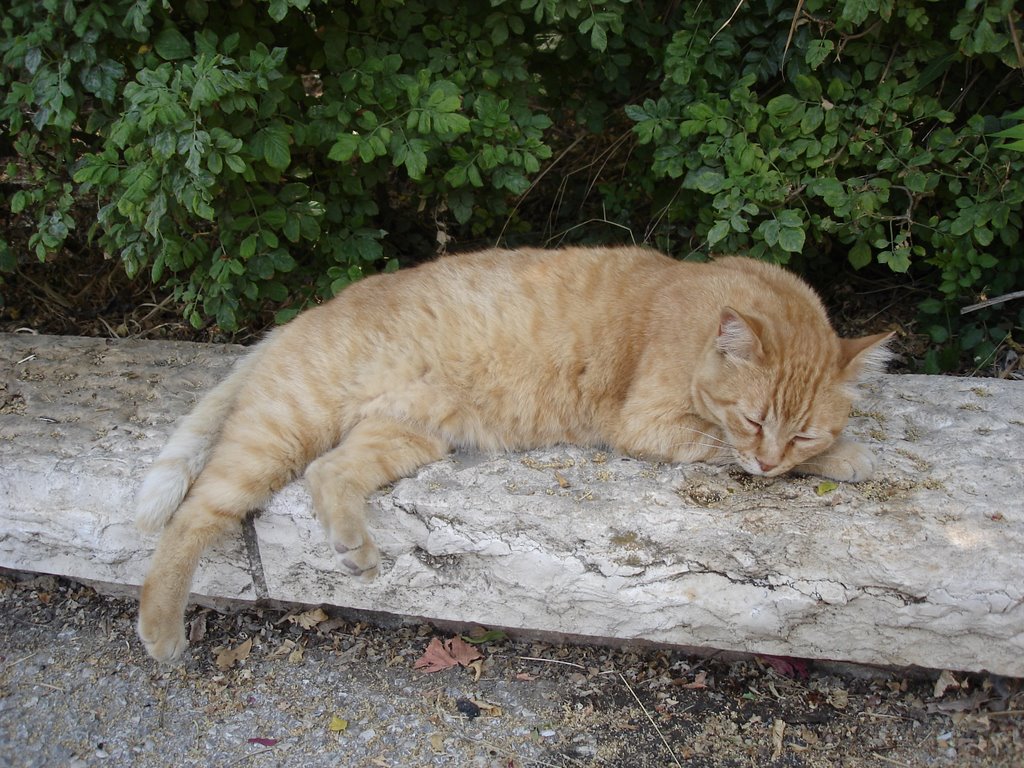
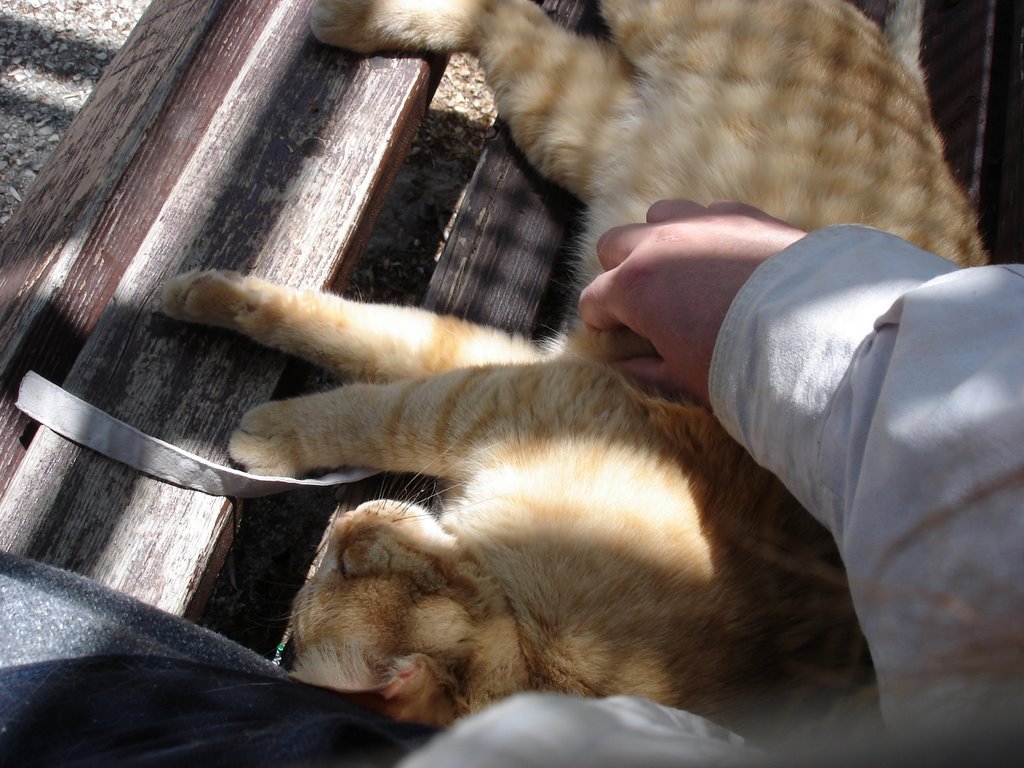
Her Ladyship’s furry belly, with paw:

Her Ladyship’s belly, with paw

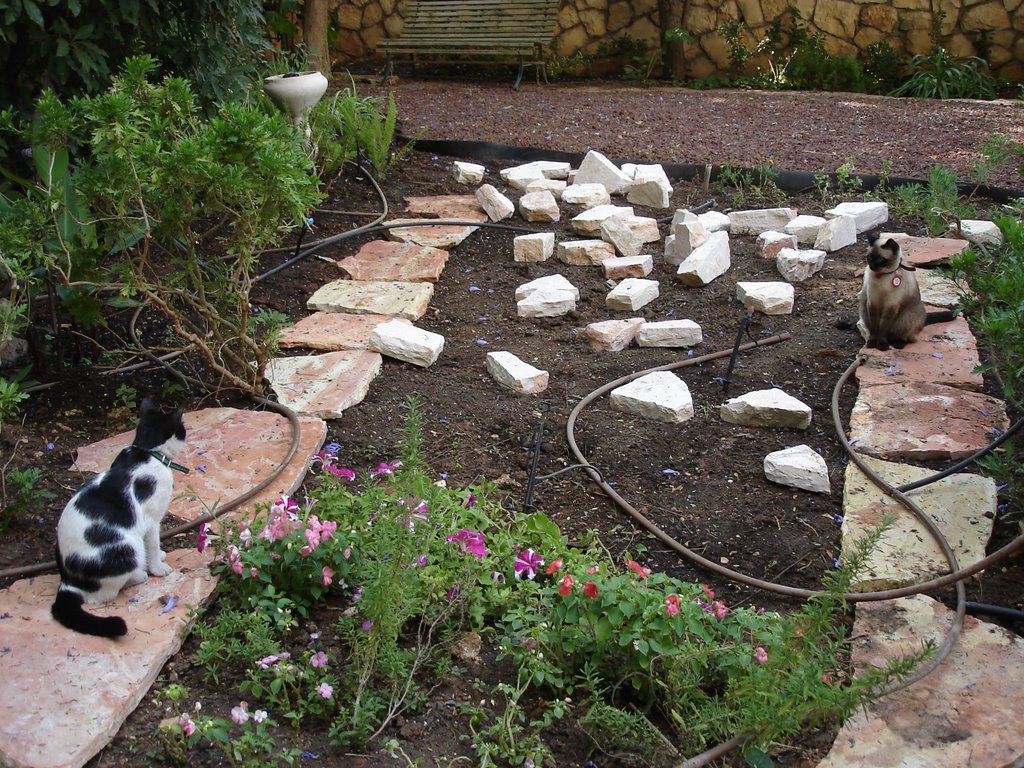
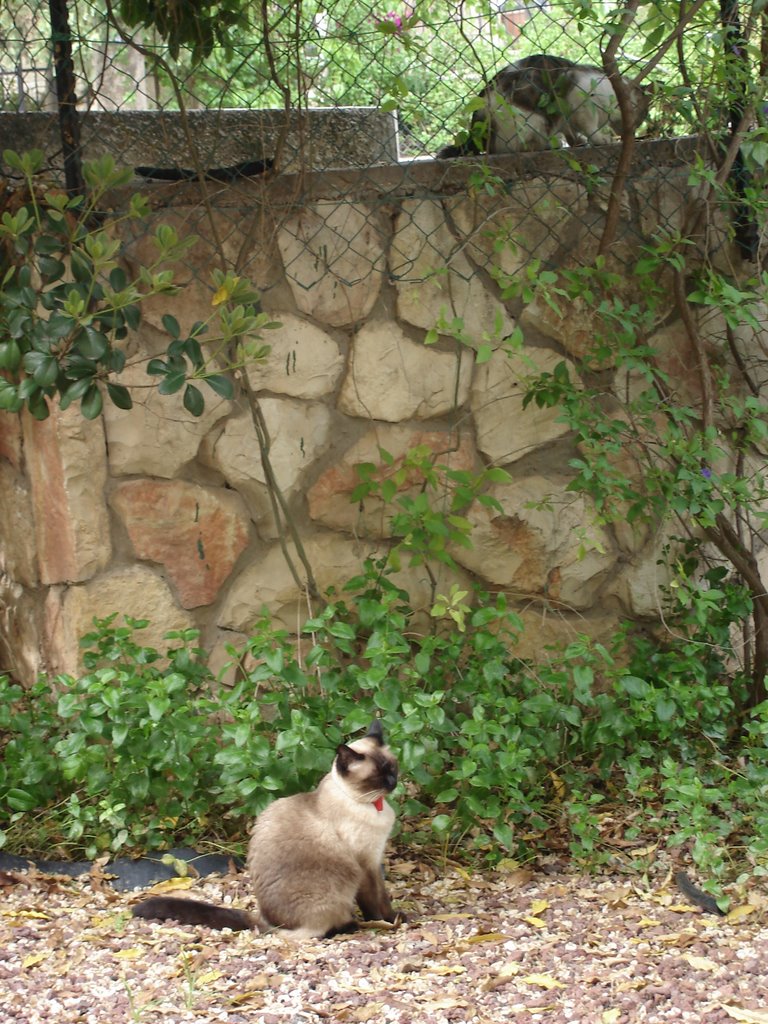
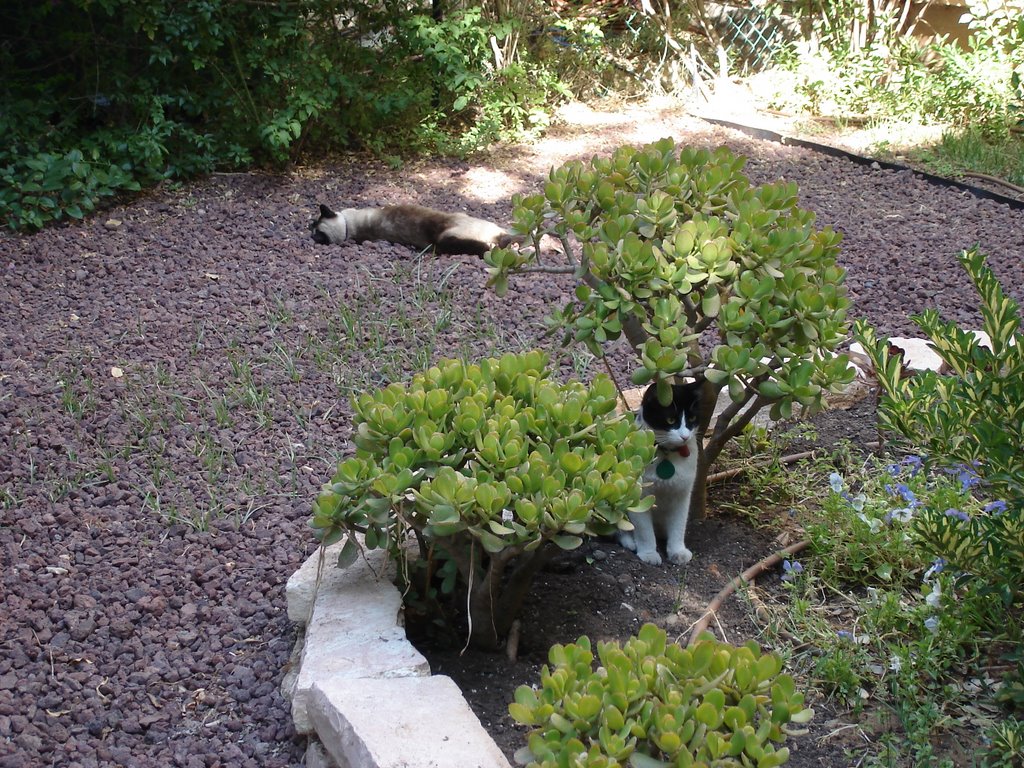
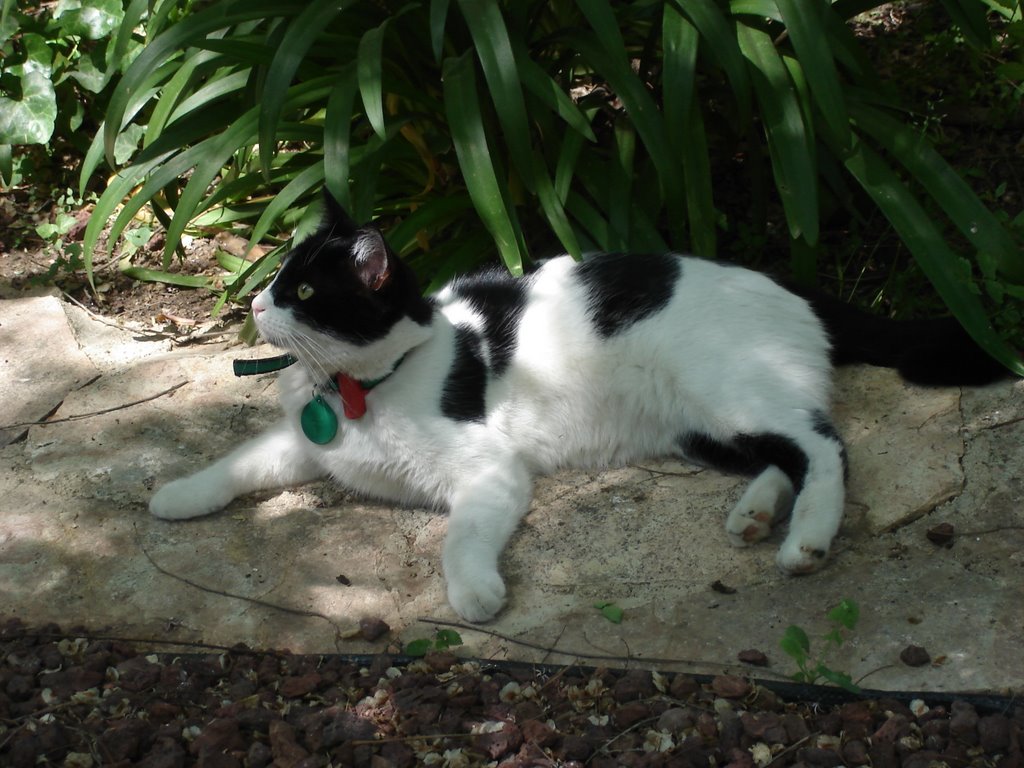
A balance of cats in the garden:

Garden cats

Catch this week’s Friday Ark up at The Modulator. The Carnival of the Cats will be up at Watermark on Sunday.

Wednesday, June 28, 2006

Just a Small Technical Note

Salamone Rossi was an Italian Jewish composer and musician who lived during the Renaissance. You can find out more about him here.

I first made the acquaintance of Rossi’s music last Hanukkah, when I sang one of his choral pieces during a benefit performance for a local synagogue. Well, “made the acquaintance of” is putting it a bit mildly. I was instantly blown away by this fantastic music and deeply regretted not having discovered it much earlier in my life.

So, some time later, I sent away for some CDs of Salamone Rossi’s choral synagogue music. They arrived a few days ago, and I have been listening ecstatically ever since. For those who are interested, it’s both volumes of The Songs of Solomon: Music for the Sabbath and Holiday and Festival Music. (Rossi also wrote secular music in his native Italian, which I hope to get for myself soon as well.)

But that’s not the real reason I’m writing this post.

As soon as I removed the plastic wrapping from the first CD and opened it, the following text leaped out at me from the disc:

NOTE: For optimum playback, the listening level should be adjusted so that the first 10 seconds of track 1 have an average sound pressure of 80 dB SPL A-weighted, and a peak sound pressure level of 84 dB SPL A-weighted, measured from the listening position.

This kind of remark doesn’t appear on most CDs I’ve seen. Intrigued, I opened the booklet and found an entire section of technical information, including a list of every microphone and other piece of equipment that had been used to create the CD. And as I scanned all this technical data, barely able to understand what I was reading, I closed my eyes for a moment and smiled to myself. Ray would have gotten an enormous kick out of seeing this, I thought. He would have been delighted.

You see, Ray didn’t just know about sound. Ray knew sound. I could swear that the man could see sound waves right in front of him as easily as I can see my alarm clock in the morning. He also spoke its language. As I typed the technical note above, I felt like I was copying words from an ancient and foreign tongue. But Ray was right at home in it—and he could easily translate it into a language that laypeople could understand. And his translations were always generous and gracious and fun.

In my mind’s eye, I can see what Ray would have done if I could have shown him the CDs. He would have listened to them from start to finish, figuring out which recording techniques had been used without needing even a glance at the booklet. With his amazing sense of sound, he probably would have been able to tell where each individual singer had stood in relation to the microphone. Then he would have suggested techniques of his own. And based on what I know of Ray’s work—far too little, to my everlasting regret, but enough to appreciate how amazing it was—it’s likely that his techniques would have been even better.

Come to think of it, Salamone Rossi and Ray had quite a few things in common. Both were Renaissance men (even if one of them lived during the actual Renaissance while the other lived several hundred years later), of Italian descent, independent thinkers, excellent composers and musicians and very much ahead of their time. So perhaps it’s no coincidence that my CDs of Rossi’s music arrived right around the time of Ray’s birthday, just a few days ago.

And if it wasn’t a coincidence, then perhaps I can let myself believe that maybe, just maybe, all that technical information on the CD, which for me might as well be ancient Greek, was in fact the briefest flash of a wink and a grin from the Other Side.

(Visit Ray’s website, and check out his albums, With the Help of Angels and Poor Working Slob, at CD Baby.)

Tuesday, June 27, 2006

A Tale of Two E-Mail Lists

There are several community-based e-mail lists in Jerusalem. One, which I will call List A, is a large city-wide list with at least one thousand members. Another, which I will call List B, comprises several neighborhoods and contains only several hundred members. The stated purpose of these lists is to allow their members to advertise goods and services and share pertinent information. Until recently, I was a member of both.

Several days ago, a message appeared on List A calling upon people to pressure government officials to cancel the World Pride event, which is scheduled to take place in Jerusalem later this year. The message included some offensive and disparaging language. I was amazed to see such a post on List A, since its moderators make a conscious effort to keep it free of politics and controversial topics. So I wrote to them to protest. It turns out that I was not alone: quite a few list members had written to say that such a message has no place on a purely informational list that is open to everyone regardless of their religious beliefs, political preference or sexual orientation.

The moderators of List A responded admirably, promptly deleting the offending message from the archives and issuing an apology. They also offered to help people on both sides of the issue to start their own dedicated e-mail lists, for and against the event, in order to satisfy their desire for self-expression while keeping List A free of controversy.

List B, which is much smaller than List A, is also meant to be an informational, non-political list. So when a similar message appeared there recently, I wrote another letter of protest. (Afterward, two people wrote to me off-list to say “Right on!”) The following day, the same person who had sent the first message to List B sent another, stronger one calling upon people to send protest faxes to government officials. The second message suggested several talking points for use in these faxes, one of which read as follows: “The police would cancel the parade if they thought they could not protect it properly.”

If they thought they could not protect it properly. That phrase set off alarm bells in my mind. Just how does one convince the leaders of a democratic country’s police force—one that has decades of experience dealing with terrorists, to boot—that they cannot protect a civilian event properly?

Why, by violence, of course, either actual or threatened. How else?

I wondered whether the ones behind this message remembered that last year, a man stabbed three people at the Pride Parade downtown. That man is now serving a twelve-year prison term. Oh, and the joke’s on him: the man he stabbed was not even gay.

Feeling that threats of violence—and actual instances of bloodshed—are much worse forms of sacrilege than the most flamboyant parade, I wrote another, stronger letter of protest. As a result, I was kicked off the list without warning or explanation.

I felt a bit disappointed, but not surprised.

Thank goodness for List A, whose moderators are menshes. As for List B: good riddance.

Friday, June 23, 2006

Kitty in a Tree

This cat and this tree have been together for quite some time. I see them frequently when I leave work at the end of the day.

Kitty in a tree

Kitty, kitty in the tree,
What secrets do you have for me?

(Check out today’s Friday Ark at The Modulator. This week’s Carnival of the Cats will be at Pets Garden Blog on Sunday.)

Wednesday, June 21, 2006

A Bloodless Fight Scene, Finally

No actors were harmed in tonight’s performance, thank goodness.

Last night we had another injury: the same cast member who, during the final fight scene several days ago, had gotten a cut on his finger that required several stitches, injured his head during last night’s fight scene. Fortunately it was a minor injury, though bloody; he got medical treatment and now he’s fine. Tonight, the entire cast watched the fight scene silently from the wings, hoping and praying that this time it would go well and there would not be any injuries or blood. To our relief and joy, the scene went smoothly and bloodlessly.

Our only casualty this evening was a sword, which broke while the two actors were practicing the final fight scene before the performance. The sword was repaired and relegated to costume-only status—it can be worn, but never used in a fight again. Fortunately, nobody was hurt by any flying sword parts.

I seem to be coming down with some kind of sinus cold, so I didn't go out with the cast after the show tonight. I could have gone for a bowl of hot soup, but I’m just not up for a late night tonight. A friend of mine who came to see the show brought me home, and I’m headed very soon for bed.

We have two performances left. I will be sorry to see the production end; it’s been a lot of fun.

Tuesday, June 20, 2006

Encounter on Agrippas Street

I was coming from the open-air market downtown, loaded with shopping bags and heading for the bus stop to catch a bus home, when I heard them: at least four excellent singers, two young men and two young women. One accompanied the group on guitar. Like a small choir, they sat on several levels of one of the new round stone seats in the section of Agrippas Street that was recently made into a pedestrian mall. Although the songs they sang were completely unfamiliar to me, they sounded beautiful: graceful, majestic cadences with full, gorgeous harmonies. After only a few moments, I was enthralled.

As I came closer to the group, I saw that I wasn’t the only one affected by the beauty of their singing. A small group of people had gathered to listen. One woman was recording them with her MP3 player. Another group of Israelis was listening eagerly, and with characteristic Israeli brashness demanded the members’ autographs when they finished a song.

As I listened to the music, I realized that the group was singing in Spanish. After a while, I was able to make out several of the words in the song: Señor. Maestro. Corazon. Cristo.

Oh, I thought, Christian pilgrims singing devotional songs under the stars in downtown Jerusalem. How lovely. It must be really exciting for them to be doing this, and what a beautiful memory they will have to take back home.

I approached the group with a smile and asked them who they were and where they were from. A young man answered: “We’re students from all over the world. Some of us study at the Hebrew University, and others study at other places.”

“Can I see your songbook?” I asked.

Betah (sure),” the young man said, handing it to me.

I leafed through it, expecting to see some familiar Christian hymns that I remembered my friends singing in school. Maybe I would be lucky and there would be some traditional songs inside, songs without an explicitly Christian theme, maybe even some African-American spirituals, that I could sing together with them. But I didn’t find any. Instead, I found songs in both Hebrew and in English that referred to “Yeshua”—the Hebrew name of Jesus that Christian missionaries use to try to convince Jews to convert to Christianity.

Instantly, and for only an instant, I went back about a decade in time:

“I met a lovely musician at a restaurant downtown,” my sabra (Israeli-born) friend told me in Hebrew. “I spoke to him after he finished his set, and he told me that he is working on a recording of his own original music and that he is looking for a female singer. Perhaps you’d be interested? He wears a kippah, you know,” she finished.

How strange, I thought. Usually, men who wear kippot aren’t interested in working with women singers. But I went anyway, figuring that it was worth an hour of my time to investigate this possibility.

As the man and I spoke, I had the feeling that something was not quite right. I couldn’t put my finger on the reason, but I also couldn’t ignore my feelings. As he spoke, I noticed two things: among the names of all the musical contacts that he mentioned, not one name sounded familiar to me, or even Jewish. How strange for a Jewish musician in Jerusalem not to know any other Jewish musicians, I thought. The second was that his speech had a definite evangelical Christian flavor, which I recognized from certain television programs I used to watch sometimes, out of curiosity, as a child in upstate New York. For example, he used the word “anointed” to describe something very special, divinely inspired. At first, I tried to judge the situation favorably. Come on, I thought, give the guy a break. He could be a convert to Judaism from an evangelical background. After all, what about my friend Esther [not her real name]? That’s her story exactly, and once in a while she also uses expressions like “anointed,” so what’s the big deal?

Yes, I argued with myself, but when Esther uses one of those expressions, she stops talking and looks embarrassed. With her, it’s clearly a slip of the tongue. With him, it isn’t.

I really wanted to work with this man. His musicianship was excellent, his compositions stunning. He was working on setting chapters of the Psalms to music, and described to me how he woke up in the morning with lines of music already in his mind, waiting to be written down.

But too many things just didn’t add up. If he was Jewish, as he said he was, then why did he speak like an evangelical Christian? Why were all of his musical contacts, without exception, not Jewish? It occurred to me then that he might be connected with a missionary group. I hoped not. If he was, then it would be impossible for me to form a musical partnership with him, especially if his music was religious in character and was directed to an audience of seekers. If I joined up with him under those circumstances, I would be lending my aid to missionary efforts, helping the very groups that are trying to make my own people abandon their faith. And there is no way that I would ever do such a thing. According to Jewish law, that is one of the foulest acts of treason that a Jew can commit.

What to do? This man wasn’t too forthcoming about his background. All he would say was that he was Jewish, but I was starting to wonder. So I called a local counter-missionary organization to find out about the missionary groups that operate here. They gave me the names and backgrounds of some of the major ones, and the next time I spoke with the musician, I asked him point-blank whether he was a member.

To my disappointment, he was.

“Then I’m very sorry, but I can’t work with you,” I said. “You’re a wonderful musician and I would enjoy making music with you, but from everything you have described about your work, I have every reason to believe that it would be used for missionary purposes, and there is no way that I can lend my energy or my voice to that. I’m sure you understand.”

Coming back to the present and returning the songbook, I faced the group once more and said: “It’s clear to me that you are part of a community of worship. May I ask which one?”

“Oh, yes,” a young woman answered eagerly, and told me the name of her group. It was the same group to which the man from years ago had belonged. Oblivious to my lack of enthusiasm, the young woman continued to describe her group, giving me directions on how to reach it. “I’m sure you’ll like it very much,” she said. “It’s a wonderful congregation.”

“It’s not a congregation,” I told her flatly. “It’s a church.”

She looked at me uncertainly for a moment, then decided it was worth trying again. “Oh, well, then, you should try our other congregation,” she bubbled, giving me its name, a Hebrew phrase taken from a well-known Jewish hymn. “It’s very Israeli and has lots of Israelis. You’ll feel comfortable there, I’m sure. It’s a congregation congregation.”

I looked directly into her eyes and said: “No, it is not a congregation either. It’s a church.”

The sweet notes had gone sour beyond recall. I walked away.

(For more information about missionary groups that target Jews, see Meryl Yourish’s post: When Is a Rabbi Not a Rabbi?)

Sunday, June 18, 2006

Macshush!

One of our cast members sent out this article from the Washington Post about the curse associated with Shakespeare’s Macbeth: Macshush!

How "Macbeth" acquired such a sinister reputation is a matter of dispute. The play, for those in need of a quick primer, concerns a Scottish general who is spurred by his own ambition as well as the prophetic incantations of the Weird Sisters—not to mention the merciless noodgings of his coldblooded wife—to murder and usurp the King of Scotland. This ends badly, to say the least, with Lady Macbeth a suicide and her hubby a rueful, morally repulsive cretin who is eventually killed, thus restoring order to the universe. It’s a brutal tale, filled with infanticide, torture, stabbing and body parts. At one point, horses go insane and eat each other.

The article goes on to enumerate examples of this curse throughout the play’s history, including some really creepy ones from modern times. True to form, our production has had quite a few troubles so far. Let’s see: two cast members dropped out of the show during rehearsal (one because he was drafted to the army, the other because of a family emergency); one cast member was injured on stage and required three stitches, and right after last Friday’s matinee, our large cast photograph fell from its place with a hideous-sounding crash, shattering all the glass. Thank goodness, no one was hurt; it appears that the edges of the frame contained all the glass, so that none of it flew into the air, where it could have caused damage.

Still, it makes a person think.

I have call again this evening, and I get to be murdered (and resurrected as another character) five more times during this run.

Fun!

Friday, June 16, 2006

A Day for the Ladies

Good news: one of the female cats at our workplace, Lady, has been spayed. Here she is at the feeding station with her last litter, two kittens:

Lady and kittens

And here is the Lady in Red after a long petting session with yours truly:

The Lady in Red

The play is going well; half our run is over. Five more performances next week.

Shabbat shalom!

(Catch the Friday Ark at The Modulator. This week’s Carnival of the Cats will be at Mind of Mog on Sunday.)

Sunday, June 11, 2006

Butterflies

Not in the yard this time. In my stomach.

It’s opening night. Call is in a little over an hour. Curtain goes up two hours after that.

The show is Macbeth, and I have two roles: Lady Macduff and the Gentlewoman Attending on Lady Macbeth during the sleepwalking scene. If you’re local and would like to see the show, please consult your local entertainment listings, or contact me for details.

A dear friend of mine is shlepping quite a distance to see the show tonight. (Thank you, dear friend—you know who you are. It means a lot.)

It’s an amazing production. The director, who is fantastic, has an interesting vision for the show which I think works very well (and no, I don’t know whether she reads my blog). Our actors are excellent and knowledgeable, and our costumes are exquisite. I particularly like mine, a long Renaissance-era chemise.

I do my own make-up. Been doing it since I was a kid.

Everything’s ready: my backpack is packed, the bed is made for my friend (who’s spending the night), there’s food ready in the refrigerator for tomorrow’s breakfast. Going down the checklist one last time ... yup, everything’s done. I’m almost ready to head out to the theater.

Oh, yes, and I’ll even be singing a little.

All I need now is a tiny bit of butterfly repellent.

Thursday, June 08, 2006

Geynest under Gore (or: Siamese by My Knees)

(Thanks to Laurence Simon for the rhyming subtitle)

Her Ladyship’s habit of using my skirt as a tent sometimes makes me think of a very old love song I came across long ago. Written sometime in the early fourteenth century, it is addressed to a woman named Alison and, in the last verse, calls her “geynest under gore”—fairest under the gown. Yesterday, Her Ladyship showed once more that she is indeed “fairest under the gown”—only it’s my “gown” that she happens to be under.

Yup, that bulge under the blue fabric is Her Ladyship.

Who’s that underneath my skirt?

Her Ladyship was in an unusually affectionate mood at the time. I detect a purr!

I detect a purr

When I told her that I had to go, she said, “Go, my foot!” and promptly lay down on mine.

Her Ladyship emerges from beneath my skirt

But the next day, Her Ladyship was back to her growly, yowly ways.

“I vant to be alone.”

I vant to be alone.

Missy gets her two cents in:

“Stop chasing after Her Ladyship and come play with me!”

Play with me!

(Check out the Friday Ark tomorrow at The Modulator. This week’s Carnival of the Cats will be up at Gigolo Kitty on Sunday.)

Monday, June 05, 2006

Circles of Justice

(Inspired by Imshin and Treppenwitz)

B’Maagalei Zedek (Circles of Justice), a grassroots social-justice organization founded in 2004, has issued a petition calling upon Education Minister Yuli Tamir to protect its most vulnerable workers from exploitation and to give them basic employment rights.

B’Maaglei Zedek is the organization that originated the Social Seal (tav hevrati in Hebrew), in effect a certificate of social kashrut, encouraging consumers to patronize restaurants and shops that pay their employees according to law and do not exploit them. (Scroll down the page for the relevant information.)

The petition is in Hebrew. Here is my own free translation of it. (Any mistakes in the translation are mine.)

A call to the Minister of Education, Yuli Tamir:
Let your first act be to stop the exploitation of contract employees in the educational system.
We ask that the first educational act you perform serve as an example to our children and school pupils.
The basic rights of human dignity and social justice (not to mention the principle of obeying the law) require that the acts of thievery against thousands of contract employees who work for the educational system as security guards and cleaning personnel be stopped.
At the entrances of our schools stand security guards who do not receive the minimum wage and benefits guaranteed them by law. Cleaning personnel, who arrive when the schools are already closed, are not paid on time and receive no benefits. The contracting firms that employ them often subject them to scandalously high fines for no reason at all.
The ministry you lead cannot ignore this. It must not act hypocritically, providing an education while exploiting its workers so severely.
The accountants who work for the Ministry of Education wilfully ignore the exploitation by choosing contractors whose prices are so low that they cannot possibly provide their workers with the most minimal salary and benefits.
Even if this decision involves an increase in the budget, and even if, in the worst case, it involves cutting half the teaching hours (a cutback which must be fought), we believe that an hour of real educational action that will serve as an example to our children is worth an hour of pompous talk about principles.

One can sign the petition in English as well. From right to left, the fields are: name, age, profession, e-mail address and telephone number. The only required area is the one for the signer’s name, which is marked with a red asterisk. To send your signature, click the button below the spaces provided, just above the list of names.

B’Maagalei Zedek takes its name from Psalms 23:3, which is familiar to us in English as “He leads me in straight paths [literally, circles of justice] for His name’s sake.”

Thursday, June 01, 2006

The Colors of Cats

I saw cats in a variety of colors this week. For starters, here is a lovely, lithe classic torbie who graciously accepted my offering of skritches:

Classic torbie

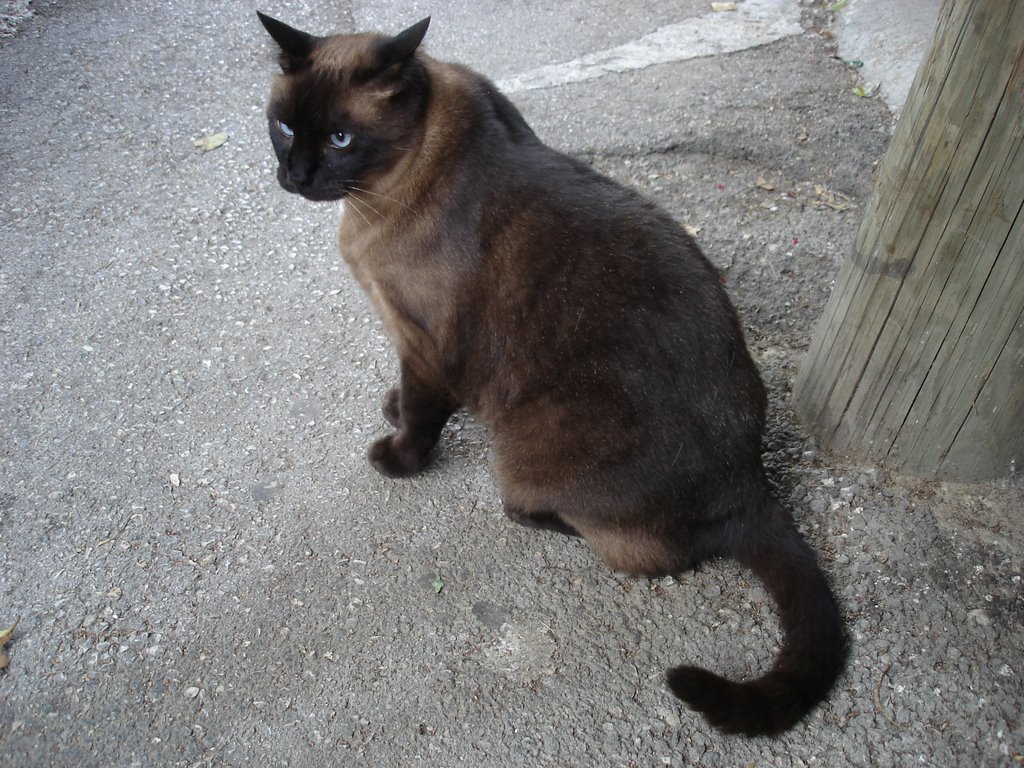
A big bruiser of a male Siamese whom I’ve known for a while:

Big Siamese fellow

Missy dozing in her very own little spot:

Missy dozing

An alert Missy listens to a parakeet calling in a tree overhead:

Missy alert

Catch the Friday Ark at The Modulator. This week’s Carnival of the Cats will be at Tacjammer.

Happy Shavuot and Shabbat Shalom.

Who the Heck Is Don Alverzo, and What’s He Doing with Six Pairs of Tweezers?

A show I’m in is going to open fairly soon. It’s been a while since I was on stage, and I’m enjoying the rehearsals a lot.

We start each rehearsal with a series of warm-up exercises. Some are purely physical stretches, while others are meant to sharpen our concentration. Still others focus on enunciation and diction, and in this category there is one exercise that I find absolutely intriguing. According to Wikipedia, it dates back to 1940 and was a test for radio announcers.

Here it is. Variations are in square brackets.

To be read aloud, preferably into a microphone:

  • One hen
  • Two ducks
  • Three squawking geese
  • Four limerick[ing] oysters
  • Five corpulent porpoises [corpuscles]
  • Six pairs of Don Alverzo[’s] tweezers
  • Seven thousand Macedonian [soldier]s [dressed] in full battle array
  • Eight brass monkeys from the ancient sacred crypts of Egypt
  • Nine apathetic, sympathetic, diabetic old men on roller skates with a marked propensity towards procrastination and sloth
  • Ten lyrical, spherical, diabolical denizens of the deep who all stall around the corner of the quo of the quay of the quivery, all at the same time.

(Those ten lyrical, spherical types sound like something out of the original Star Trek, don’t they? Like those weird creatures in the pilot episode who kidnapped Captain Pike.)

You can try this at home. And locals, let me know if you’re interested in coming to see the show. I have tickets, and I promise not to go on about Don Alverzo’s tweezers, Macedonian soldiers or Egyptian brass monkeys unless you ask me to.

Thursday, May 25, 2006

Flowers and Kittycat

I was photographing these beautiful red flowers when a lovely cream-colored cat happened by and wanted to be in the picture:

Flowers and kittycat

Sure, darlin’. Come here and I’ll make you a star.

(Check out this week’s Friday Ark at The Modulator. The Carnival of the Cats will be at Niobium on Sunday.)

Yom Yerushalayim

Today is Yom Yerushalayim, the thirty-ninth anniversary of the reunification of Jerusalem, Israel’s capital.

I was going to post about it, but gave up after I saw Treppenwitz’s post. Go, read and listen—and don’t forget the tissues.

He makes an excellent point:

We should never forget or take for granted the sacrifices that were made so that we could have our city back under Jewish Control after 2000 years! It makes me sad to think about how many people would re-divide Jerusalem again in a second on the off chance that it might buy us a few weeks of a shaky “truce.”
How soon they forget.

I and the Bird #24

I and the Bird #24 is up at Rigor Vitae: Life Unyielding, and all I can say is: Wow. Now that is an amazing carnival.

Monday, May 22, 2006

Name-Brand Underwear Bites

One of the really cool things about living in Israel is that we can buy name-brand underwear for cheap. This is because the underwear is made for export by Israeli companies. Yet there is always surplus, so people can buy all the name-brand underwear they want if they know where to look. The underwear is usually arranged in neat piles on shelves or stored loose in large bins that the customers must look through in order to choose what they want.

Yesterday I was off doing my errands when I spotted a store with a sign that read “Export Surplus.” When I popped in, the shop assistant directed me to a bin with sparkling new name-brand underwear in lovely colors, 100 percent cotton. Yay! Just what I like! My shopping bag got a bit heavier, and my bank account got a bit lighter.

Shortly afterwards, my right hand and forearm began to itch. When I looked down, I saw what looked like a row of mosquito bites dotting my skin. Makes me wonder: could I have paid for all that pretty new name-brand underwear not only with money but also with some blood?

True, I can’t be absolutely certain that I got those bites in the export surplus shop. The critter—whatever it was—could have bitten me in any one of half a dozen places that I went to yesterday. But the bites are only on my right hand, and it was my right hand that I put into the underwear bin at the surplus store. At one point I put my arm inside all the way to the elbow in order to fish out any other colors I might not have seen—and the bites reach to just beneath my elbow.

I’m thinking that the bug in the underwear bin could be a devilishly simple anti-theft device that the owner puts in just before he closes the store. Since I popped in just before closing time, he must have just put it in, and he didn’t have time to whisk it back out before I started going through the bin.

Well, it’s as good an explanation as any.

Or maybe it’s a warning from the Universe not to put my trust in name brands.

Man, those bites really itch. Anybody got some calamine lotion?

Thursday, May 18, 2006

Obligatory Friday Cat Photos

Here’s a tuxxie on a wall:

Tuxedo kittycat on a wall

A friendly neighbor cat whom I just met shows off his tummy:

Red tabby kittycat shows off his tummy

(Check out this week’s Friday Ark at The Modulator. The Carnival of the Cats will be at IMAO on Sunday.)

More Sunbird Pics

(Click on any image to see a larger version.)

Takeoff ...

Sunbird takes off

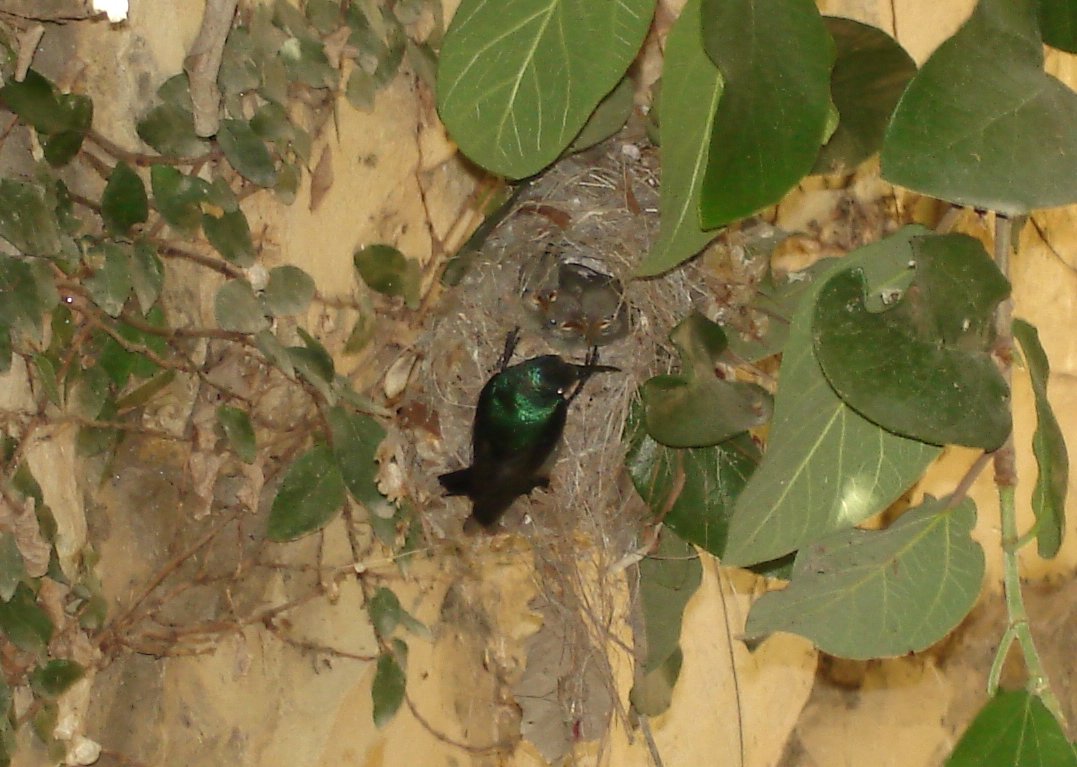
Daddy Sunbird on the nest:

Daddy Sunbird on the nest

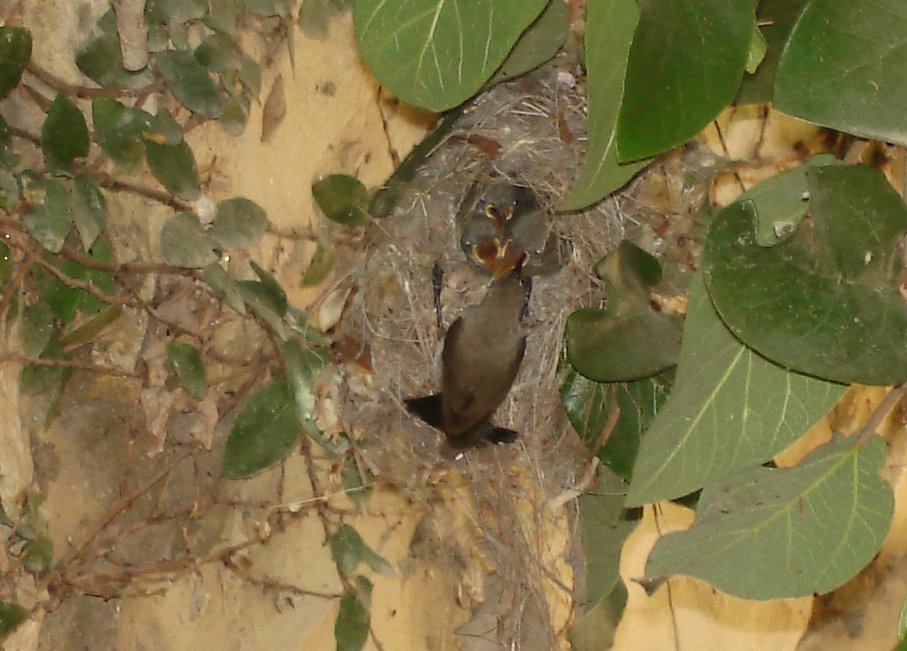
Mama Sunbird feeds her chicks:

Mama Sunbird feeds her chicks

Wednesday, May 17, 2006

Hearing Tommy Sands in Jerusalem

Slightly more than twenty years ago, I was in my bedroom listening to Fiona Ritchie’s program of Celtic music, “The Thistle and Shamrock,” on National Public Radio. One song she played that day has never left my memory. In fact, the impact it made on me was so profound that the moment froze for me like a snapshot: I remember exactly where I was standing when I heard the song, what I was looking at and from what angle.

The song was “There Were Roses” by Tommy Sands, about two young men from northern Ireland, one Catholic and one Protestant, who did not let the troubles around them interfere with their close friendship. When one of the friends was killed by the enemy side, a revenge gang from the victim’s side seized and killed another young man at random in order to avenge their co-religionist’s death. That by itself was dreadful enough, but to add sorrow to sorrow, the young man they killed turned out to have been the first victim’s best friend.

Although I never forgot the song, I didn’t remember the name of the man who wrote it. So when I went to Tommy Sands’s concert in downtown Jerusalem this evening, I was prepared for a concert of wonderful and meaningful music, which the performance certainly was. But nothing prepared me for the jolt I got when Tommy Sands began to introduce “There Were Roses.” I couldn’t believe that more than twenty years and several thousand miles from the place where I first heard the song, I was hearing it performed live by the man who wrote it and who, unfortunately, lived the tragic reality it describes for much of his life.

I guess that explains why Tommy Sands’s music emphasizes healing as much as it does. He wrote a fantastic song together with Pete Seeger about that very subject. He also has some hilarious songs, particularly one that describes how he tries to make breakfast for his two-and-a-half-year-old daughter, who turns out to have a few ideas of her own about what breakfast should be.

Wherever you are, if you get the chance to hear Tommy Sands, grab it and go. (He tours in the United States.) The evening was absolutely delightful. I can’t wait till Tommy Sands comes back to Israel so that I can hear him again.

Saturday, May 13, 2006

Modesty or Territoriality?

So the Gerrer rebbe asked for, and received, a woman-free flight on El Al. This was supposedly done for reasons of modesty. But I find myself wondering: Since when has the word “modesty” come to mean “woman-free”?

According to the American Heritage Dictionary definition (via Answers.com), modesty is defined as 1) the state or quality of being modest; 2) Reserve or propriety in speech, dress or behavior; 3) lack of pretentiousness; simplicity.

No mention of “woman-free” there.

A few weeks ago, I was returning from Bet Shemesh to Jerusalem on a sherut—a taxi van that seats ten passengers. I was the only passenger in the van at that point, and I was sitting in a front-row aisle seat when a young man wearing clothing that identified him as belonging to a particularly strict Jewish group got on. He stopped on the steps leading to the aisle and said, without looking directly at me: “Aht yekhola la’alot le-mala?” (Hebrew: Can you go farther up?)
Since I was following my custom of falling asleep within minutes of boarding a sherut, I didn't realize that he was speaking to me. (The fact that he did not look at me while he spoke didn’t help either.) When I finally realized that he was speaking to me, I looked at him, confused. What on earth did he mean by “farther up”? Where was I supposed to go?
Seeing my confused expression, the young man gestured toward the back of the van.

I looked straight at him and said: “Seliha—ani nisheret po” (Excuse me, I'm staying here).

He got onto the van and sat down in a row of seats behind me. Apparently my refusal to move to the back of the van wasn’t such a serious issue for him after all, since if it had been, he would have found himself another means of transportation. Which leads me to wonder: if the issue wasn’t so important for him that he would not have gotten into the van unless I moved, then why did he ask me to move in the first place?

If he had asked me to move so that he could sit next to a member of his family or so that he would not have to sit between two women (which, actually, is not so much a traditional safeguard against immodesty as it is against sorcery, but that’s another story), I would have understood. But I was the only other passenger in the van. So what was the problem?

Among groups of very strict Jews in Israel, there is a small but persistent movement to shift women to the back of the bus. I have seen stickers made to look as though they were printed by the Egged bus company telling women to sit in the rear portion of articulated buses, and I have seen signs printed up with the seal of a respected rabbinical court stating that certain Egged bus lines are sex-segregated. Of course, the stickers never came from Egged, nor did the signs come from the rabbinical court. So what’s going on here?

Certainly not modesty. Modest people do not demand that others inconvenience themselves for their sake. Nor do modest people demand that an entire sex demean itself so that the other may enjoy what it perceives as an elevated level of holiness. That is not modesty; that is arrogance. True holiness is never achieved at the expense of others.

No, this isn’t about modesty or holiness at all. It’s about territoriality, power and control.

And I don’t like where this is heading. Not at all.

(See my previous posts on this issue here and here.)

Friday, May 12, 2006

Some Pictures from My Latest Excursion

(Click on any image to enlarge it.)

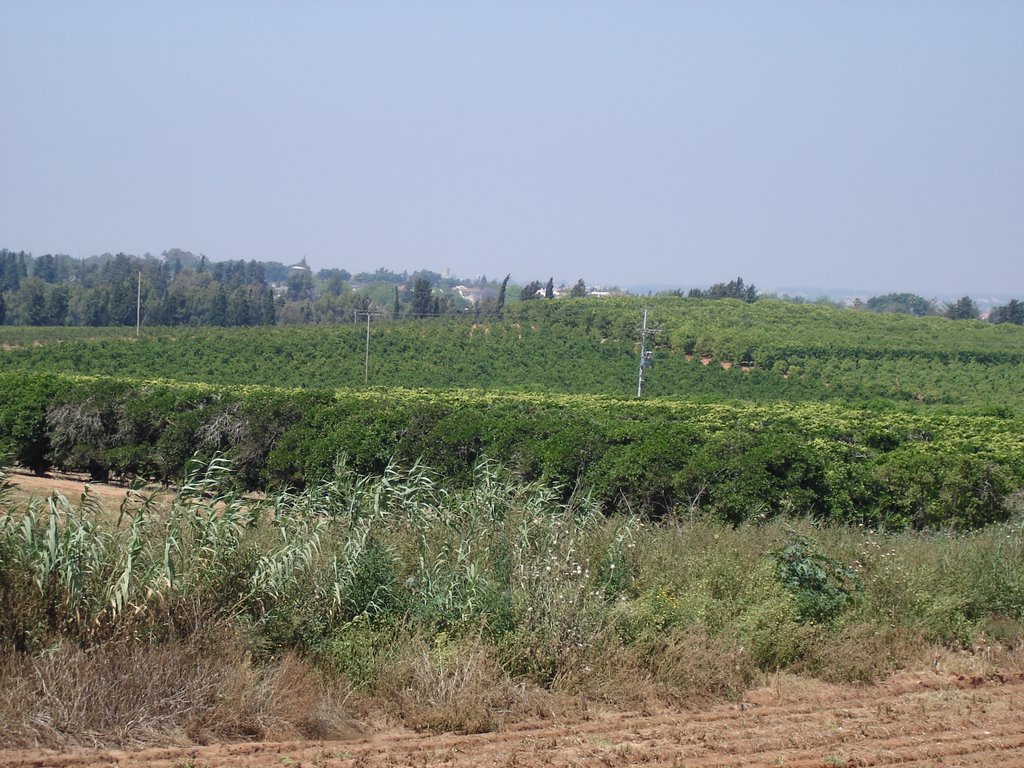
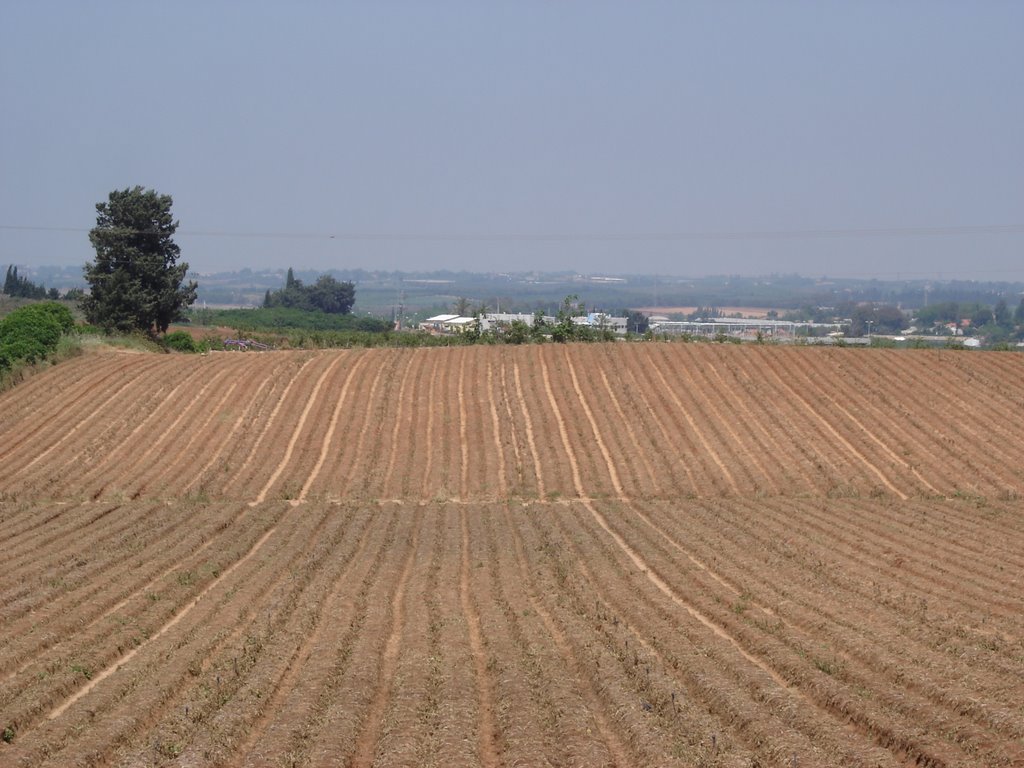
A field and orchard just outside Ra’anannah:

Field and orchard outside Ra’anannah

A few potatoes left in a harvested potato field:

Potatoes left in field

An orange tree in the wild:

Wild oranges

Sumac seed pods:

Sumac seed pods

Sumac flowers, berries and seeds:

Sumac flowers, berries and seeds

A harvested field:

Harvested field near Ra’anannah

A bee covered in sabra blossom pollen:

Bee covered in sabra blossom pollen

A bee checks out a sabra blossom and finds that it is already occupied:

Two bees, one blossom

A flowering bush. I am not sure what kind it is, but the leaves smell minty. It is usually a cultivated plant, so I’m not sure what it’s doing out there:

Flowering bush

Drama in the Garden

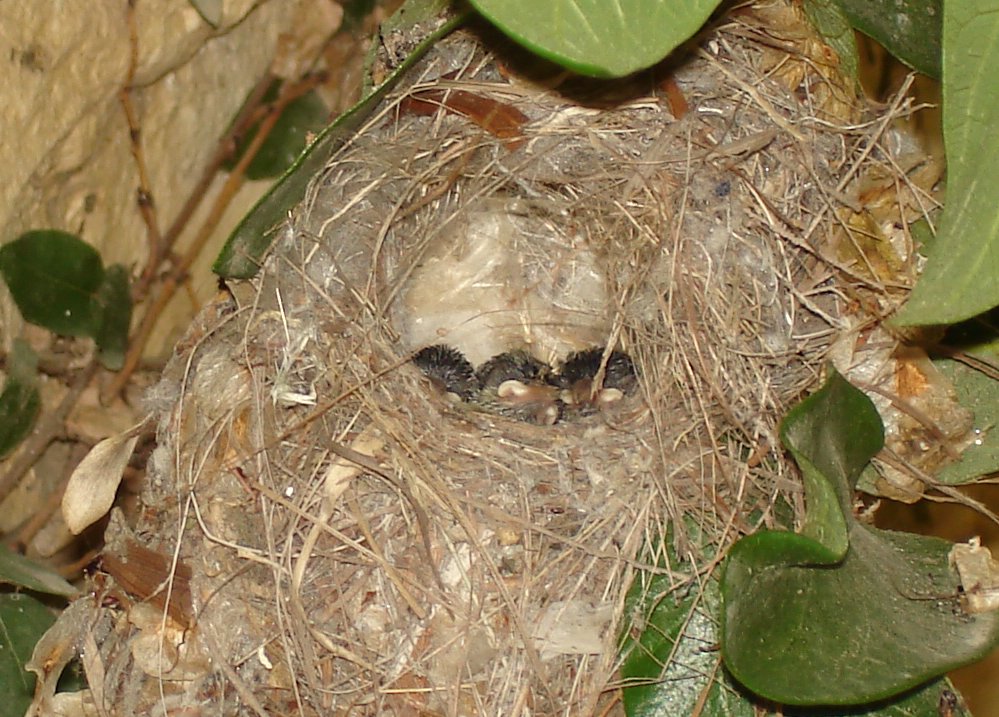
Mazal tov—the sunbirds in our garden are parents! Today I found the nest, with the chicks inside. (Click on the images to see a larger version.)

Sunbird nest with young

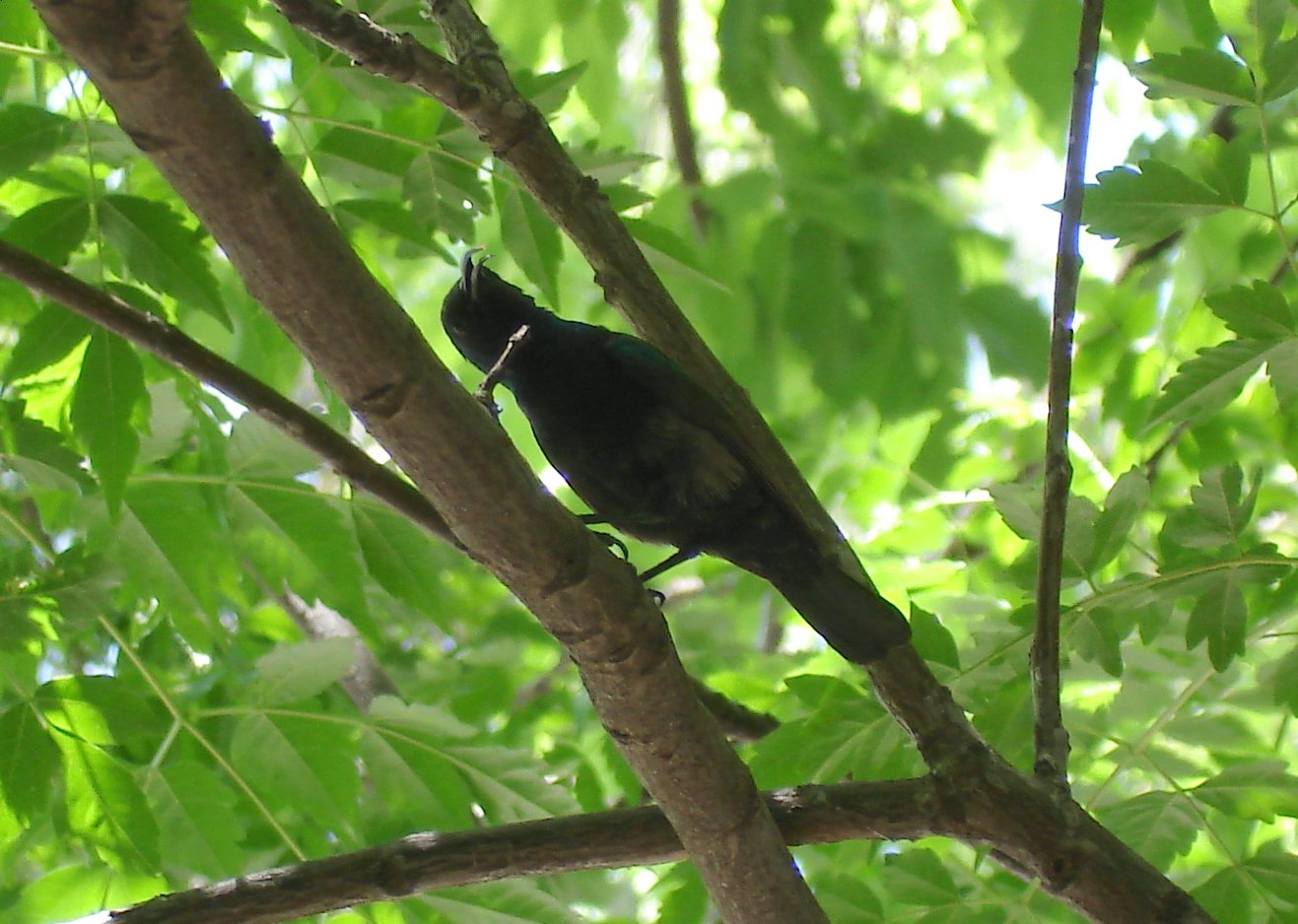
But being sunbird parents can be rather difficult, especially when you share your living quarters with two cats. I can always tell when the cats are in the garden now because the sunbirds shriek their Predator! Predator! warning and fly about frantically, trying to frighten the cats away. Here are two photos of Daddy Sunbird guarding the chicks. In the second, he is actually on the nest.

Daddy sunbird

Daddy sunbird on nest

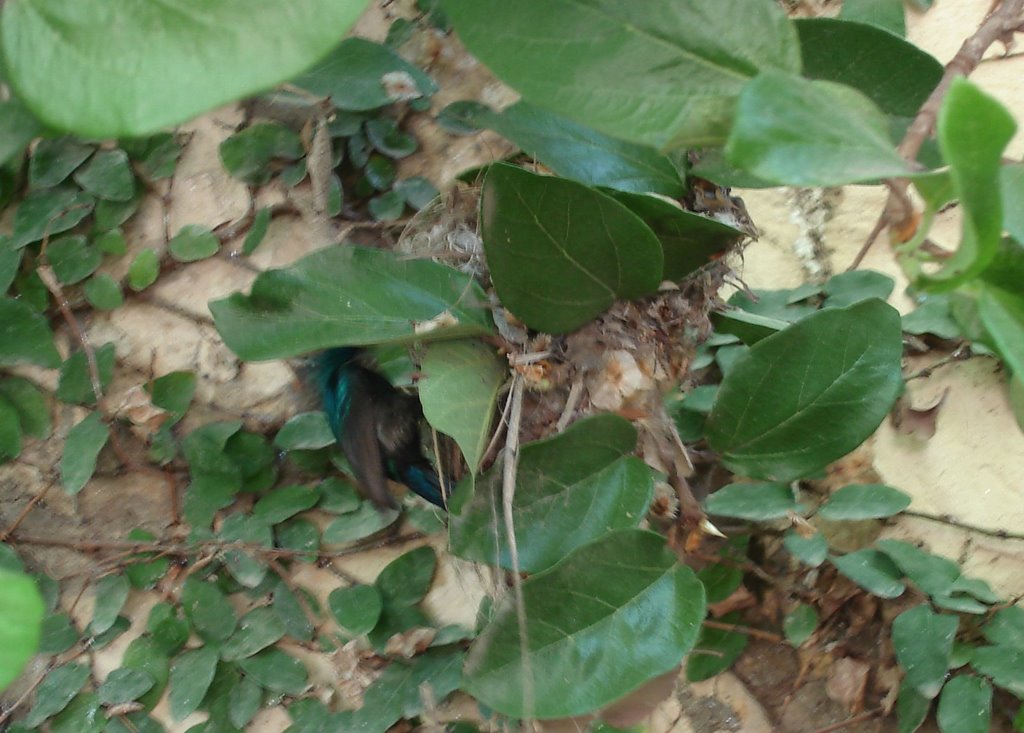
Here’s Mama:

Mama sunbird guards her young

And here are the reasons that Mom and Dad Sunbird are so upset:

Her Ladyship in the sunlight

Missy on the alert

Everything’s fine so far, but I don’t envy the sunbirds one bit. They’ve been shrieking their warning and flying about for hours on end. They must be exhausted, poor things.

To the cats’ credit, they haven’t touched the nest, at least as far as I know.

(Check out this week’s Friday Ark at The Modulator. This week’s Carnival of the Cats will be at Watermark on Sunday.)

Sunday, May 07, 2006

Big Fat Kitty

On Folk Alley, Bettina Makley sings about her Big Fat Kitty.

Friday, May 05, 2006

Let Dozing Cats Lie

So runs the (slightly reworked) proverb. But Missy doesn’t listen very well.

Her Ladyship snoozes

Missy investigates the drowsy one

Wake up and play with me already!

Yes, Missy woke Her Ladyship up in the end, and Her Ladyship flounced off to find another place to snooze.

(Check out today's Friday Ark at The Modulator. This week’s Carnival of the Cats will be up at Pages Turned this coming Sunday.)

Monday, May 01, 2006

Memorial Day

Helichrysum sanguineum

The deep crimson flower above has many names: red everlasting, cudweed, Helichrysum sanguineum. In Hebrew it is called dam ha-maccabim—blood of the Maccabees.

This is the flower that symbolizes the memorial day for Israel’s fallen soldiers and victims of terror attacks. On this day, which started just a few hours ago and which will end tomorrow night—ushering in the festivities of Independence Day—many people wear special stickers bearing an image of this flower and the Hebrew word nizkor—“We will remember.”

Last week we remembered the millions of Jews who were murdered before they could reach these shores. Today we remember those who paid the ultimate price for our ability to live here as free human beings and as Jews.

Actually, we always remember. Not a day goes by that we do not. But most of the time it is a private remembrance. Today it is a shared, public one.

Here are two of the people I remember:

Rafi, a young man from the Netherlands who was in the midst of his conversion process when I met him in the Sar-El volunteer program in 1991. He was killed in a terrorist drive-by shooting the day after Shavuot in 1994, only three months after he had been married, on his way back from a vacation with his wife at a Gush Katif hotel. One of the medics who tried to resuscitate Rafi recalled that the marks of his tefillin were still visible on his arm when he died. I was listening to the radio when the news broke, but because Rafi had changed his surname since we had last met, I didn’t realize he was the one who had been murdered until I saw his photograph on the front page of the newspaper the next morning. One of the last times I saw Rafi was at the annual Yom ha-Shoah memorial service at Yad Vashem. I was there with my ulpan class; he was there in IDF uniform as a Sar-El volunteer.

Sara, a member of my women’s tefilla group and the first of us to take a stand on wearing a tallit during our services. At her urging we held an evening of learning and debate about the issue. Well into the evening, Sara told us that she had to leave a little early because she was going on a trip to Petra with her fiancé early the following morning. We said goodbye and wished her a good trip. The next morning, the No. 18 bus on which Sara and her fiancé were traveling was blown up by a terrorist. It was February 1996. They had planned to go to Petra; they never even made it to the Central Bus Station.

Some years ago I learned that the essential oil of the helichrysum plant heals hurts and bruises. Since then I have wondered whether that might, on some level, however unconscious, have anything at all to do with the fact that this flower was chosen as the symbol of one of the most painful days in our calendar.

We go on ... but we always remember.

Friday, April 28, 2006

Heavy Petting

Yes, I’m referring to a cat—the Lady in Red, to be exact. She is very pettable indeed.

The Lady in Red gets a bellyrub

Skritching the Lady in Red

The Lady in Red kneads

(Check out this week’s Friday Ark. The Carnival of the Cats will be at Furry Paws on Sunday.)

Saturday, April 22, 2006

Laurence Simon’s Weekly Podcast Challenge

Laurence Simon has posted the results of his first 100-word story podcast challenge. Give a listen. (Click on the gramophone icon on the left in order to hear it.)

This week’s theme is “bunnies.” I admit to borrowing a bit from the movies.

Next week’s theme is “five minutes late.” Wonder what I’ll come up with.

Friday, April 21, 2006

Bee on Lavender Blossom

A bee sips nectar from the large lavender bush near my building:

Bee on lavender blossom

Shabbat shalom.

Intruder Alert

Her Ladyship was a bit out of sorts during this photo shoot. Seems there was an interloper around, and Her Ladyship does not like interlopers the least little bit.

Here she is against a background of basalt gravel and slippery-elm seeds:

Study in tans and browns

The reason why Her Ladyship is not amused:

Her Ladyship and the interloper

Who’s that in my territory? asks Her Ladyship.

Who’s that in my territory?

And just what do you think you’re looking at?

What’re you looking at?

Tuesday, April 18, 2006

My First Published Podcast

Want to know what I sound like? Laurence Simon has graciously added my story, and a recording of me telling it, to his 100-Word Stories page.

A Small Act of Defiance
I went on a hike today, and I heard about the bombing attack in Tel Aviv just as I was getting on the bus to go to the meeting point.
During the hike, my old hiking boots fell apart. (Well, I'd had them for more than a decade, and they were cheap to begin with.)
So after the hike, I went to buy new boots with my birthday money.
I bought Caterpillar boots.
Two good things about that:
I get to defy the Caterpillar boycott ... and I get to walk around in shoes with the word “Cat” on them.

Friday, April 14, 2006

Why I Love Living in Israel: Reason No. 3,763.2

This sign invites all passersby into the garden to recite the blessing of the trees ... and it’s right in my neighborhood.

Invitation to make blessing over trees

The sign reads: “To Whom It May Concern: We welcome you to our garden to make Birkat ha-Ilanot. Please ring the bell.”

How lovely. Only in Israel. (If it’s not, if you’ve seen such signs in other countries, please tell me about them.)

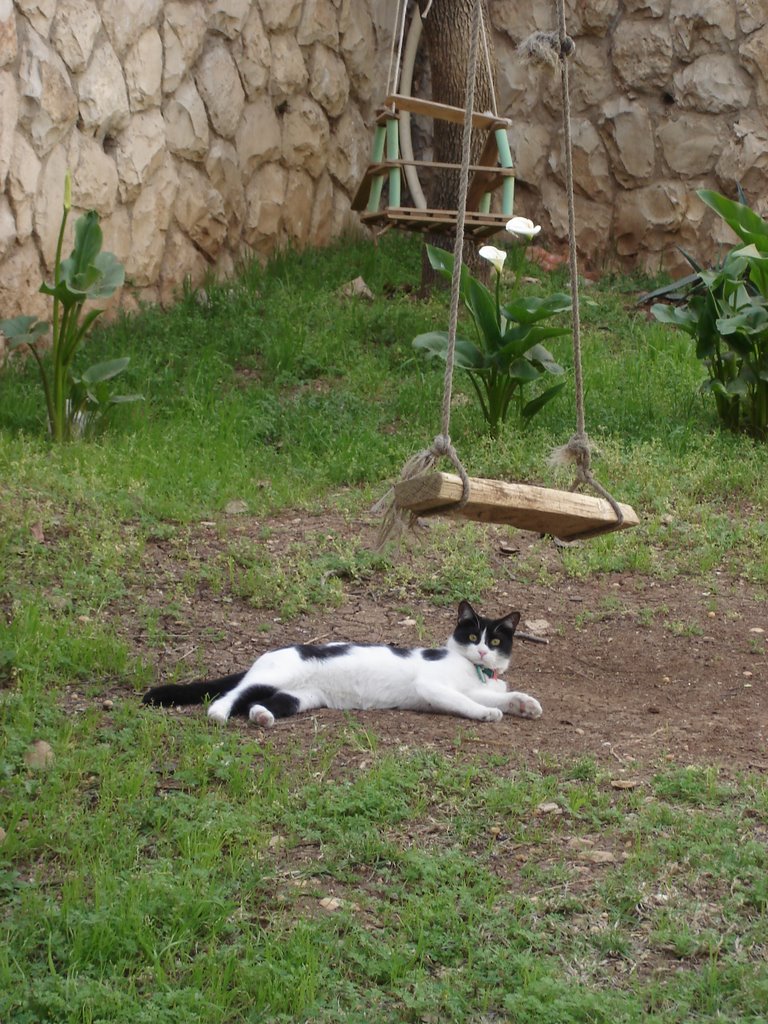
Little Explorer

Missy explores a local swing:

Missy underneath a swing

Hey, sweet kittycat, how about a skritch?

A skritch for Missy

Shabbat shalom, and mo’adim le-simha!

Tuesday, April 11, 2006

Pre-Pessah Post

Be vewy quiet ...

... I’m huntin’ hametz.

(with apologies to the creators of Bugs Bunny)

Sunday, April 09, 2006

Hakarat ha-Tov Department

(Hakarat ha-tov, literally “acknowledging the good”: gratitude, giving credit where due)

A big thank-you to Josh Waxman of Parshablog for his helpful post on how to vowelize Hebrew in Blogger.

Try out his new Online Hebrew Transliteration Program here.