Seen on the Back of a Scooter

I like.
I’ve put a few new links on the sidebar for English speakers who would like to watch the local Israeli news in English on both Channel One (or Channel 33, which broadcasts a longer version) and Channel Two.
Courtesy of the TooJewish.com forum, here’s how to get to the Channel One English news on the Israel Broadcasting Authority’s website:
Go to http://media.iba.org.il/. Go to TV Broadcasts >> On demand >> Channel 33 - English News Edition and then click on the camera icon and you’re done.
Or you can just head over to TooJewish.com and click on the IBA News icon on the sidebar on the left.
You can watch the Channel Two news in English via the Jerusalem Post’s site or at Jerusalem Online.
You can join just about every Israeli in the country in keeping up with the current water level of the Kinneret (Sea of Galilee) at Ynet’s site. (Don’t you just love that rubber ducky?)
If you would like to watch traffic on the various parts of the Ayalon Highway in real time, head over to the Ayalon Highways website and click on “Live Cameras.” (This one isn’t on my sidebar yet. If you would like me to put it there, please let me know.)
UPDATE: I found a simpler way to get to the IBA news directly. The sidebar has been updated.
All right ... that may be an old one. Or maybe not. But since the Jerusalem English-Speaking Theatre has been around for twenty years already, I’m sure someone else thought of it first.
Back when I was in sixth grade, a group of actors came to our elementary school and put on a short play about Tom Sawyer. I remember several of the vignettes to this day. I also remember a few words from the opening and closing number:
Tom Sawyer—say that name again;
Tom Sawyer—everybody’s friend.
When I found out that some of my friends were going to be in JEST’s production of Tom Sawyer, I couldn’t help wondering whether this was the same show. Turns out that it was. (Talk about closing circles ... after nearly thirty years!) So I went to the show tonight and enjoyed it very much. I also felt like I knew half the cast; they were either friends of mine or their children. Neat.
(Maybe it’s time to start going out for shows again. It’s been too long, I think.)
Anyway, here are two pictures from the curtain call. Enjoy.


The gentleman in the white suit played the character of Mark Twain. Directly to his left (stage right) is the young man who played Huckleberry Finn. After the show, I went to congratulate that young man (one of the members of the cast whom I don’t know, actually), but he didn’t see me. Instead, he ran over to a friend of his and greeted him enthusiastically ... in fluent Hebrew.
I bet that was a first for a production of Tom Sawyer.
Only in Israel ... nakhon (right)?
UPDATE: The father of the young man who played Huckleberry Finn dropped by with a link to pictures from the dress rehearsal (and other JEST productions). Thanks, “Mr. Finn”!
I dodged a bullet last night.
No, not in the literal sense. And it wasn’t even anything terribly serious. Just extremely unpleasant.
I don’t get migraines often, but unfortunately I am familiar enough with them to know when one is on the way. It starts with what I’ve come to call “the shimmer”—a shimmering point at the center of my visual field that gradually widens into a semicircle comprising a kind of line sketch (called the “fortress formation” if memory serves). Eventually this formation reaches the outer edges of my visual field, and once it gets there, the real fun starts. (I’ll spare you the description.) The initial process takes approximately twenty minutes to a half hour, so once the shimmer begins I know I have that much time to take the strongest painkillers I can find. Getting them into my system as quickly as possible makes all the difference in how I make it through the next several hours. Even with painkillers, it’s not so simple.
The shimmer began last night as I was getting ready for bed. Well, that’s convenient, I thought. I’ll take a strong painkiller now, go to sleep, and avoid the whole nasty experience.
And so it was. I woke up this morning refreshed, pain-free and very grateful.
But I still feel the after-effects—a bit weak, a bit off-center. Nothing serious, but enough for me to notice.
I also have a superstitious thought. I evaded last night’s migraine by going to sleep. What if there’s another one lurking around the corner to grab me when I’m awake?
... and it was reviewed in Haaretz. Wow.
It looks like the reviewer liked it, too.
Professional musicians performed during the first half hour in the improvised synagogue situated in the building serving the Religious Scouts youth movement, and the audience was able to restrain itself. But when these four musicians were joined by a pianist and four amateur singers, who had previously sat in the audience and now began to sing magnificently, emotions ran too high, and a storm of applause filled the modest confines of the room after every piece. And when these nine adults were joined by two teenage girls and two younger girls, the crowd became ecstatic. In the end, the audience rose to its feet and cheered long and loud. There were shouts of “You were fantastic!” but this was only half the message sent to the 13 performers; the other half was: “You’re ours, and we’re proud of you.”
Just one thing, though: I wish that the reviewer had mentioned the song we sang. It was “Daughter Voices” by Jerusalem composer Mindy Kornberg (check out her album of songs for the cycle of the Jewish year, “Music from the Mountain”). “Daughter Voices” is a lovely song, exquisitely and intricately constructed, about the need to listen to the voices of women throughout Jewish history—voices that, too often, were silenced.
I was one of the four “amateur singers”—at least one of whom is a professional, and a choir director to boot—who sang “Daughter Voices.” (I also sang the alto part of Salamone Rossi’s “Shir ha-Ma’alot” and promptly fell in love with the piece. Now I want to hear everything Rossi ever wrote.)
I do hope we’ll get to do this again. It was fun.

Shabbat shalom. May we hear good news.
By the way, I’m with Treppenwitz a hundred percent on this one.
This morning at work I translated several articles about Prime Minister Ariel Sharon’s involvement in the Cyril Kern affair. One analyst believed that just as Sharon had emerged from other, similar scandals intact, he would come out of this one unscathed as well.
Now the television reports are saying things like “serious stroke,” “anesthetized and on a respirator” and “paralysis in lower limbs and bleeding in the brain.” Regrettably, it doesn’t look like he’s going to come out of this situation intact.
Whether Sharon makes it through the night or not, there are going to be some significant changes here by morning.
Last Friday morning I went on a tour of the Jerusalem promenades sponsored by the Association of Americans and Canadians in Israel (AACI). The tour guide was my friend Dani Barkai.
Here’s the route, taken from the AACI English-speaking tours page:
We’ll begin with the new Goldman Promenade encircling the old Governor's House in East Talpiot, continue along the Haas-Sherover Promenade and then through Abu Tor, Gai Ben Hinnom, and Yemin Moshe, ending up at the King David Hotel.
The tour was fantastic, and I’m not saying that just because a friend of mine happened to be the guide. I saw parts of Jerusalem that I had never seen before and learned quite a lot.
Here are some pictures from the tour. First, just off the Haas Promenade is a shaft dug two millennia ago, which is part of the complex system of aqueducts that served Jerusalem from Roman times until the mid-twentieth century:
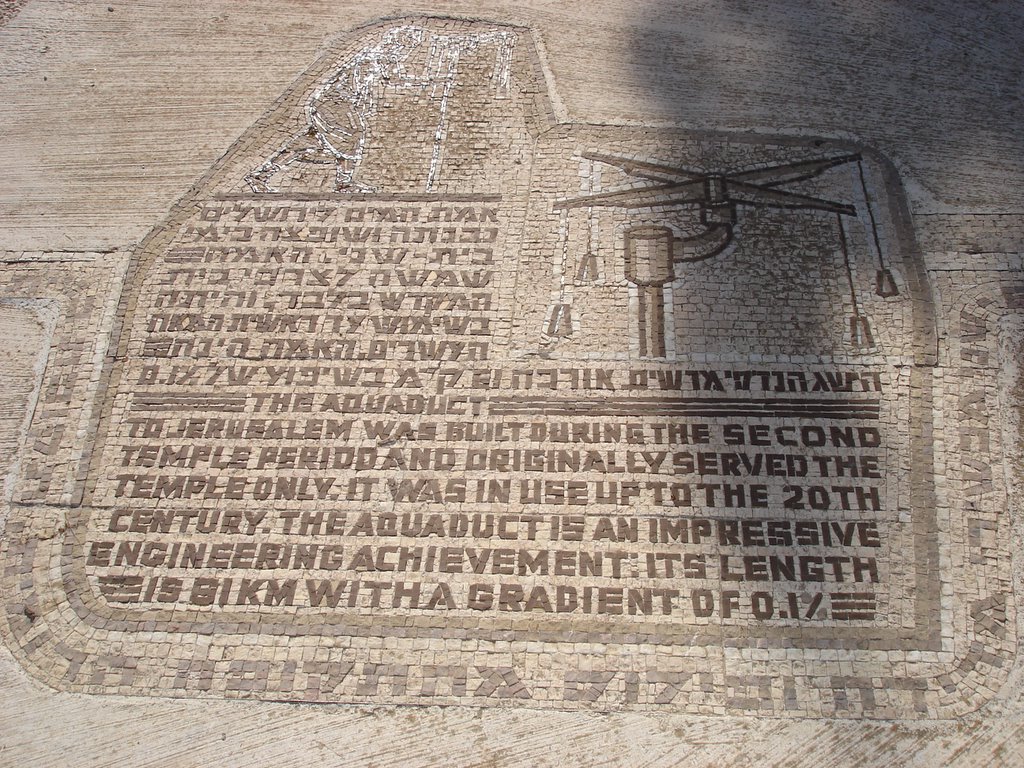
Here is the text of the explanatory mosaic in the photograph:
The aqueduct to Jerusalem was built during the Second Temple period and originally served the Temple only. It was in use up to the twentieth century. The aqueduct is an impressive engineering achievement. Its length is 61 kilometers with a gradient of 0.1 percent.
The next photograph is part of a mosaic that shows the aqueduct’s entire route, including significant landmarks:
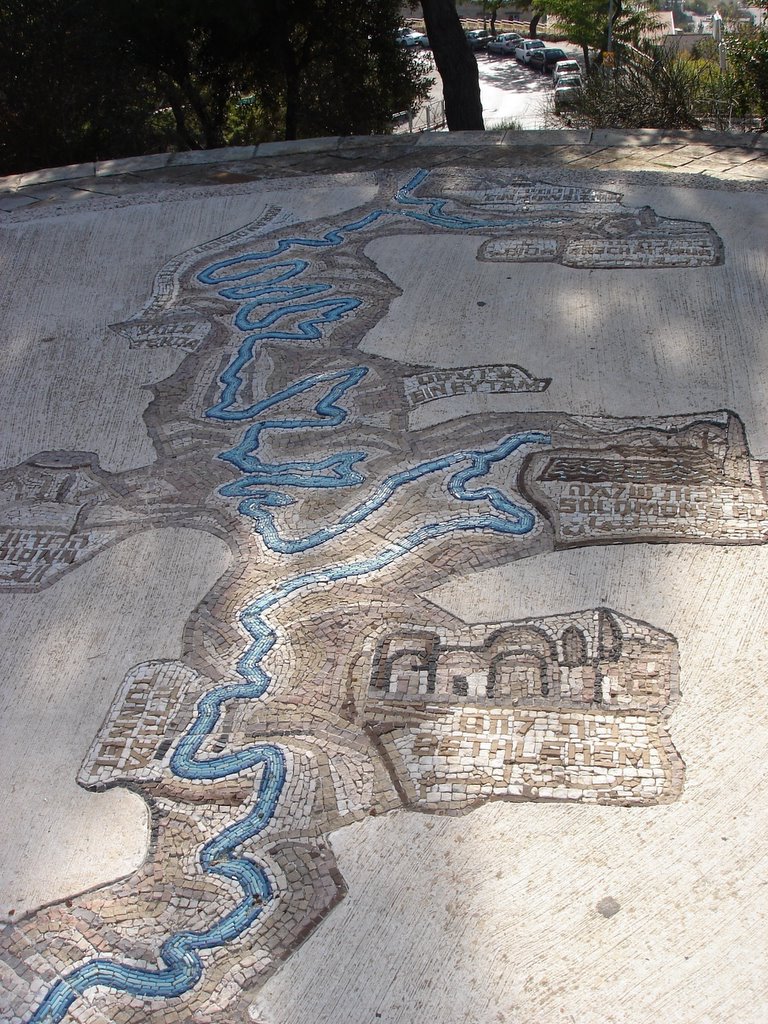
From this spot it is possible to see the Herodion fortress. It’s the flat-topped mountain in the distance.

Next, some early almond blossoms:

Yet another bee on a rosemary blossom:

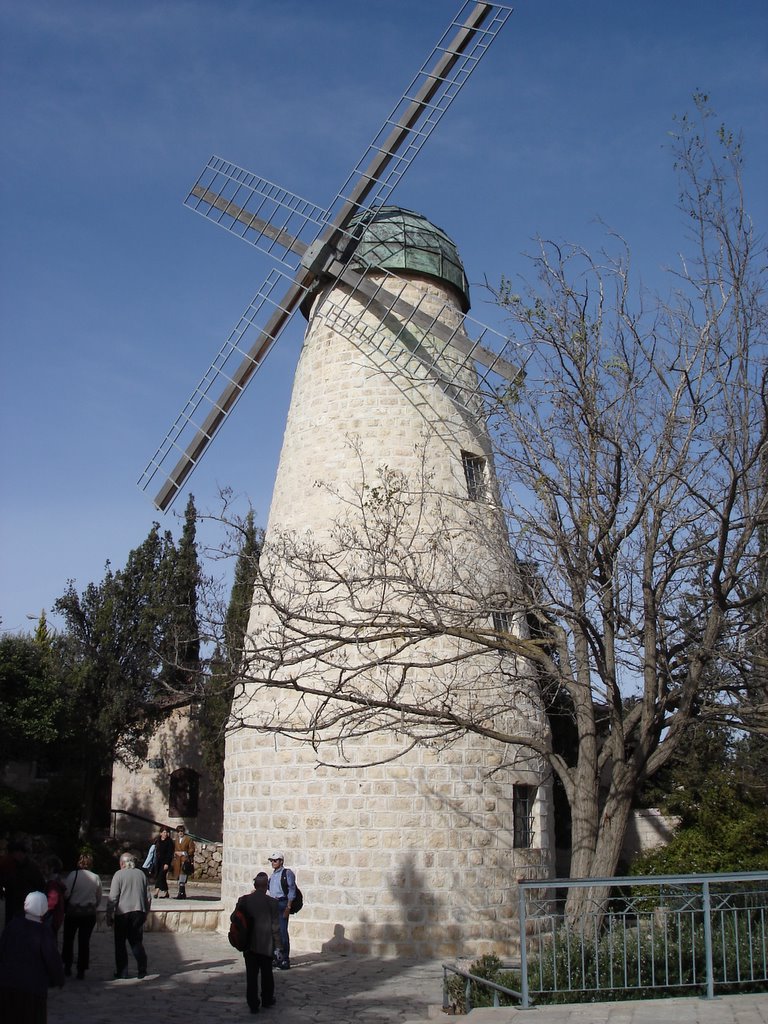
Here is the windmill built by Sir Moses Montefiore. It was only in use for several months; unfortunately, the native wheat that grows here proved too coarse for it. Today it is a museum of the life and times of Sir Moses Montefiore, who lived to be 101 years old.
As we walked, we found a large salt bush. The leaves are edible and are indeed salty—a good thing to know for hot days.

A panoramic view of Jerusalem, with a diagram at the lookout site to show us what we are looking at:

This is the cable car that brought supplies across the valley to Mount Zion from the Yemin Moshe area during the War of Independence. Mount Zion was under a blockade then, and this rickety cable car was the only way to get supplies to the fighters. This was done at night, when no one could see the cable car; during the day it was lowered to the ground, where it could not be seen.

By the way, the name of the valley between Yemin Moshe and Mount Zion is Gei Ben Hinnom, otherwise known as Gehenna. That’s right: hell. This was the location in which, during the time of the prophet Jeremiah, the Israelites carried out the abominable practice of sacrificing their own children to the Moabite god Molokh. Jeremiah’s denunciations of this practice, which was eventually eradicated, survive in the Bible.
The mountains of Moab—present-day Jordan—are quite close to where we were, and on a clear day they can be seen from where we were standing.
Here is a view of the Old City with the City of David—King David’s original capital—approaching the foreground.
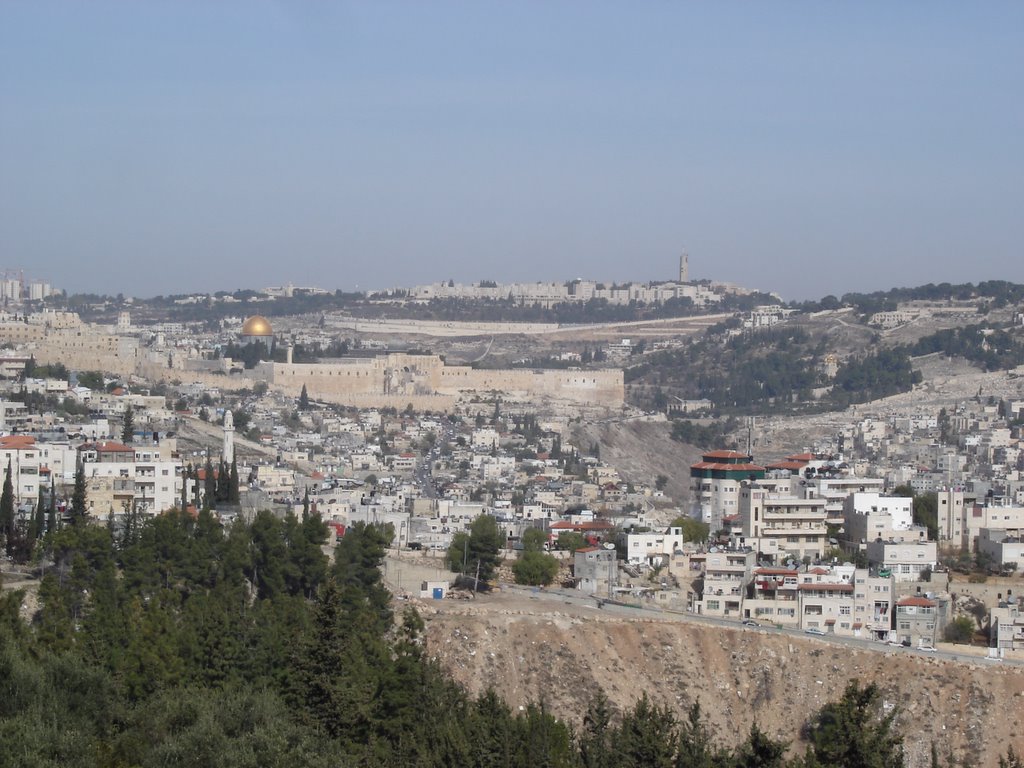
The Jerusalem barrier:

Finally, a black and white cat we met on the way.


Happy New Year and welcome to Elms in the Yard. I’m Her Ladyship.
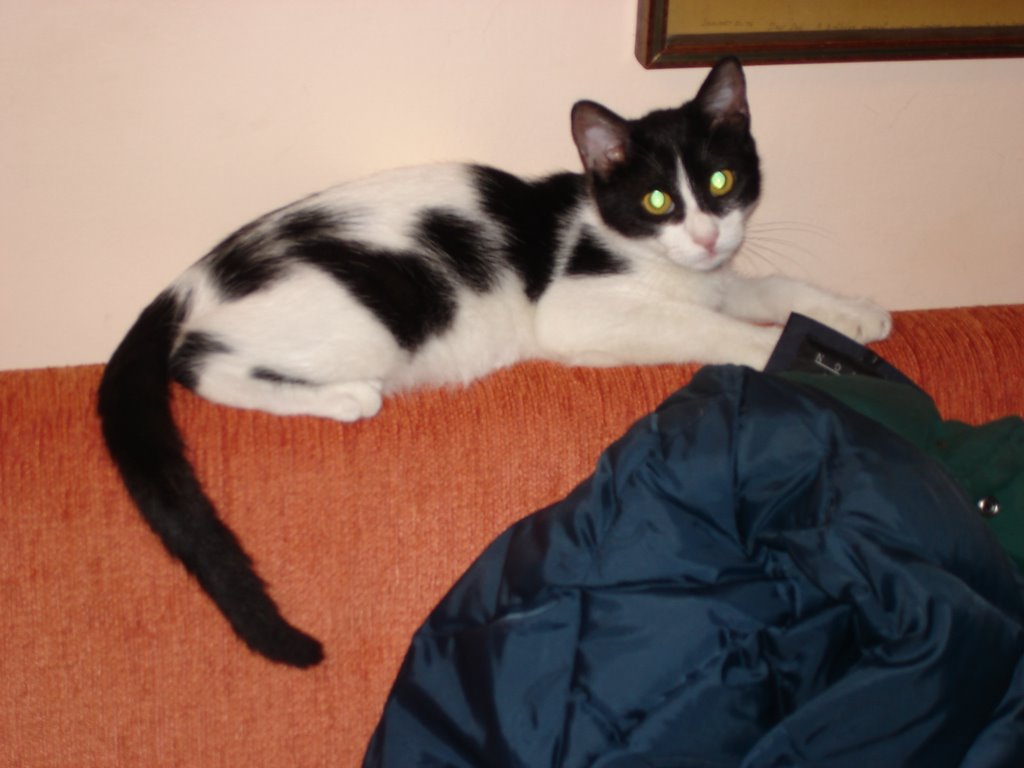
And I’m Missy. We live with a friend of Rahel’s, and we’re ringing in the new year with this week’s edition of the Carnival of the Cats. ... Hey, Your Ladyship, why do we have to do this? What’s up with Rahel, anyway? Isn’t she the one who’s supposed to be running this blog?
Her Ladyship: Forget it—she’s zonked out from looking at all the kitty pics. So you can start assembling the links, and I’ll be back to check on you later.
Missy: That’s not fair! Why do I have to do all the work?
Her Ladyship: Because you’re young and strong ... and I am the senior cat in this household.
Missy: Thousands of cats in Jerusalem, and I get stuck living with a Siamese housemate. Sheesh. All right—here we go:
Laurence Simon at This Blog Is Full of Crap sends us a lovely New Year message via the Divine Grumpus, the late, sweet Edloe.
At enrevanche, Mister Gato looks down at the world in his new favorite spot.
Check out some belly action as ACM of Just Between Strangers presents Claws are for climbing.
Allan at AllanThinks gives us the soulful gaze of (Macy) Grey.
Benjamin at Benjamin the Blogging Cat introduces his friends Satchi and Simba. (Hey, how about a picture of Benjamin for the blog, too? The photo on the Profiles page is nice, but it’s just not the same.)
The handsome Ferdinand T. Cat at Conservative Cat shows us that the Other Cat is still on top of things.
Rhett of Melange is a skilled writer of love letters. Here is a note to his love, Sophie. Meanwhile, Nicky the Shy peeks out at the world from his safe place.
The Robot Vegetable at Far Cartouche presents Robin’s and Jonah at the Escher Tree and, at Middle-Fork, Tinker and Sabaki on the Lookout.
Meanwhile, over at Running Scared, Tom Takes Over the World, but I’m not complaining. After all, cats should take over the world, shouldn’t they?
Meryl Yourish delights us with Tig the Goofball, Parts One and Two.
Blueberry at Texas Oasis gives us Jax, the Shaved Cat. Ouch.
Sleeping Mommy sneaks a few dogs into her Friday Ark post. But don’t worry; there are some lovely kittypics there, too.
Ah, the Cats d’Elisson! Here are the Sweet Sisters, Hakuna and Matata. Do you know how many times a day Rahel checks Elisson’s blog for new pictures of those two? It makes me jealous. This week we have a bonus, too: The Mistress of Sarcasm’s lovely cat, Neighbor.
At Cascade Exposures, Pepper wins the Great Tissue War.
Storyteller’s kittycats at Scribblings wish us a Happy New Year.
At Pencil Roving, Mister Gato proves himself a benevolent feline dictator and a yarn expert.
Chuq at 7610 posts a feline whodunit.
The People’s Republic of Seabrook tells us No, I haven’t figured out how I'm getting down, thank you ...
Missy: Oh, man, am I getting tired! Your Ladyship, can I take a break now?
Her Ladyship: No.
Missy: How do you say “slave driver” in Hebrew? Hey, wait—who are you? Aren’t you the Lady in Red?
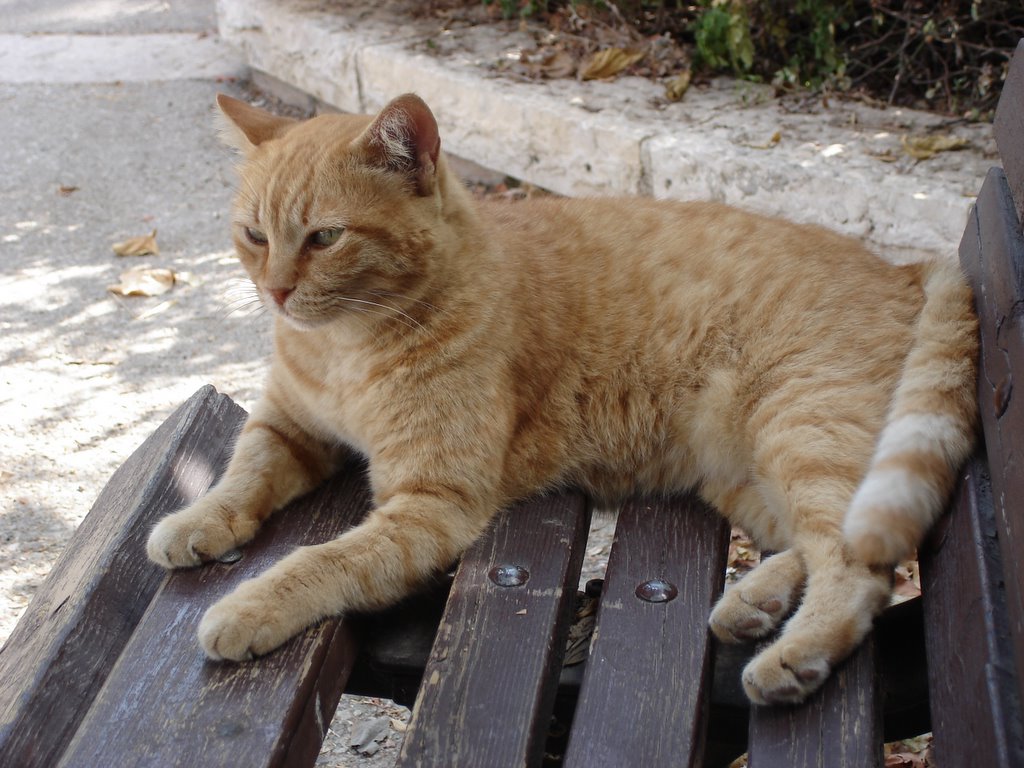
Lady in Red: Yup. Why don’t you rest while I take over for a bit?
Missy: Thanks!
At Where the Dolphins Play, Gryphon leaps for joy.
Julie at i-pets.com blog gets some holiday visitors.
The critters at Watermark share their new year’s resolutions.
PJ at No Deep Thoughts shows us how getting good photos of Rhett and Rafe is a bit like ... well, herding cats.
At Mensa Barbie Welcomes You, Butterscotch shows off his New Year’s Eve hat.
Is Kali of Composite Drawlings really a food critic, or could she be on to something good here?
At maggies meanderings and shameless plugs, Carlos supervises the installation of a particularly important home fixture.
Feak of Bloggg tells us where to go to have fun. But can we believe everything we see?
Poor Gigolo Kitty is having a difficult time with his mistress on a diet.
Martin Lindeskog at Ego poses a question about feline heraldry.
Check out the great kitty links at eatstuff. Good news: Kiri is doing fine.
Her Ladyship: Well, how’s it going?
Lady in Red: Beautifully, only now it’s your turn.
Her Ladyship: What?! Oh, all right.
At pages turned, Ellie rests up from Christmas.
Bruce Mckay at Bigcatheads—The Blog shares an inspired painting.
Sergei of Music and Cats fashions himself a kitty cave, while Kimberly wonders whether people might not come to resemble their pets and vice versa.
Political Fred shows us Day 337 of Captivity.
Jinx of Manxmnews loves pillow nests. (Who doesn’t?)
Jennifer Smith at All Things Jen(nifer) shows us how nothing says Jen like a kitty hat.
Ollie Adamson of Life in a Silly Little Country shares his outrage over having been blogged by someone else. Wow, he sure looks bothered, doesn’t he?
Over at Catymology, Aloysius dreams of summer.
Leigh-Ann at The Blog Pound presents Day 16: all kittens, all the time.
Rosie shows us her cat bling. Cool!
Back at No Deep Thoughts, the fog really does come on little cat feet. Literally.
Sisu—or is that Lucie?—makes it all seem effortless, while Baby gazes into the distance at another cat we can’t see. Finally, everything comes out in the wash.
Over at StrangeRanger, Maddie’s been enjoying the holidays.
Eep at The Oubliette loves her new window bed.
Mean Ol’ Meany shares some cat blogging with teeth.
Even though this post by Wenchypoo doesn’t contain a kitty picture or RFOAC (reasonable facsimile of a cat), it deals with a most relevant subject for our human companions.
Bengals rule the roost at Life~Florida~Whatever. (A tip for carnival submitters: please send a link to the specific post you would like the carnival host to include. It’s also helpful to make sure that each post has its own link.)
Meanwhile, at Mind of Mog, Izzy sniffs a bush while Bazel and others brave the cold.
Zuleme at Caturday shows us some split-level catblogging.
Missy: Well, we did it! Thanks for your help, Lady in Red, and yes, you too, Your Ladyship. Don’t forget to check out the weekly Friday Ark at The Modulator for more kitty and other critter goodness. Next week’s Carnival of the Cats will be up at Pages Turned. Happy New Year, and laila tov (good night) from Jerusalem. May your 2006 be filled with good health, good news and lots of contented purrs.

Now I’m going to sleep.
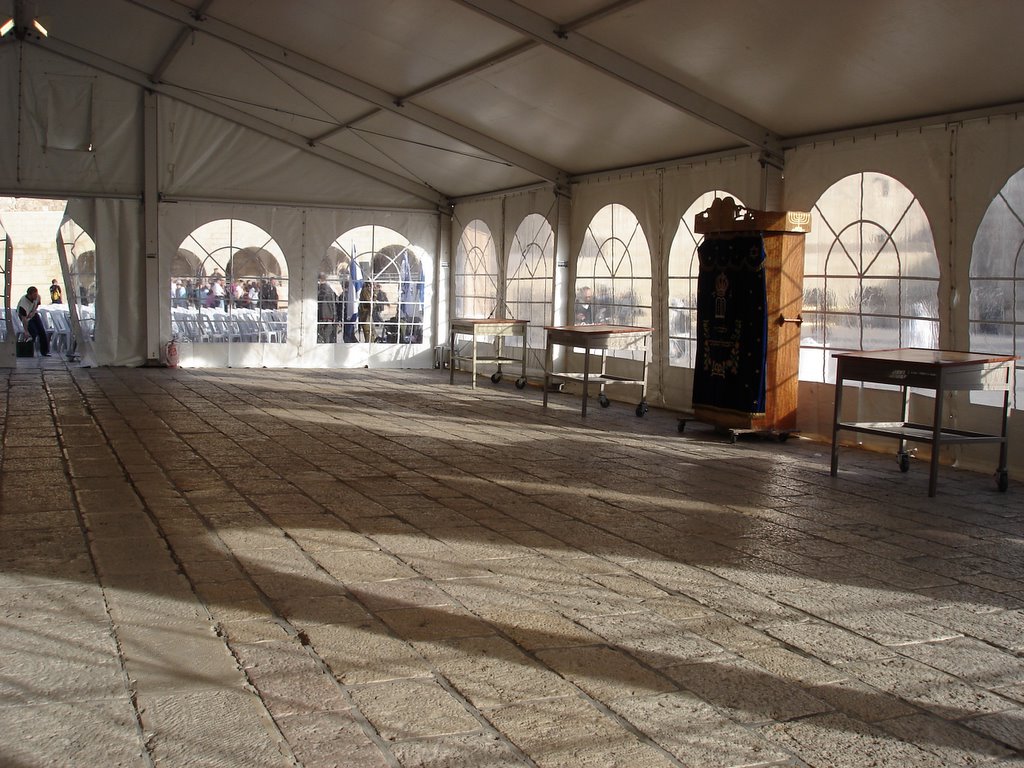
A temporary indoor synagogue has been put up at the Western Wall, presumably for Hanukkah or perhaps for the rainy winter season. Here is a view of the men’s section. The arched windows behind the Ark, in which a Torah scroll is stored, look directly toward the Kotel.
Here is a view of the women’s section, which is located behind that of the men—no view of the Kotel at all:
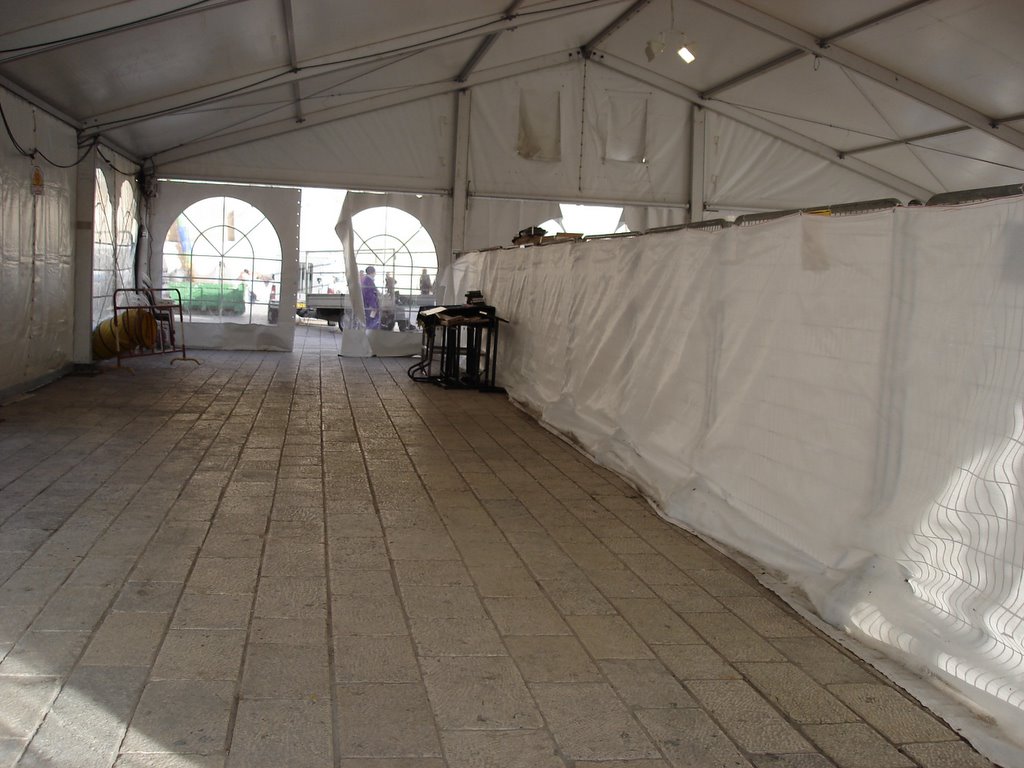
Why couldn’t the mehitza have been placed such that the women would be beside the men and not behind them, so that they, too, might have a view of the Kotel while they are praying indoors? Frankly, sometimes I think that those currently in control of the Western Wall would reorient the mehitza at the Wall itself to put the women behind the men if they could get away with it.
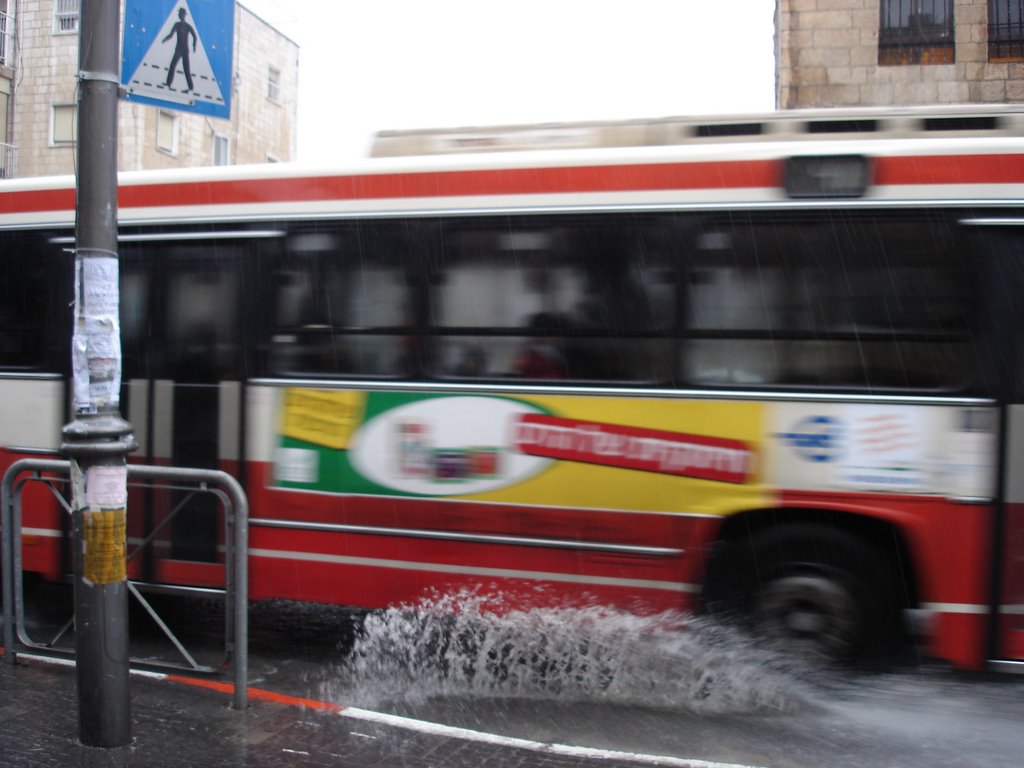
... he’d be dreaming of a wet Christmas, not a white one. There was snow in the forecast for Jerusalem, but alas, in the end it never came. The Hermon and the north got plenty, though not enough to close schools on the Golan Heights, so the radio news said—my sympathies, kids.
But we got rain. Lots and lots of rain, a bit of sleet, thunder and lightning—the whole works. The radio news noted this morning that the Kinneret rose seven centimeters over the weekend. Now that’s a lovely gift for the first night of Hanukkah.
But I’m still waiting for snow.
Merry Christmas to all my Christian readers.
And a Happy New Year, too!
Here’s a site dedicated to The Yule Log for those who are interested (and who remember the New York television program).
Tomorrow I have to be at work at 6 a.m. But don’t worry about me—have fun! (Heh. How’s that for a bit of Jewish guilt mixed in?)
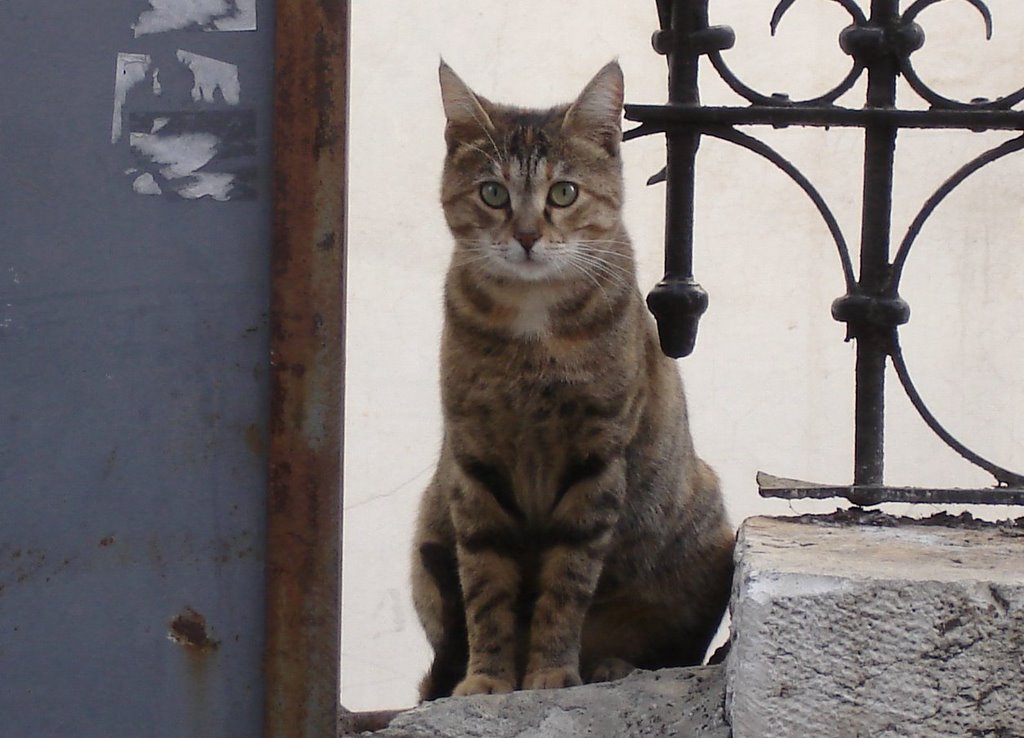
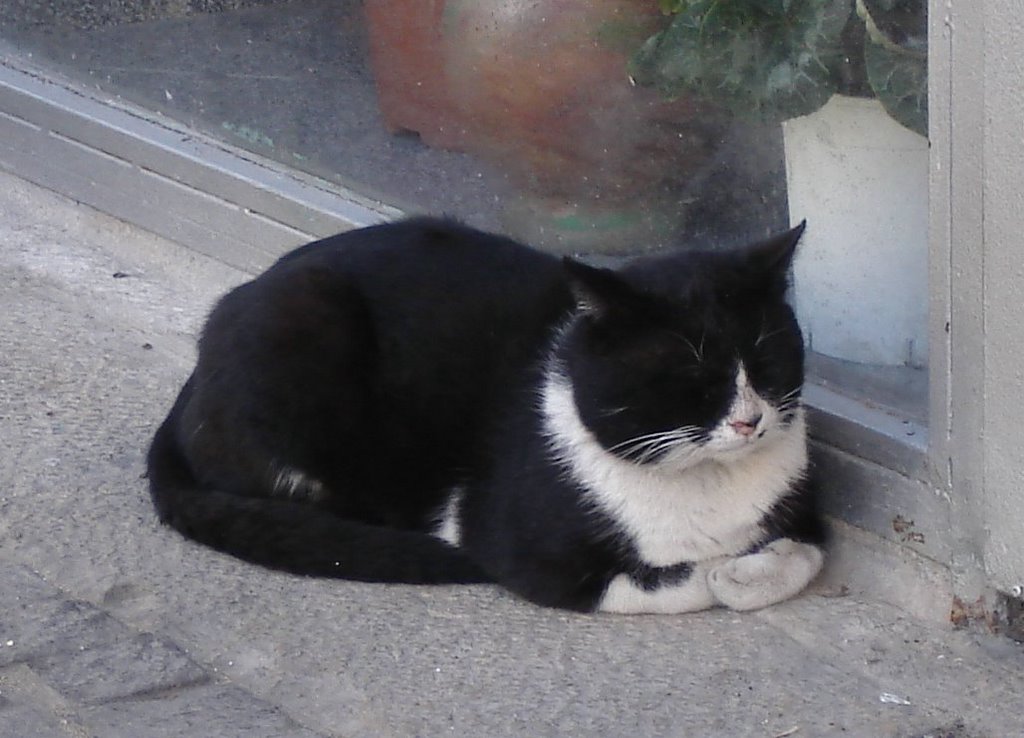
A Jerusalem torbie ...
... and a tux.
(Check out this week’s Friday Ark at The Modulator. The upcoming Carnival of the Cats will be at Watermark.)
The first anniversary edition of Haveil Havalim is up (and I’m still catching up).
So I bring my computer into the shop for some necessary work. I get it back, hook it up, boot it ...
... and my monitor crashes.
Turns out that my computer had configured itself to the monitor in the shop, and my monitor at home couldn’t handle the new settings. It crashed so quickly that I didn’t even get a chance to reconfigure it. So I’ve been off-line at home for the past several days.
Now I have a temporary monitor, thanks to a good-hearted person I know. It should be just fine until my own monitor is repaired early next week (I hope).
Isn’t technology wonderful?
I’ve made some good changes, though. I now have Open Office and am using Thunderbird for e-mail (thanks to Laurence Simon, who gave me the idea).
The ninety-first Carnival of the Cats is up at Music and Cats, whose name is based on an saying by Albert Schweitzer: “There are two means of refuge from the miseries of life: music and cats.”
Barry Davis of the Jerusalem Post remembers Ray.
Ray Scudero was a rare breed of man and artist. In a world where, like it or not, marketing and image-promotion is all part and parcel of a musician’s life and livelihood Scudero just got on with the business of performing, and recording himself and others quietly, professionally and with great sensitivity.
I first met Scudero, who died earlier this month at the age of 59, on a rainy day five or six years ago in his Kiryat Yovel apartment in Jerusalem before he relocated to Karkur. I spent several hours in his company and was enthralled by his stories and, more so, by the way he retold them. But, then, Scudero was a storyteller par excellence.
Born and raised in Brooklyn, New York Scudero started his performing career in Greenwich Village in 1962. This was the heyday of the folk scene when the likes of Bob Dylan and Joan Baez were springing thought-provoking lyrics on an unsuspecting but thirsty public, and the spirit of those artistically formative years was to leave a telling imprint on Scudero’s life and work.
I was also struck by Scudero’s inquisitive mind. He had put together a home studio with his own bare hands and, besides writing and performing his own material, had devoted much of his time investigating, and mastering, the mysteries of electronics, physics, acoustics, fluid dynamics and sound engineering. He very much gave the image of a free-spirited man who pursued his own truth in his own way.
I feel I should add just one thing. A bit later in the article, Barry Davis refers to me as a singer-songwriter. With all due respect to him, I feel I must correct the error: at this point, I’m not.
But he is right about everything else. Ray was extraordinary.
I’ll start posting some of my recollections of him in a few more weeks, I think.
Last September I posted here about The Incredible Shrinking Women’s Section at the Western Wall. Twelve days later, I received a comment from Yaakov Reichert of the Western Wall Foundation addressing my concerns. (Haloscan gets a raspberry here. They’re supposed to e-mail me all the comments I receive, and since they don’t always do that, I didn’t see Mr. Reichert’s response until today. And I’m paying for Haloscan’s services. Feh.)
Without further ado, here is most of Mr. Reichert’s response, copied from the comments section of that post:
As you described in your blog, quite well, the women’s section seems to have shrunk as a result of the work being done on the Mughrabi Ascent. Since the earth quake, which you have mentioned, it is no longer safe to be used as an ascent to the Mughrabi Gate. Currently we are working to excavate it to see what we will find underneath. As I’m sure you are aware the entire area is rich with historical treasures hidden and buried. Since we do not know what we will find it is hard to tell how long the excavations will take. We truly are sorry for the inconvenience.
Since we were concerned with the women losing space from the already crowded prayer area before we started with the excavations we expanded the section backwards. While it is hardly an alternative to having an expansive area next to the Western Wall itself it is a temporary measure while we are excavating. When we are finished we plan to return the women’s to it’s [sic] original width and depending on what we find we might be able to expand it as well.
In response to Balabusta in Blue Jeans inquiry: “Do you know if there’s a webcam that focuses on the women’s side?” The camera is not directed towards the women’s section so as not to offend the ultra religious community since they would see it as a violation of the laws of modesty.
Please feel free to write to me with any other inquiries.
All right. Where do I start?
“... the women’s section seems to have shrunk ...”
Seems to have shrunk, Mr. Reichert? No. It has shrunk. Maybe you should take a closer look at the before-and-after pictures, and speak to some of the women who go there. I have, and they’re not any happier about it than I am.
“As I’m sure you are aware the entire area is rich with historical treasures hidden and buried. Since we do not know what we will find it is hard to tell how long the excavations will take. We truly are sorry for the inconvenience.”
Well, I suppose it’s nice that you regret the inconvenience. And truly, I do understand how important it is to excavate the area. Nevertheless, why must the women be the only ones to bear the burden of the changes at the site? Why can’t the men shoulder some of it so that the women’s area won’t be so terribly cramped? And by the way, whatever happened to the temporary mehitza that was placed in the men’s section in order to give the women more room? Who had it removed, and why?
“Since we were concerned with the women losing space from the already crowded prayer area before we started with the excavations we expanded the section backwards.”
Yes, and that was a pretty backward move. See above.
“When we are finished we plan to return the women’s to it’s [sic] original width and depending on what we find we might be able to expand it as well.”
So when all this is done, the women who come to pray at the Western Wall will have the same amount of space they had before—still substantially less than the men’s area—along with a vague assurance of more space, if possible. Come on, Mr. Reichert. Talk is cheap. If you are really interested in making room for women at the Western Wall, move the mehitza.
Last, but not least: “In response to Balabusta in Blue Jeans inquiry: ‘Do you know if there’s a webcam that focuses on the women’s side?’ The camera is not directed towards the women’s section so as not to offend the ultra religious community since they would see it as a violation of the laws of modesty.”
Mr. Reichert, members of the ultra-religious community are by far not the only ones who visit the site. In fact, many of them are not even permitted Internet access according to their own religious principles. So surely you can accommodate those of us for whom the sight of a woman is harmless and inoffensive. How can you allow one sector of the Jewish community to control what the rest of us see? By the way, I just saw the pitch for donations on the camera page. Why should I donate to your effort if it crowds women out both visually and spatially?
Here’s an idea: how about putting in another camera just for the women’s section, with its own separate link? I can’t think that would offend even the strictest sensibilities, since those who wish to avoid it may do so. In any case, it’s a pretty safe bet that people of whatever stripe who have Internet access and want to see racy images of women will not be using the Western Wall cameras for that purpose.
Also, since when does the Jewish concept of modesty dictate that no image of a woman, however modestly dressed, must ever be shown or seen? Such a narrow and restrictive interpretation of modesty is more characteristic of Saudi Arabia or Iran than of Jewish religious law. I’m thinking of those awful capes again. True, they’re not quite burkas, but the direction in which things are going at the Western Wall is depressing. And disappointing. And scary.
Isn’t the Western Wall supposed to belong to all Jews?
The contact address for the Western Wall Heritage Foundation is (contact_english [at] thekotel [dot] org). (Omit all spaces, brackets and parentheses, and use a real “at” sign and dot.)
There’s a new plan in the works for renovations at the Western Wall Plaza. For Hebrew speakers, here’s the article about it from Ma’ariv, and here’s the one from Yediot Aharonot. For those readers who don’t speak Hebrew, here is my translation of the article from Ma’ariv.
An Upgrade for the Western Wall
The Western Wall—the most popular place in Israel, with five million visitors per year—wants an upgrade. As part of efforts by the Western Wall administration to increase the number of visitors even more and appeal to new target populations, today the cabinet will approve a plan that will make it interactive. Video cameras broadcast from the Western Wall Plaza 24 hours a day and the holy site is a hit on the Internet.
This morning, cabinet ministers will approve a budget of NIS 68 million over five years to renovate the Western Wall Plaza. The money will be invested in placing signs in the plaza, renovating the bridge that ascends to the Temple Mount and installing air conditioning in the Western Wall Tunnels. Alongside the renovations, Western Wall officials are trying to strengthen Diaspora Jewry’s connection to the holy site. “We have placed a video camera that broadcasts from the Western Wall Plaza 24 hours a day, and we have built an interactive website that tells of the history of the area,” said Aryeh Bauner, who is responsible for the educational program at the Western Wall. The site has become extremely popular, with two million visitors just in the past year. In addition, a new visitors’ area will be opened at the Western Wall in approximately a month. The area, which will be called The Chain of Generations, will have visitors’ walk that tells the story of the Jewish people via glass pillars, light and sound. The administrator of the Western Wall, Rabbi Shmuel Rabinovitch, said yesterday, “A generation has grown up here that has not visited the Western Wall, and we are asking ourselves what happened and are trying to turn the Western Wall into an area that will speak to everyone. I believe that we should not make Judaism into a business, and therefore anyone who wants to have an aliya to the Torah is invited to do so without payment, rich and poor alike,” Rabinovitch said.
The Western Wall administration has been working together with the director-general of the Prime Minister’s Office, Ilan Cohen, and with Tourism Minister Avraham Herschson in recent months on a plan whose goal is to bring the secular population to the Western Wall as well. Among other things, the plan is to encourage children in Israel and throughout the world to celebrate their bar mitzvah at the Western Wall. “We intend to place one of our employees with every family who will help them plan a ceremony appropriate to the relevant ethnic group and its customs,” Bauner said. In order to bring the public to the Western Wall, a large campaign which will call on the general public to come and visit the Western Wall is being planned. Within its framework, attempts are being made to create various attractions which will draw visitors. “We are working on a system that will help everyone find their roots. People can type in the country of origin of their grandfather or grandmother and get the whole path that their families traveled over the past two thousand years,” Bauner said.
So, Rabbi Rabinovitch, you’re wondering why people don’t visit the Western Wall anymore? You’re wondering what happened? Here’s one possible reason: in recent years, the Western Wall has been transformed gradually into an ultra-religious synagogue instead of the inclusive national site it was meant to be. This has turned off a lot of people, including many who are religiously observant. So, in my opinion, here is a way to increase the number of visitors to the Western Wall: include them. Everybody. Men, women, those who are religiously observant and those who are not. Include them as they are, without telling them in all sorts of subtle and non-subtle ways that the Western Wall is now a strictly-run ultra-religious synagogue and if they want to be welcome there, they must behave accordingly. Call off your aggressive female ushers who throw those awful capes over the shoulders of girls and women whom they feel are not covered well enough. (If you are trying to educate them to respect our holy sites, that is not the way to do it.) Move the mehitza to give women more room outdoors, and give them more space indoors as well. Be more welcoming toward those of us whose religious outlook differs from the current ultra-religious party line. The Western Wall belongs to all Jews, not just to those of a certain stripe.
Stop with the glitzy packaging and work on the real problem. Without true and sincere inclusion, no glass pillars or sound-and-light shows will do the least bit of good.
It’s about time: this coming Saturday night, the Dimona railway station will be re-opened for the first time since the 1970s.
Passenger trains will travel to Dimona for the first time since the 1970s beginning Saturday night, Israel Railways director-general Ofer Linczewski said Tuesday. The revived train service was a sign of the importance of bringing the periphery closer to the center of the country, he said. Upgrading the line and the station had cost NIS 18 million, and several unguarded crossings had been eliminated, he said, adding that he hoped 150,000 passengers would use the line in 2006 and 900,000 annually by 2015.
Completion of the double track between Ashdod and Ashkelon, and to Ben-Gurion Airport, will enable more frequent trains.
These buds were attracting a lot of bees. I tried to get a bee photo but they were going too fast for me this time. On close inspection, it looks like these buds put out really tiny flowers, which could be the reason that the bees were going so quickly—there were such small quantities of nectar to be had that they didn’t need to stay long.

Some guy walking by gave me trouble as I was taking the picture. Seems he thought I was photographing a nearby car. When I told him I was after the plant and the bees, he left me alone.
Here’s some graffiti I saw at the bus stop several days ago:

For those who read sites with voice synthesizer programs, here’s the text:
Femdom forever! Female rule now!
Every girl is a goddess. Make him worship you on his knees!
Girls, the Goddess made you sexy so that the boys will be your willing slaves!
And right next to that: a poster advertising an appearance by well-known religious revivalist Amnon Yitzhak.
(Okay. What-ever.)
I shall seek and find you.
I shall take you to bed and have my way with you. I shall make you ache, shake and sweat until you moan and groan.
I will make you beg for mercy ... beg for me to stop.
I will exhaust you to the point where you will be relieved when I’m finished with you.
And you will be weak for days.
Sincerely,
The Flu
(Now get your mind out of the gutter ... and get your flu shot!)
The above is taped to the wall of my doctor’s waiting room. I didn’t listen this year, and now it’s got me.
Not fun at all.
Did ever I mention that for all her excellent qualities, the Lady in Red is extremely territorial?
I met her this morning as I was walking back from the doctor’s office. Although she let me skritch her and offer her water, boy, was she ever in a territorial mood. Here she is challenging a cat in the bushes, right after she engaged in a shouting match with the young tom lying on the ground on her right:

This is the interloper from the bushes:

Heading for the relative safety of the path, the interloper was joined by another, similar cat, possibly a littermate:

Finally, the Lady in Red took a snooze. Defending one’s territory is hard work, you know.
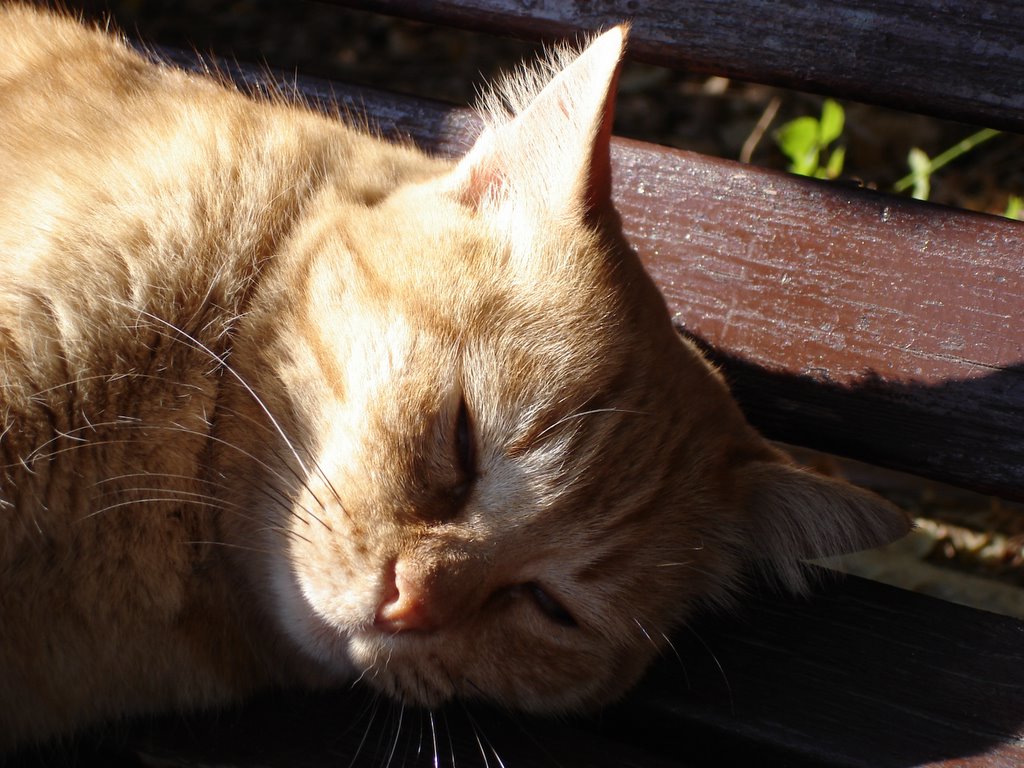
It appears that the Lady is territorial regarding her human admirers, too. When I petted the juvenile red-and-white tom where she could see me, she got huffy and tried to swat me when I went to pet her a little while later.
We’ll make up. We always do.
Meryl, this one’s for you:
What’s gray and was just born in Jerusalem?
The baby elephant at the Jerusalem Biblical Zoo.
A two-year pregnancy and a 10-hour birth process made Israeli history on Saturday when a baby elephant was born at the Jerusalem Tisch Family Zoological Gardens after being conceived through artificial insemination.
The male baby—who has yet to be named—was born to Tamar a Thai elephant brought to Israel ten years ago as a gift from the Thai government to then-prime minister Yitzhak Rabin. Saturday’s birth was one of 10 births around the world of an elephant conceived through artificial insemination.
Director General of the zoo Shai Doron called the birth: “A breakthrough in the efforts to conserve the endangered species of Asian elephants.”
You can see the little one live here (sorry, but you’ll need Internet Explorer in order to see the streaming video). Be warned: viewing is addictive.
Her Ladyship forsakes her dignity for a moment: Look, Ma! I’m on TV!

From another angle:
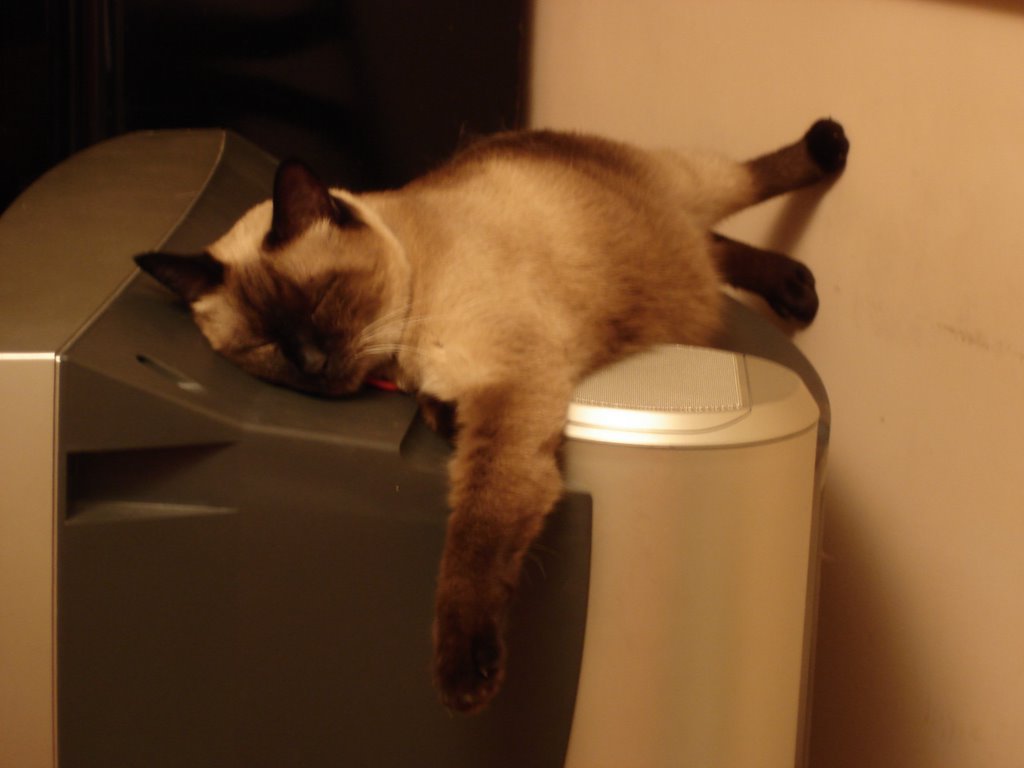
Here’s Missy. What a sweet jumble of paws. (She has a lovely, loud purr, too.)

(I missed this week’s Friday Ark, but the Carnival of the Cats will be up later today at Quite Early One Morning.)
Charlotte Hallé of the English-language edition of Haaretz has written a lovely article about Ray: No guitar in Israel he didn’t touch.
Singer-songwriter Ray Scudero, who died on Saturday, would take his carefully packed “gig bag” with him to each performance. It contained not only his own things, his widow Joanna Katzen recalled this week, but also items that might come in useful for other musicians, such as superglue, pliers and strings for mandolins and banjos—two instruments he did not play. “That way, if someone’s string broke or guitar cracked, he’d always have the parts to repair it,” she said.
It was this appealing combination of musical talent, technical expertise and kindness that members of Israel's folk music community recalled this week when paying tribute to Scudero.
Considered a leading figure in the close-knit and largely Anglo folkie community, Scudero was a regular performer at festivals and clubs across Israel, where he sang his own compositions and played his guitar and his “Stanley,” a 12-string instrument that he created himself. He ran his own recording studio from his home in Karkur, where he also built and repaired fretted instruments. “Within the folk community here, there’s almost no guitar that hasn’t been touched by him,” said Katzen. “You can see his custom-made pick-ups, his filed-down bridges and his tuning machines all over the country.”
There’s more.

Ray playing Stanley, the instrument he created. (Source: the Tzora Folk Club website. Photo credit: Carol Fuchs)
The answers quick and keen, the honest look, the laughter, the love,—
They are gone. They are gone to feed the roses. Elegant and curled
Is the blossom. Fragrant is the blossom. I know. But I do not approve.
More precious was the light in your eyes than all the roses in the world.
Down, down, down into the darkness of the grave
Gently they go, the beautiful, the tender, the kind;
Quietly they go, the intelligent, the witty, the brave.
I know. But I do not approve. And I am not resigned.
(from “Dirge Without Music” by Edna St. Vincent Millay)
Ray Scudero, a beloved member and shining light of Israel’s folk-music scene, passed away yesterday morning after a two-and-a-half-year battle with cancer.
I will post more about Ray sometime soon. For now, here are some links:
Ray’s website (including an archive of his song lyrics), lovingly crafted by his wife, Joanna
Ray’s page at the Tzora Folk Club website
“Upon Us, from the Broken Sky,” an article about Ray by the late Jerusalem Post columnist, Sam Orbaum
Here are links to Ray’s music:
The CD Baby page of Ray’s first CD, “With the Help of Angels”
The CD Baby page of Ray’s second CD, created together with Joanna, “Poor Working Slob”
May Ray’s memory be for a blessing. He is much missed.
Lady dozes under the rosebush.

Shabbat shalom.
(Check out this week’s Friday Ark at The Modulator. Next week’s Carnival of the Cats will be up at When Cats Attack on Sunday.)
I was going to call this post “Breasts,” but decided that I didn’t want to give anyone the wrong idea. This is a family site.
Those who have gone through it will know what the title means, though. Today I experienced a rite of passage in which I left the last wisps of my youth behind and officially entered middle age: I had my first mammogram.
(I’m tempted to add: Today I am a pancake.)
I went to a comprehensive clinic that performs a mammography, a manual exam and an ultrasound. The clinic, which is located in a new building, is beautifully kept and especially sensitive to the need for privacy; for example, even though the waiting room and the area where clients pay their bills and discuss administrative matters occupy the same physical space, an effective divider separates them. The medical and administrative staff were, for the most part, friendly and supportive, and overall it was a positive experience. (The ultrasound was fascinating. The image on the screen looked like waves on the ocean, and the doctor said that many patients were reminded of the same image.)
Now to the question that some of you must be asking: What about the mammogram? Did it hurt? I won’t try to sugar-coat the facts: yes, it did. Having my breasts put into a machine that slowly squashed them horizontally and vertically by turns was no fun at all, and actually, for a time it put me in mind of certain unpleasant facets of life during the Middle Ages. Also, the woman who performed my mammogram wasn’t exactly sympathetic (even if I was being a bit of a wimp, I still think she could have been a bit more compassionate). It was also a bit disillusioning: Good grief, was it for this that I read all those Judy Blume books when I was twelve? They never told me about this when I went shopping for my first training bra. But seriously, it wasn’t so bad after all. The squeezing part was actually very brief, and the doctor pointed out that it’s very important. “Not squeezing doesn’t do you any favors,” he said, and I see his point.
So now that I know what a mammogram is like, will I be doing it again? Absolutely. The clinic I went to has a waiting list of approximately six months, so half a year from now I’ll be calling for my next appointment, and I’ll be seeing them—or, more accurately, they’ll be seeing me—next year.
I left with good news: all the results were negative. But a friend of mine, herself a survivor of breast cancer, asked me to add that although it’s important to get a mammogram at the proper time, women shouldn’t consider it a substitute for proper breast self-examination. She should know; that’s how she discovered her own illness. (Thank God, she is fine today.)
By the way, there is such a thing as male breast cancer. The American Cancer Society has more information about it.
Also, daily clicks at The Breast Cancer Site help provide mammograms to women who can’t afford them.
Now I think I’ll rest for a bit ... and decompress from the experience.
Here are some pictures I took today.
Despite the fact that today’s Gregorian date is December 1, it felt like summer here. Yet we have plenty of wild greenery in Jerusalem even during cold weather, provided that there is enough rain. Here is some kind of small grain plant that I’ve been seeing around for years but have never been able to identify:

This is spiny burnet, a plant that grows throughout the Jerusalem hills. Every tour guide who has told me about this plant says that the army uses it to stuff mattresses. Spiny burnet plants have tiny red berries later in the season. Here are the leaves:

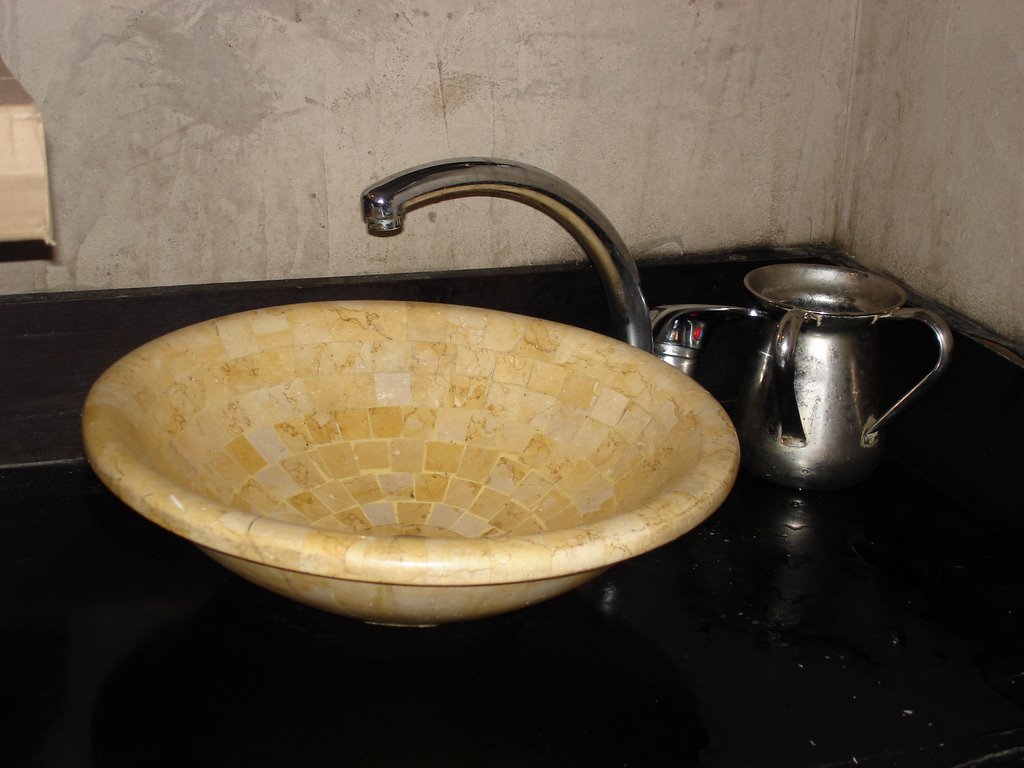
Moving indoors, this is a trend that seems to be catching on at local restaurants: a bowl-shaped sink that rests on top of the counter rather than being set into it:
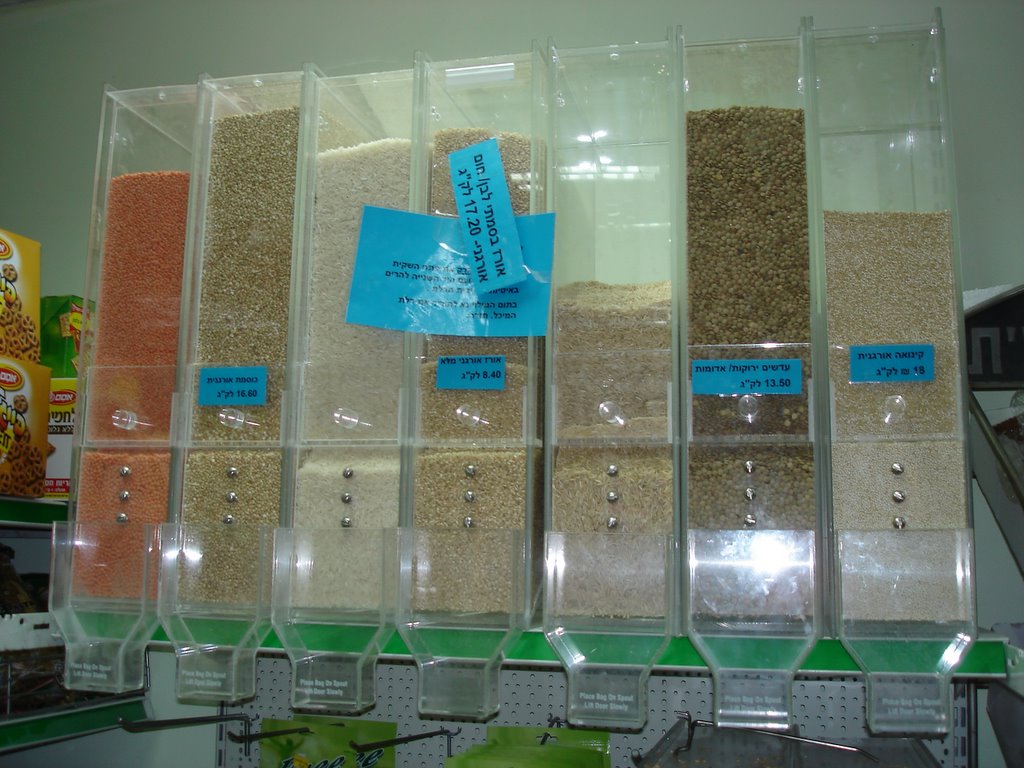
I took this picture at a local health-food store. Want some grains? Pull up a bag, lift the plastic door and let the abundance flow:
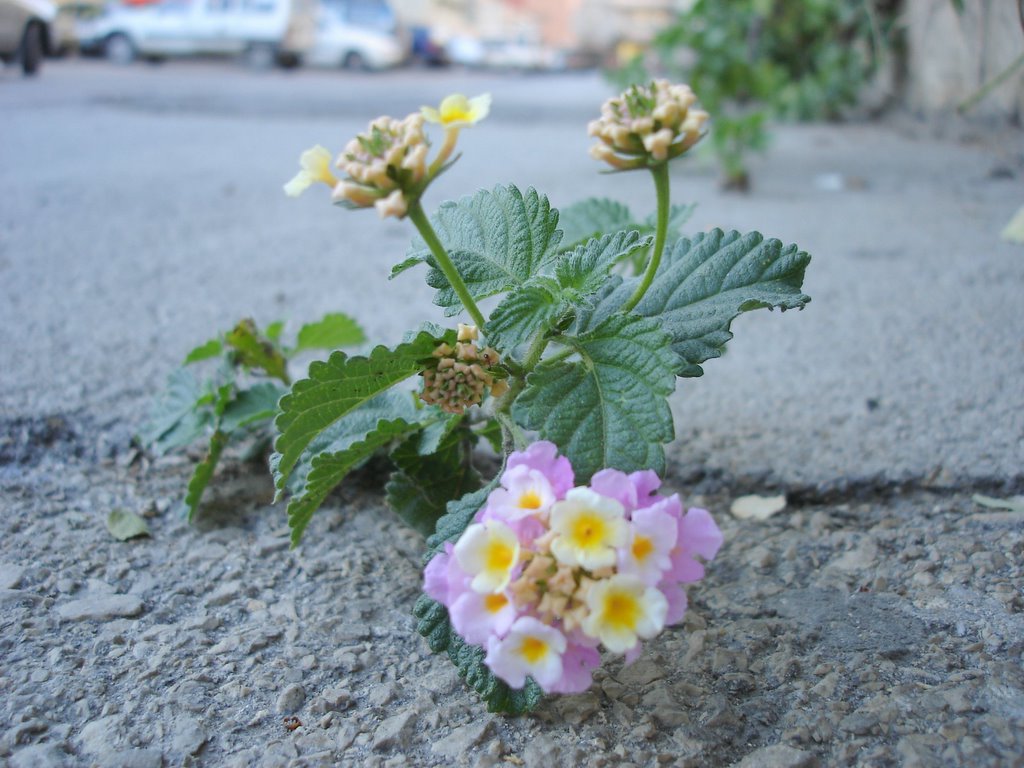
Finally, back outdoors where I found this lovely little plant—which is a garden or hedge plant here—growing in a crack in the sidewalk. I don’t know what this plant is, but I think it’s a member of the mint family. The leaves are a bit sticky to the touch and have a strong minty scent, and the flowers give way to rich, dark berries: